EDITION 4 - 2026
Today I Would Like To Be A Tree
1000 Houses of Paper | Lebanon
“What could a child draw from within a context of constant displacement? How do you explain all of this to a child whose home has been destroyed, whose loved ones are no longer there, and whose school has been reduced to rubble? How do you recreate an entirely new world? You hold a picture of a bird with sunlight streaming through its wings, ask the child what the bird is called, and whisper in their ear, “How I wish I were a tree.” In a child’s world, magic is possible…”
Abed Al Kadiri
Since March 2026, as a response to the ongoing Israeli war on Lebanon, Today I Would Like to Be a Tree expands into a nationwide mobile artistic and psychosocial initiative engaging displaced and crisis-affected children across Lebanon, with a particular focus on remote districts, underserved communities, collective shelters, and public schools with limited access to cultural and emotional support programs.
Moving across villages in Lebanon, within these environments shaped by loss, interrupted education, displacement, and instability, the project creates a safe space for collective expression through drawing, storytelling and collaborative image-making.
At the heart of Today I Would Like to Be a Tree is the transformation of children’s collective drawings into leporello artist’s books, developed in dialogue with Lebanese, regional, and international artists. Preserving children’s gestures, emotions, and lived experiences, these works become collective visual archives and significant cultural documents, creating an intergenerational and cross-cultural dialogue.
The project culminates in a fundraising exhibition that brings together the children’s collective artistic expressions with the work of participating artists, transforming the intervention into a public platform for visibility and support. Sale proceeds support the education and psychosocial wellbeing of children affected by displacement, through partnerships with established Lebanese organizations working in these fields.
EDITION 4 - 2026
Today I Would Like To Be A Tree
1000 Houses of Paper | Lebanon
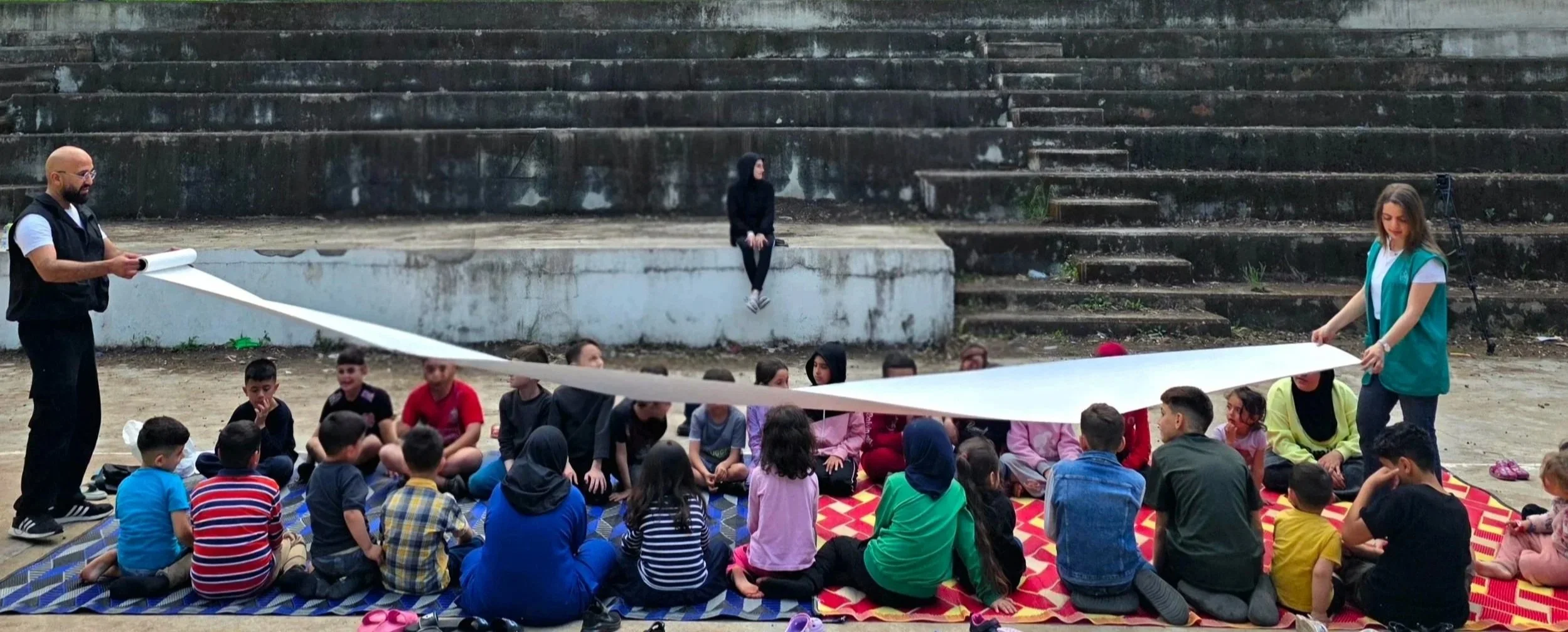
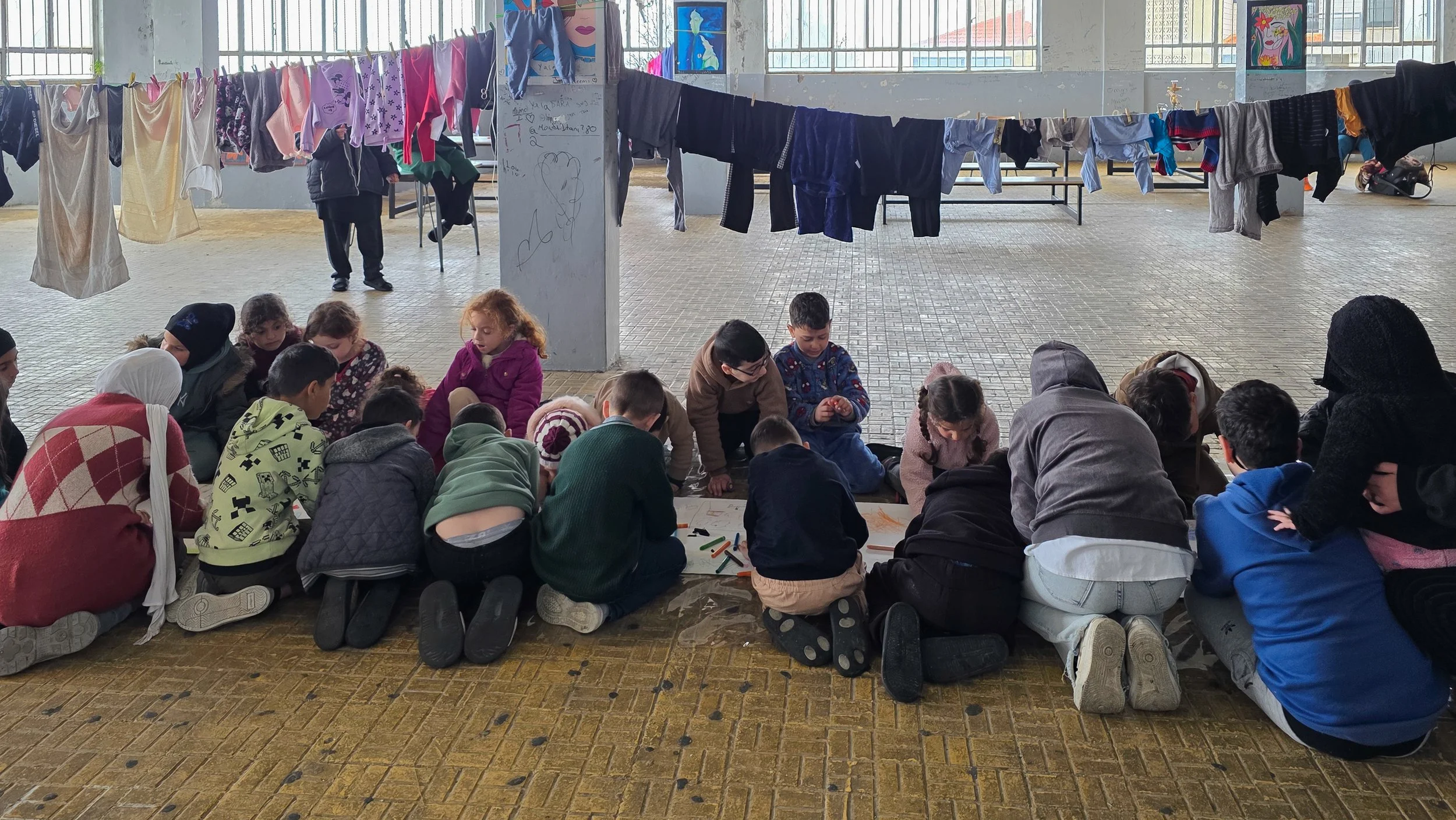
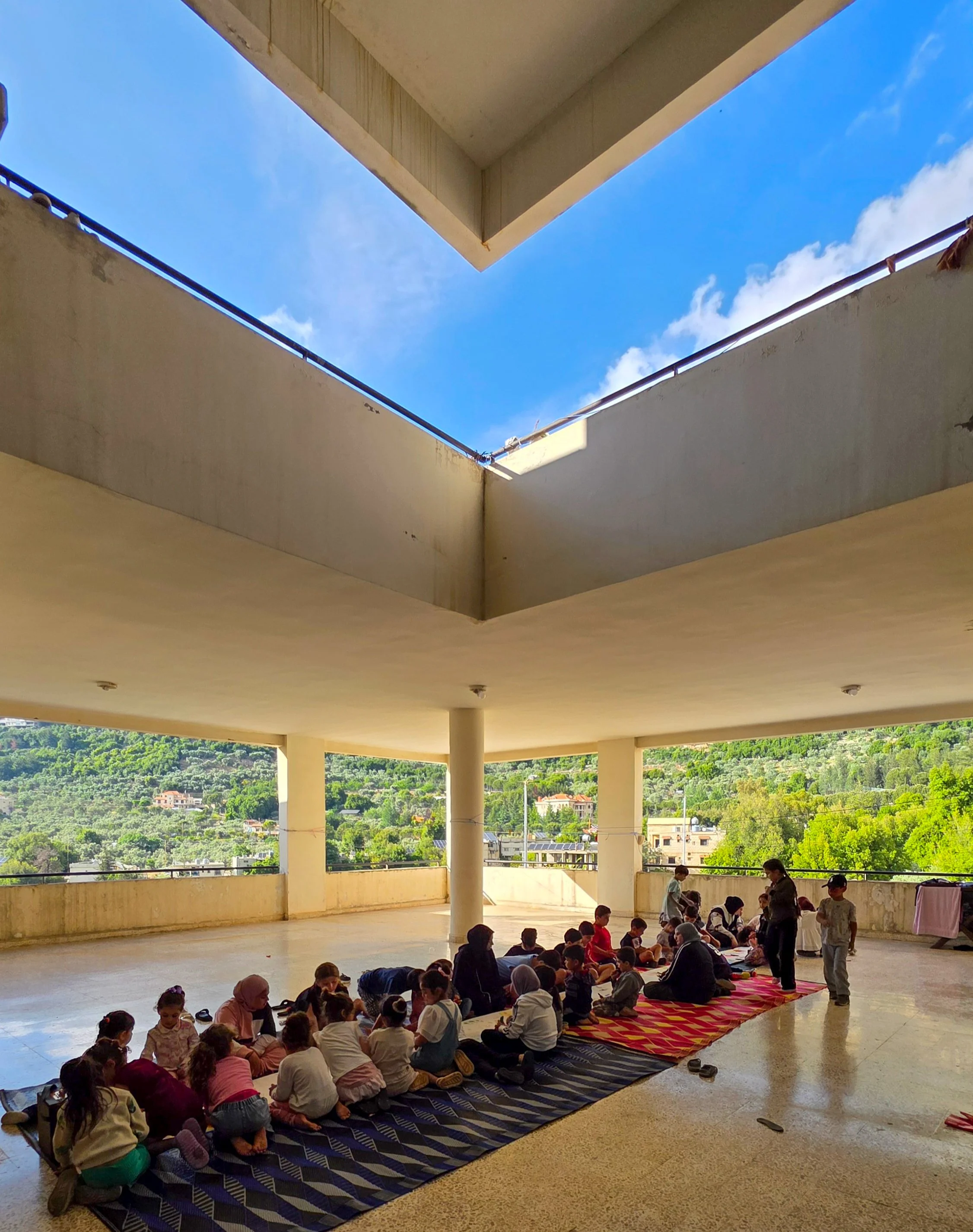
The first phase focuses on implementing mobile art sessions across public schools, collective shelters, and underserved areas with limited access to psychosocial and cultural programming. Designed as a flexible and low-infrastructure intervention, the project operates directly within communities affected by war and displacement, enabling accessibility in emergency and high-need contexts.
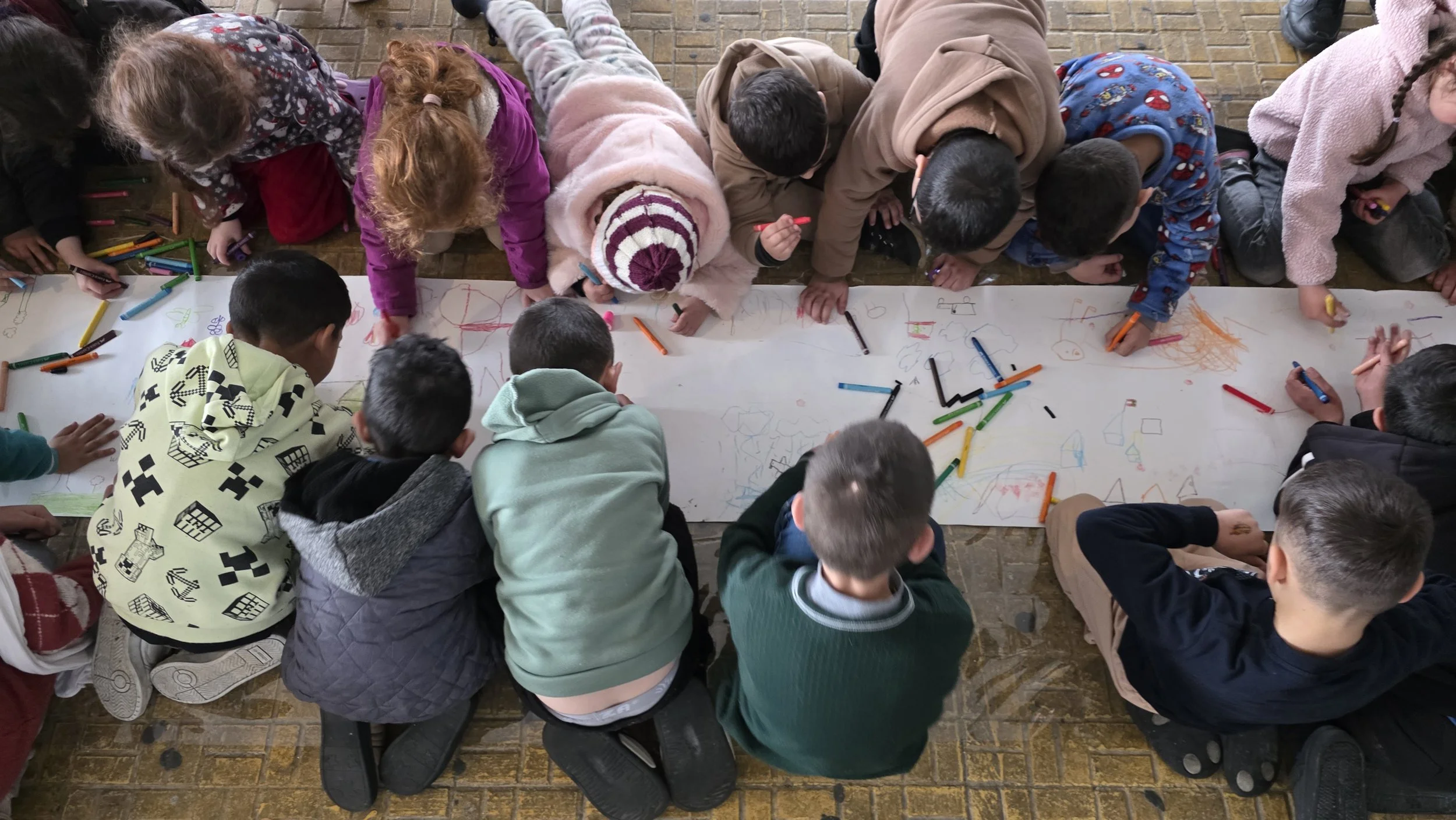
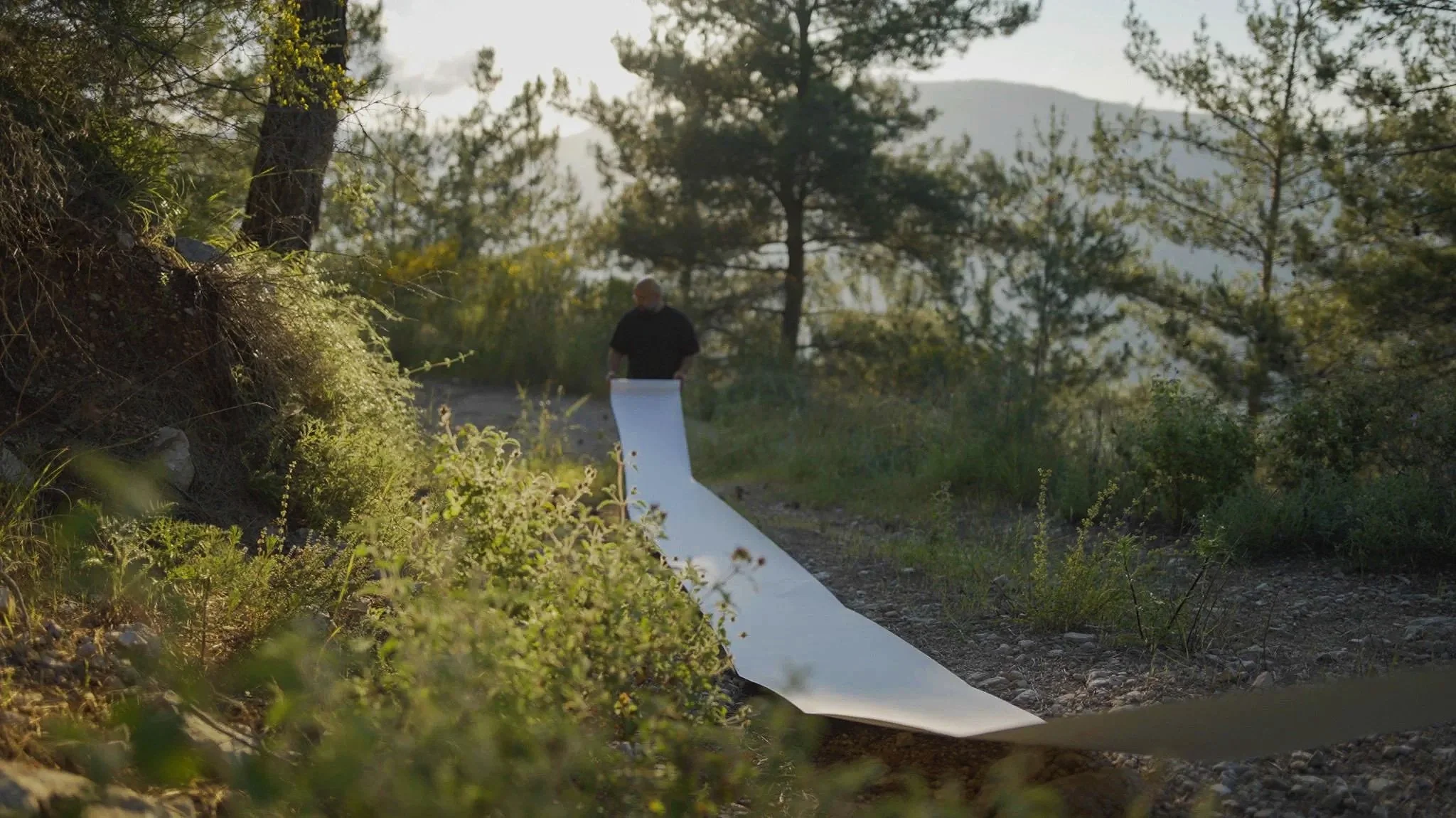
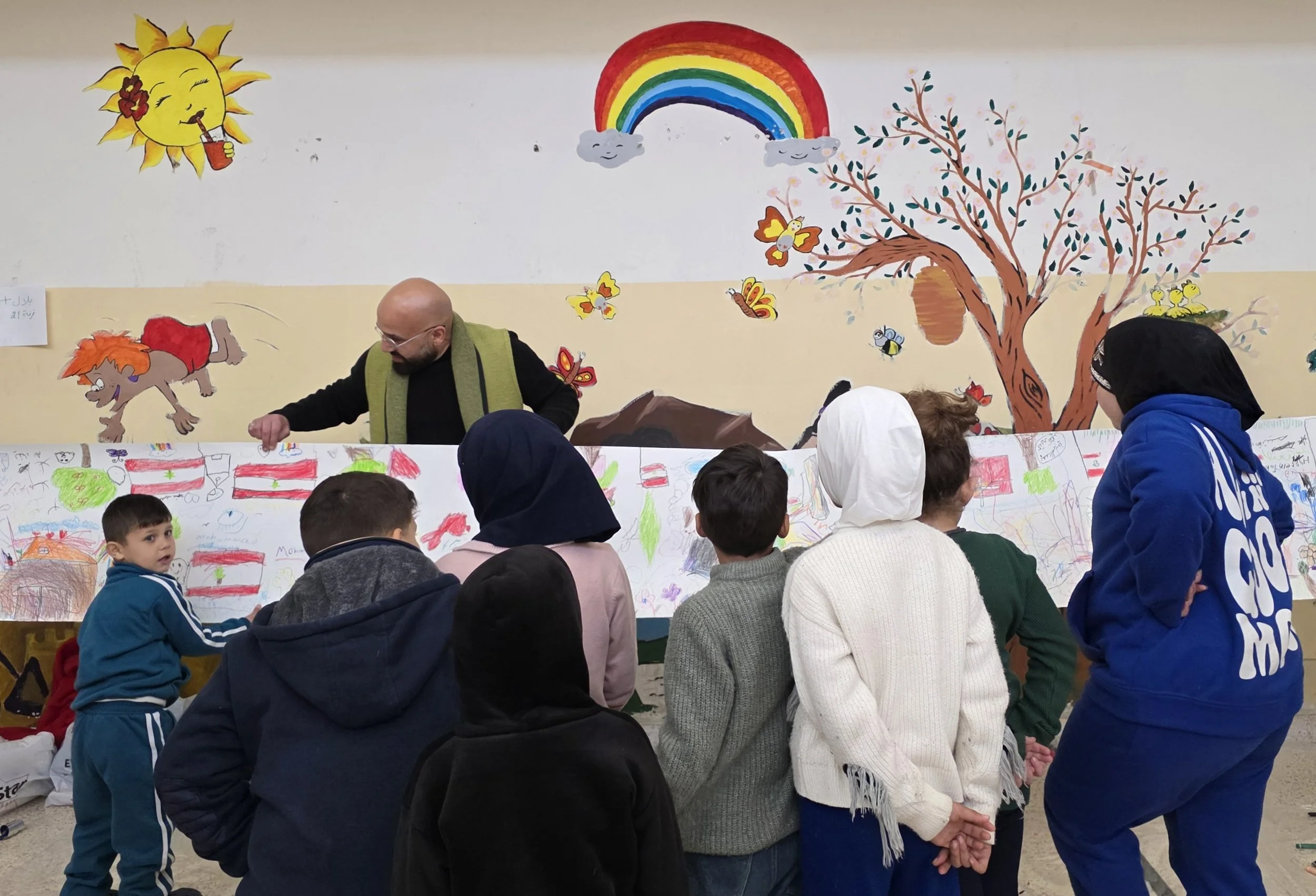
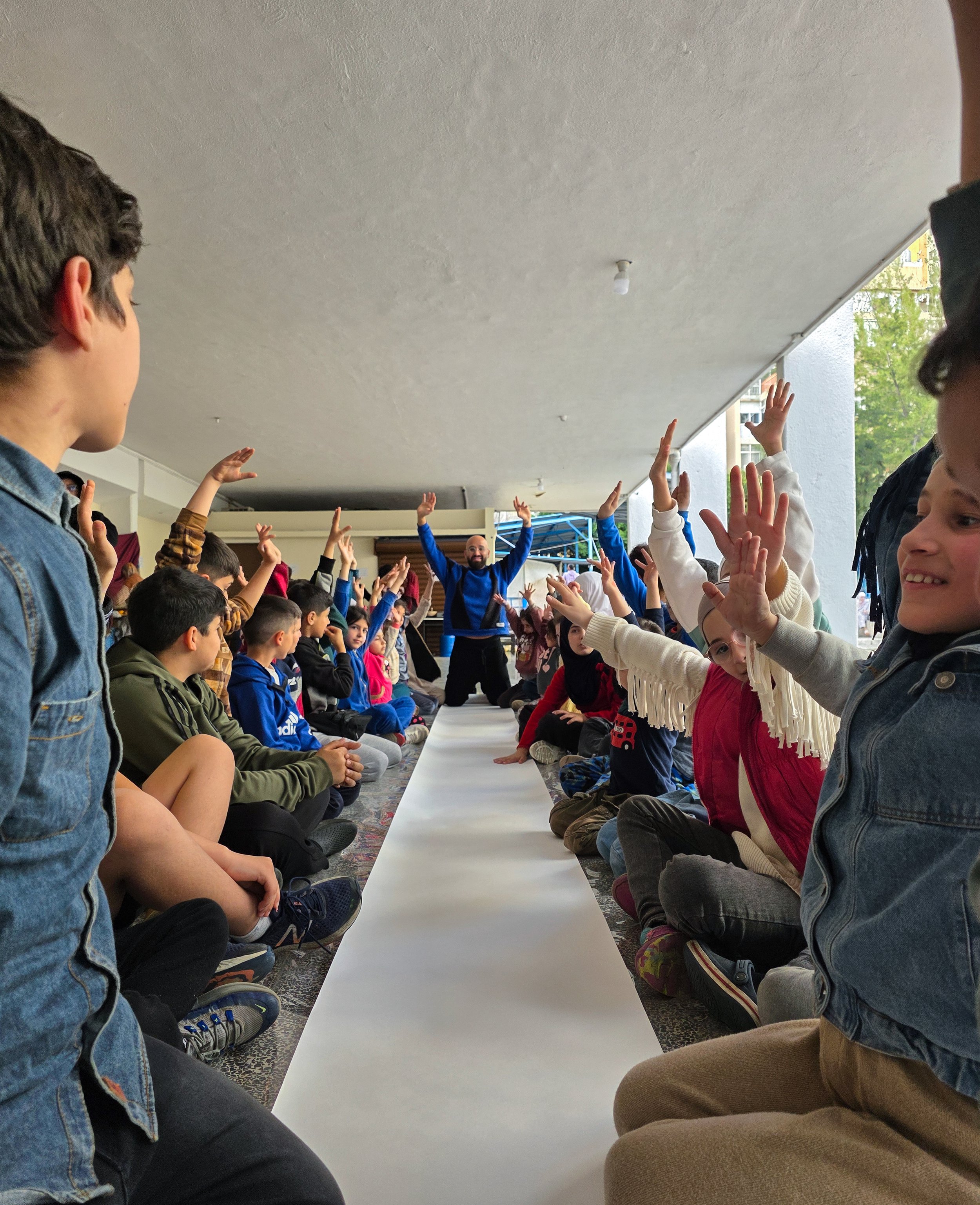
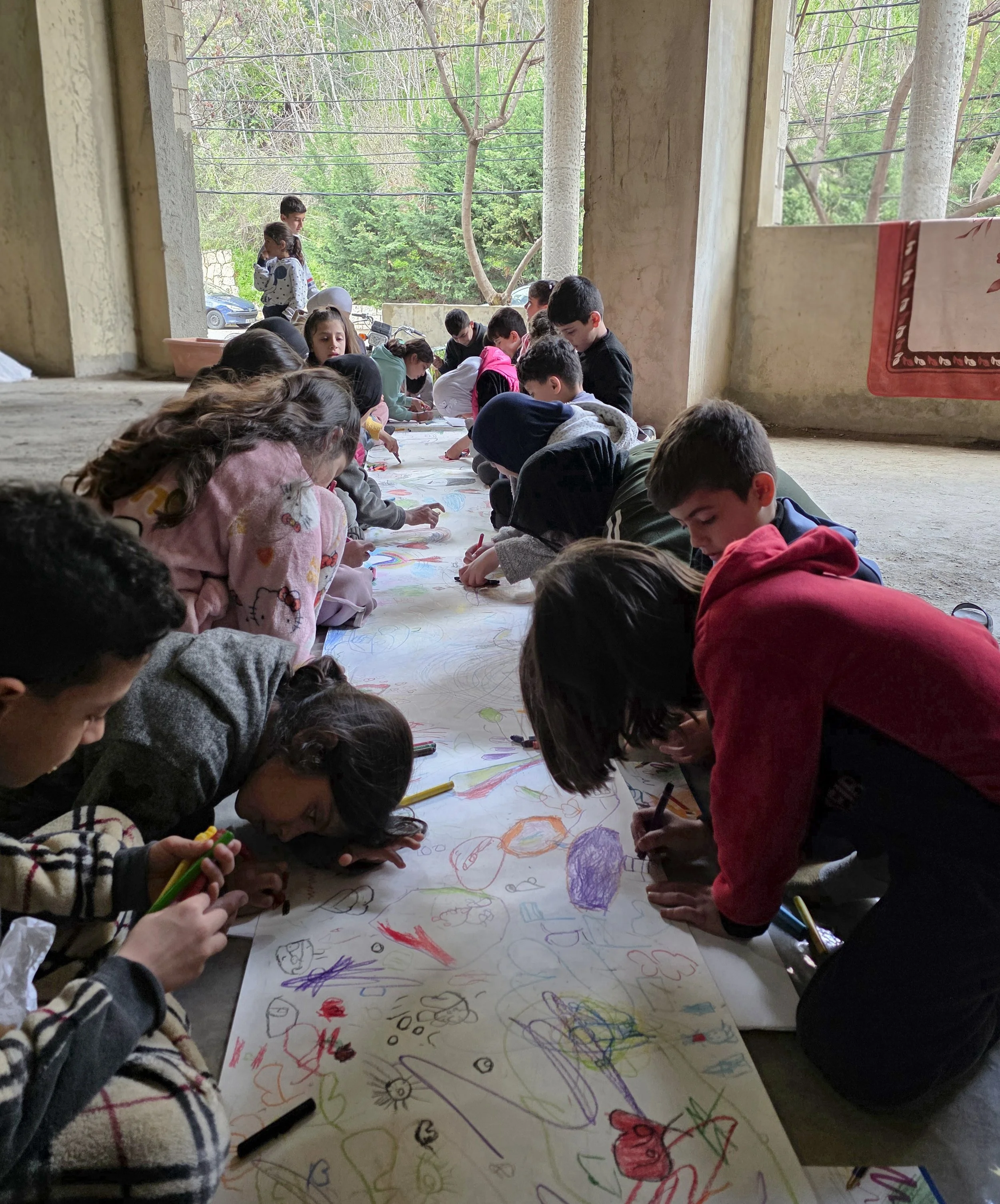
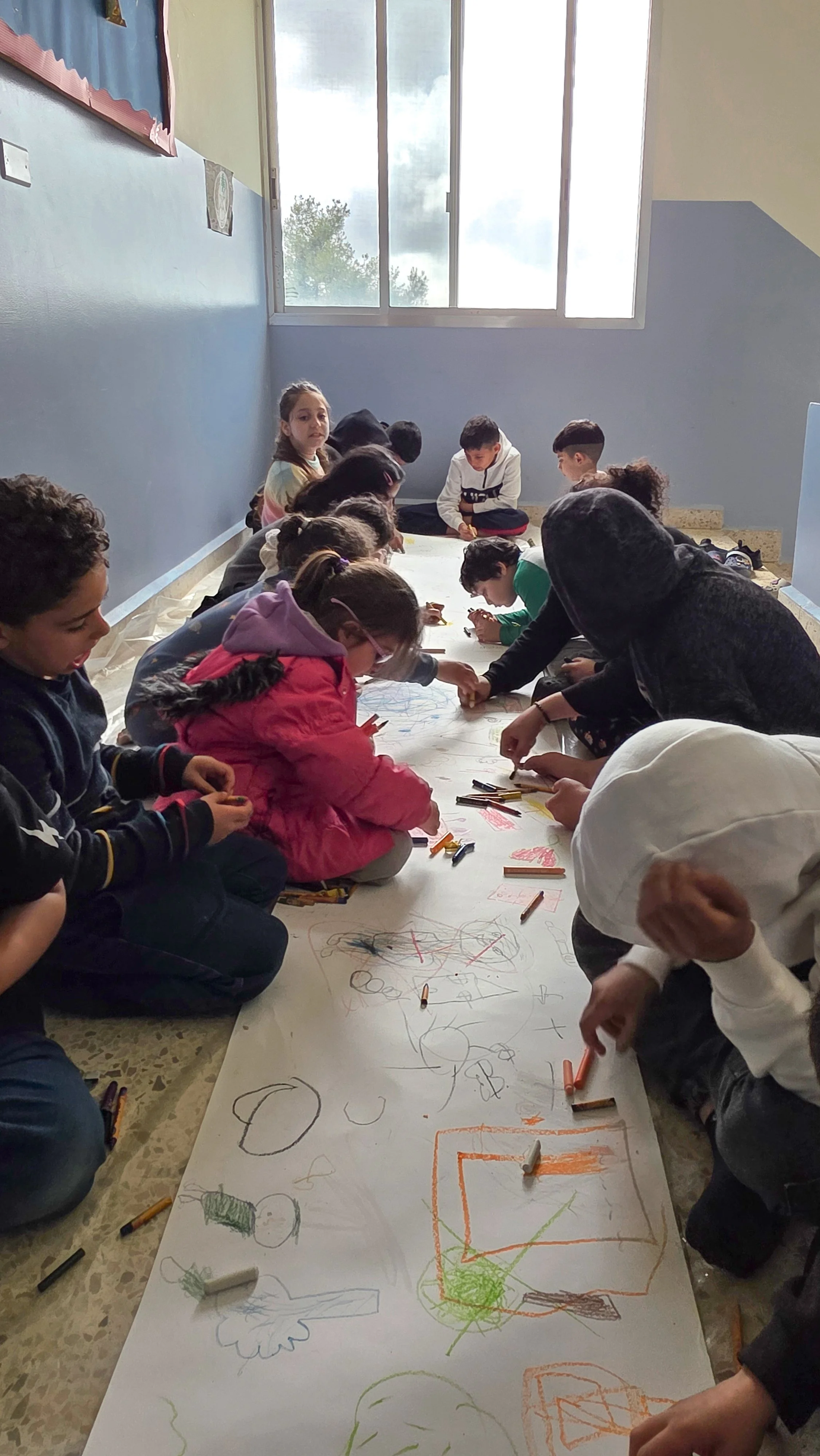
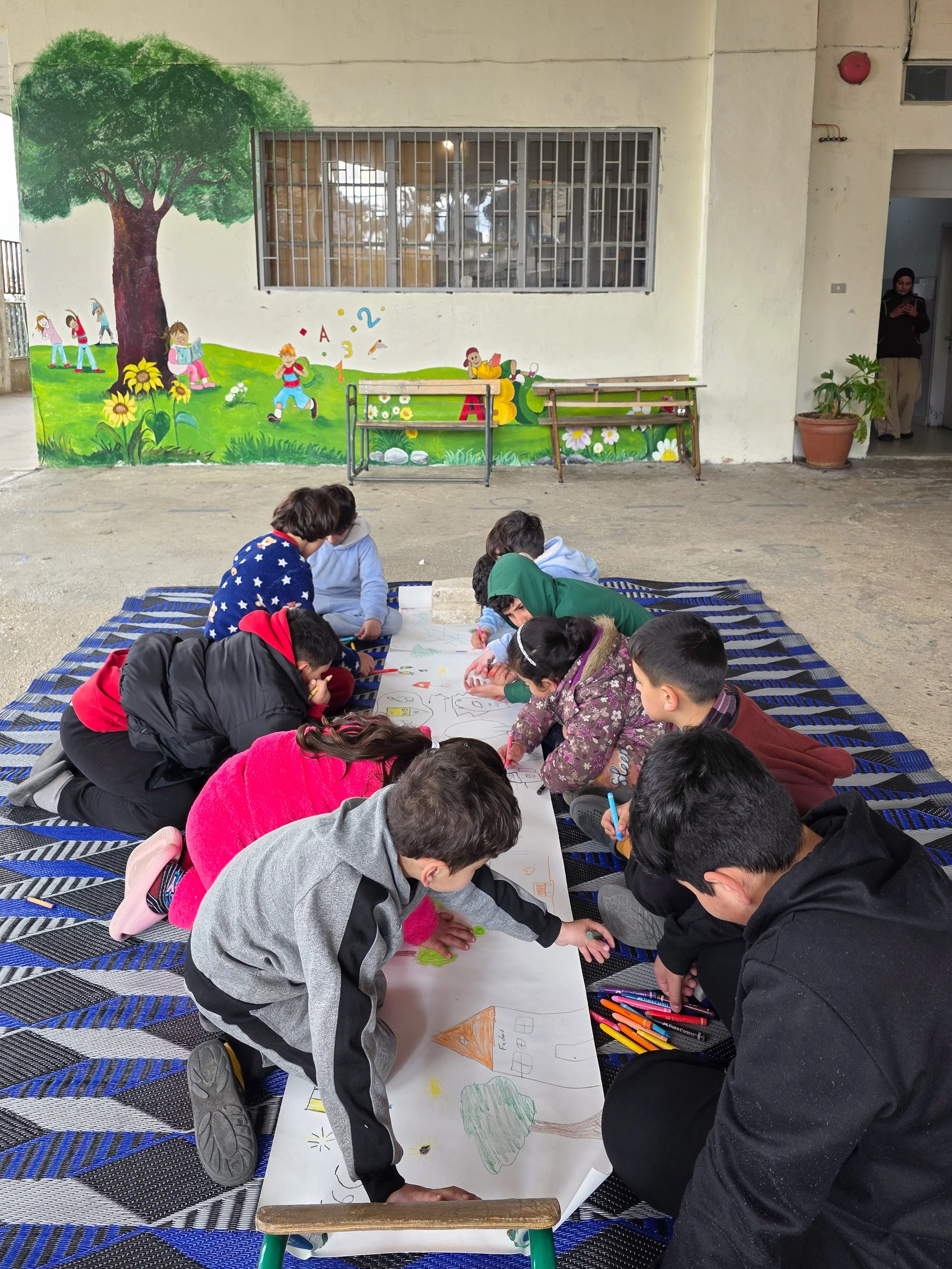
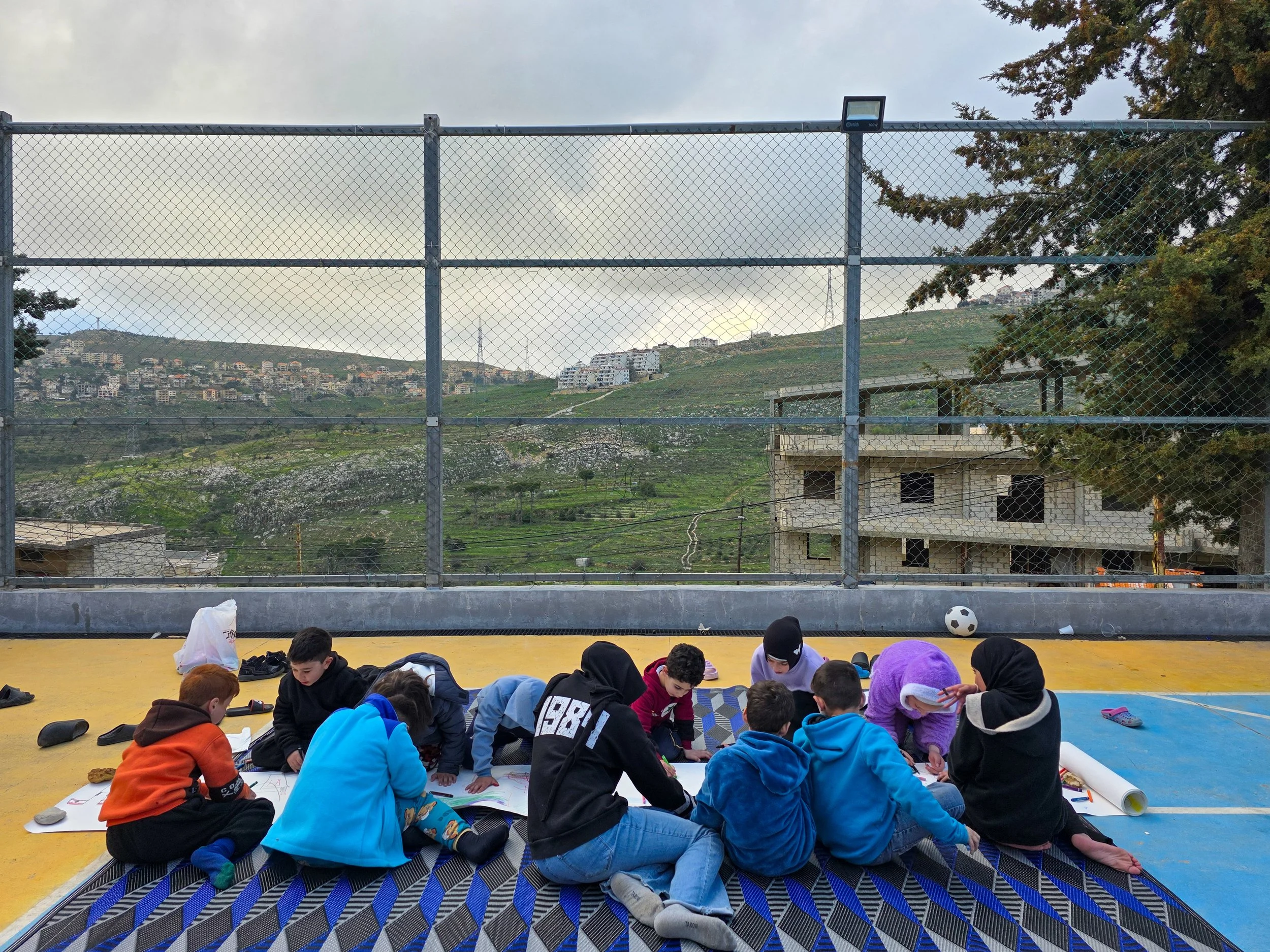
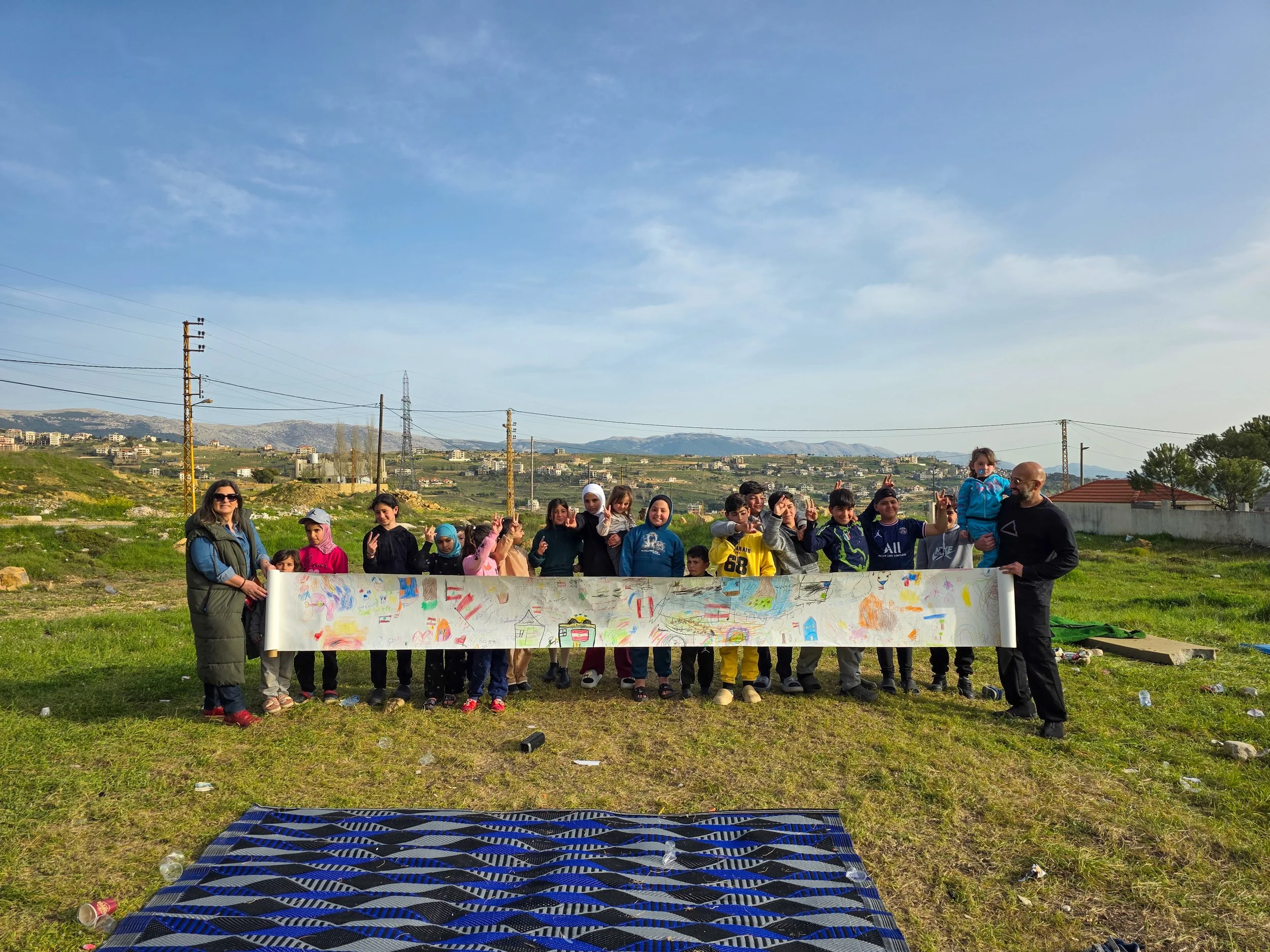
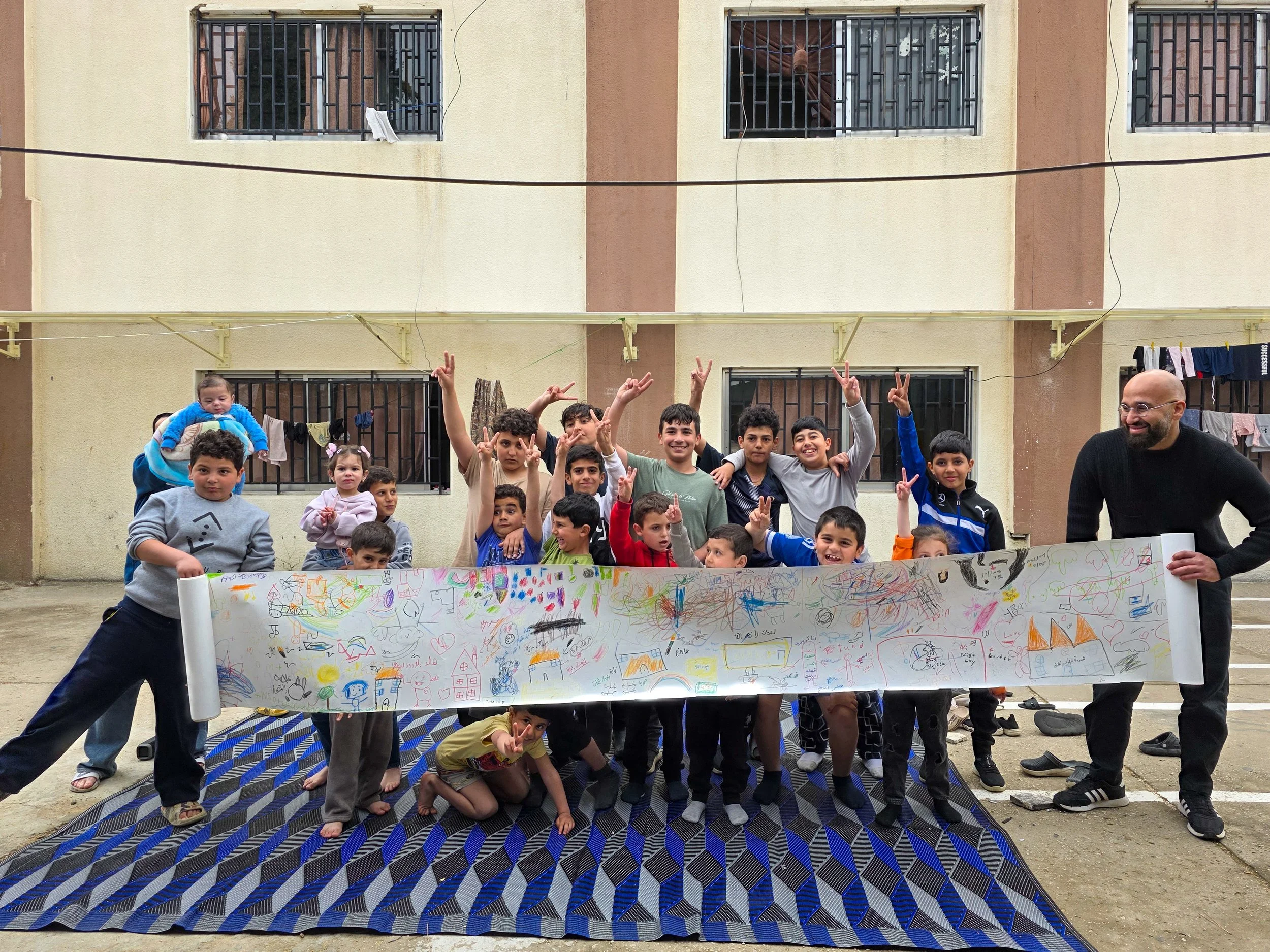
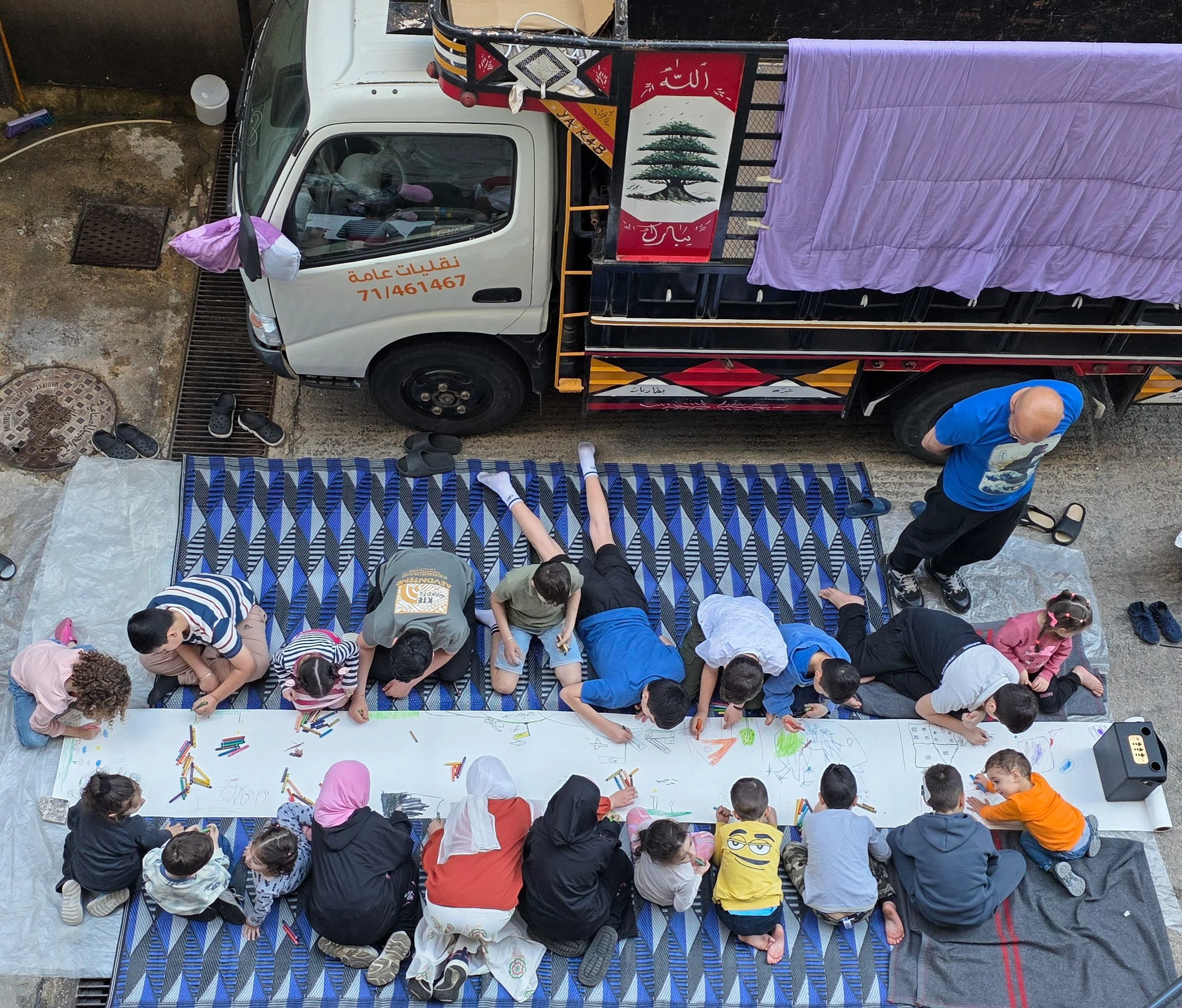
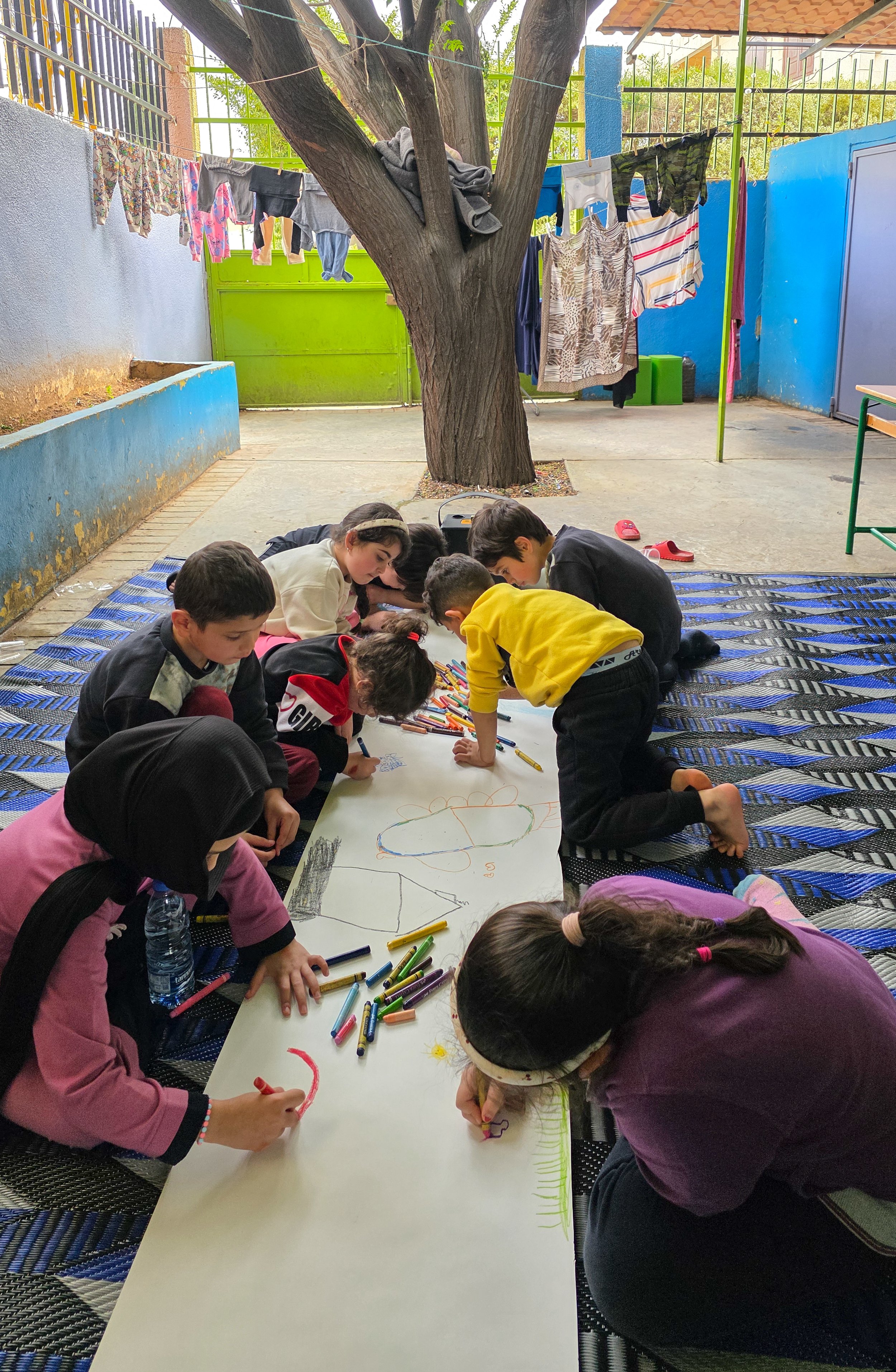
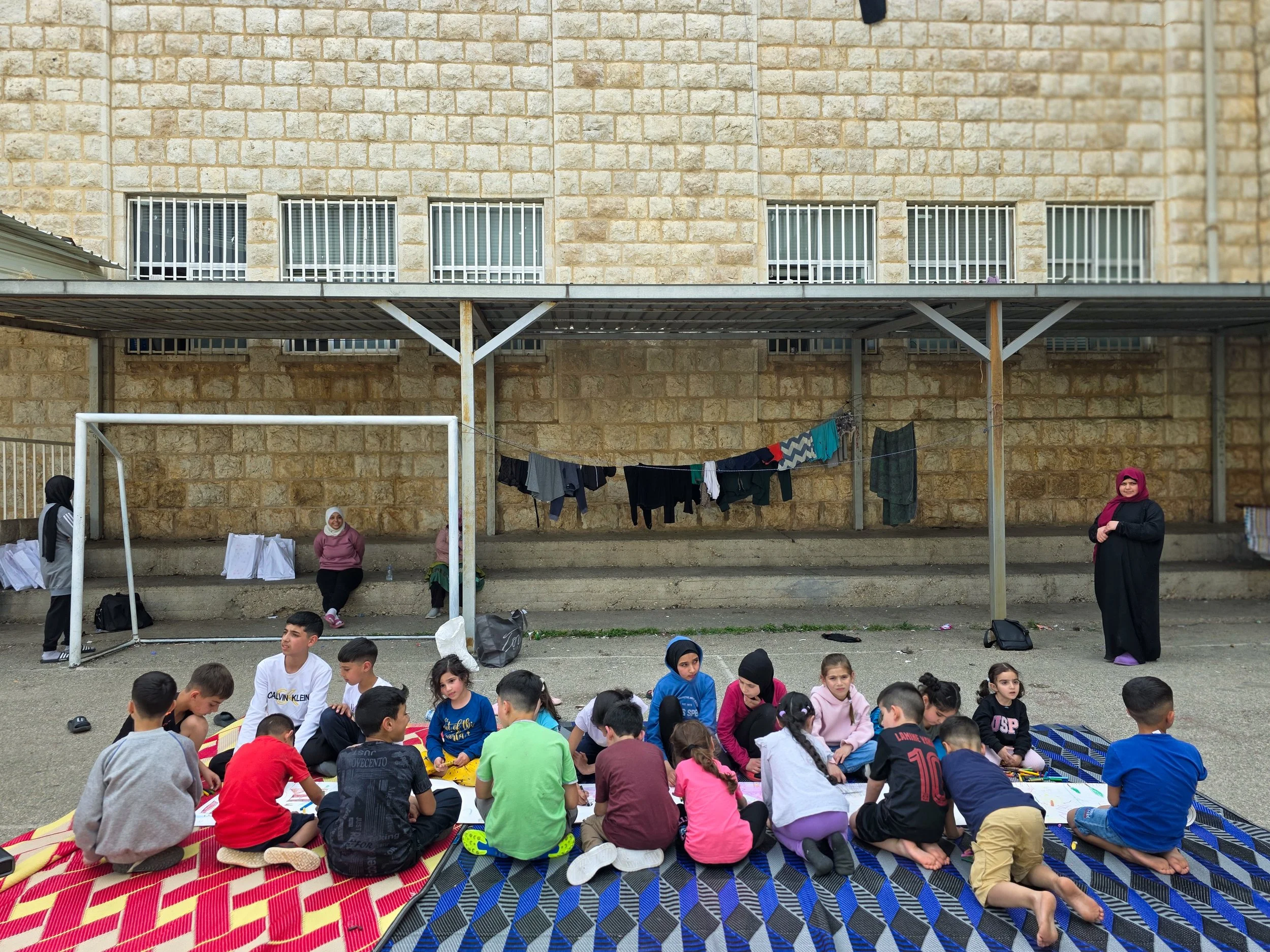
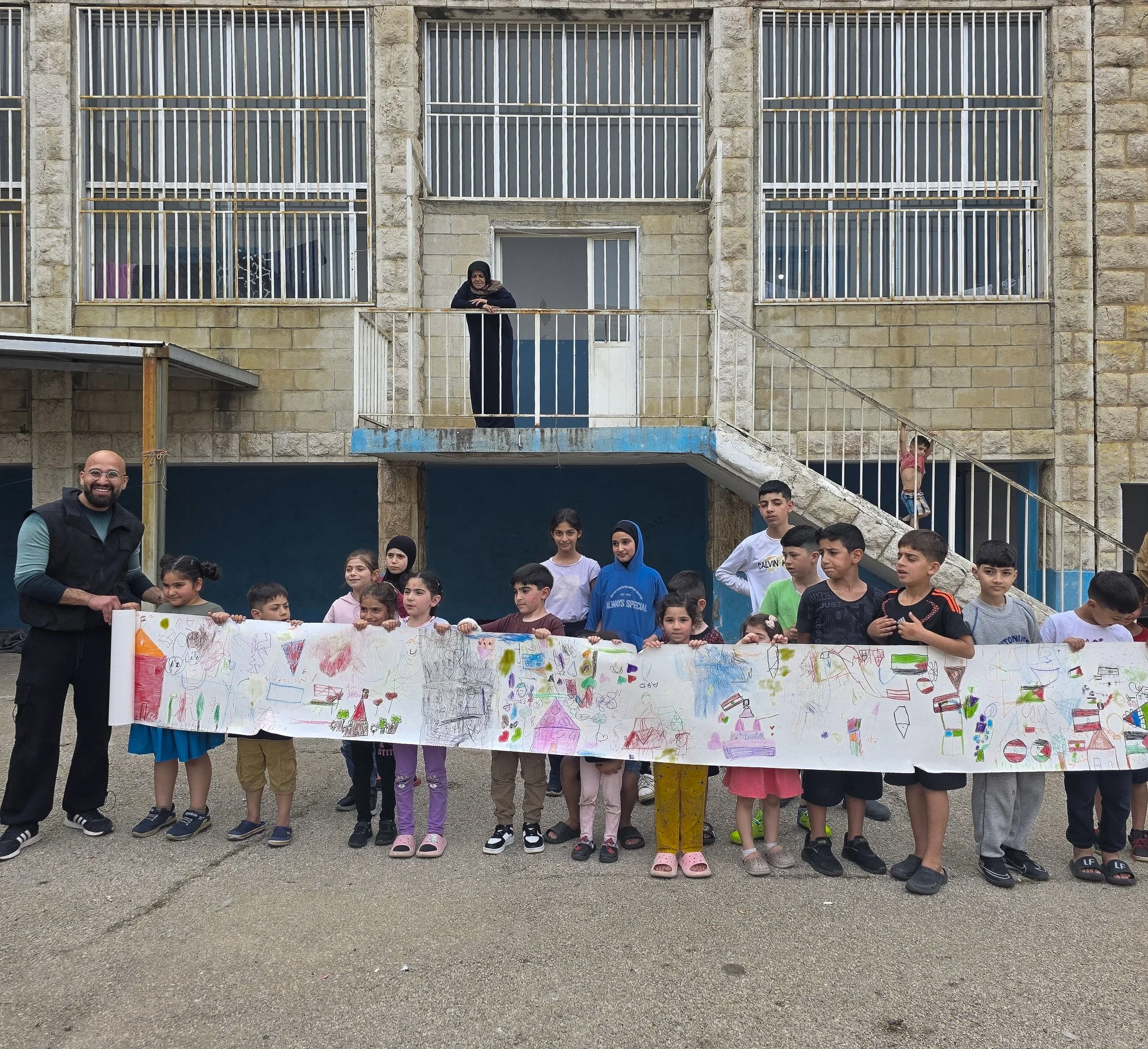
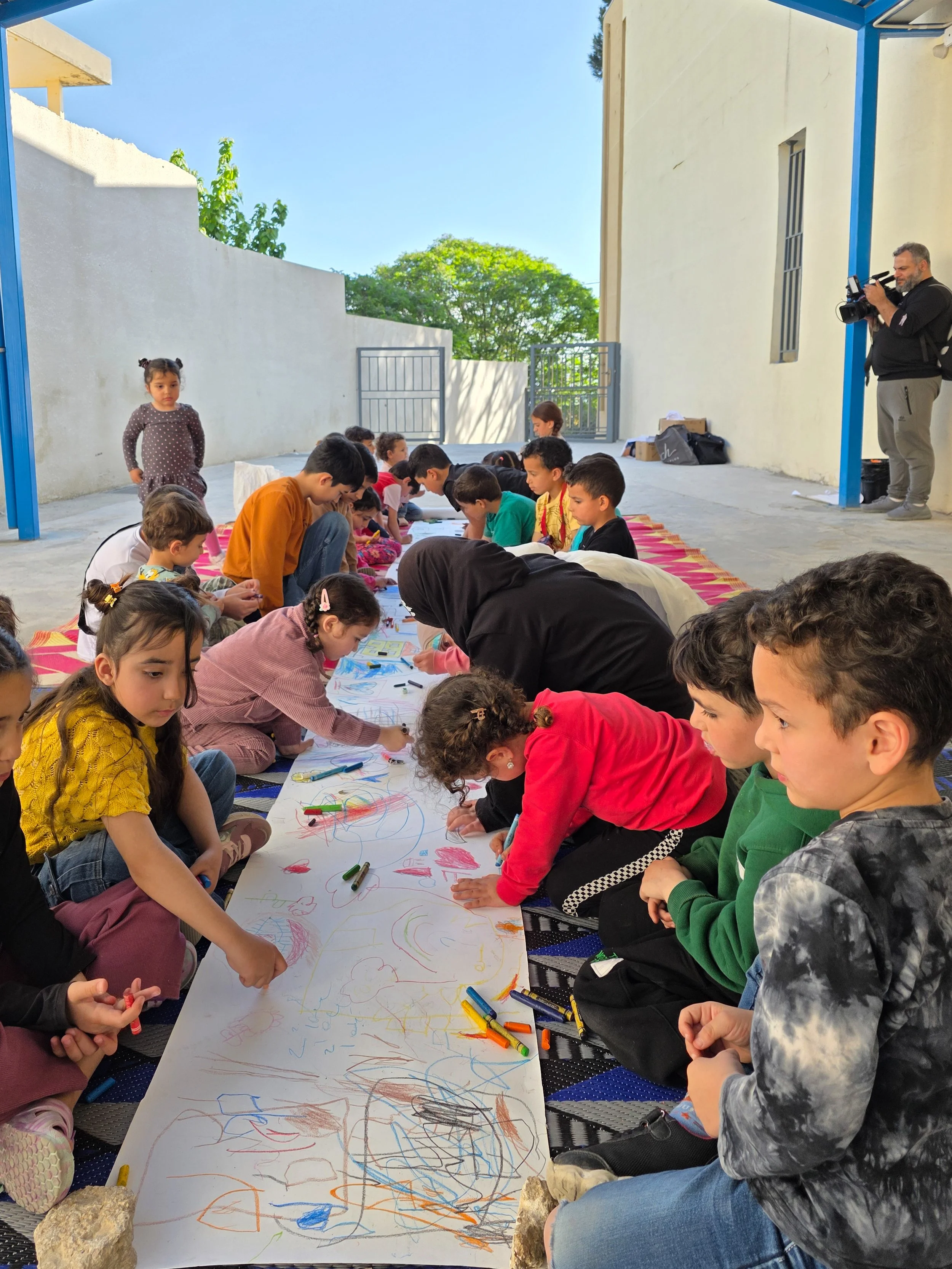
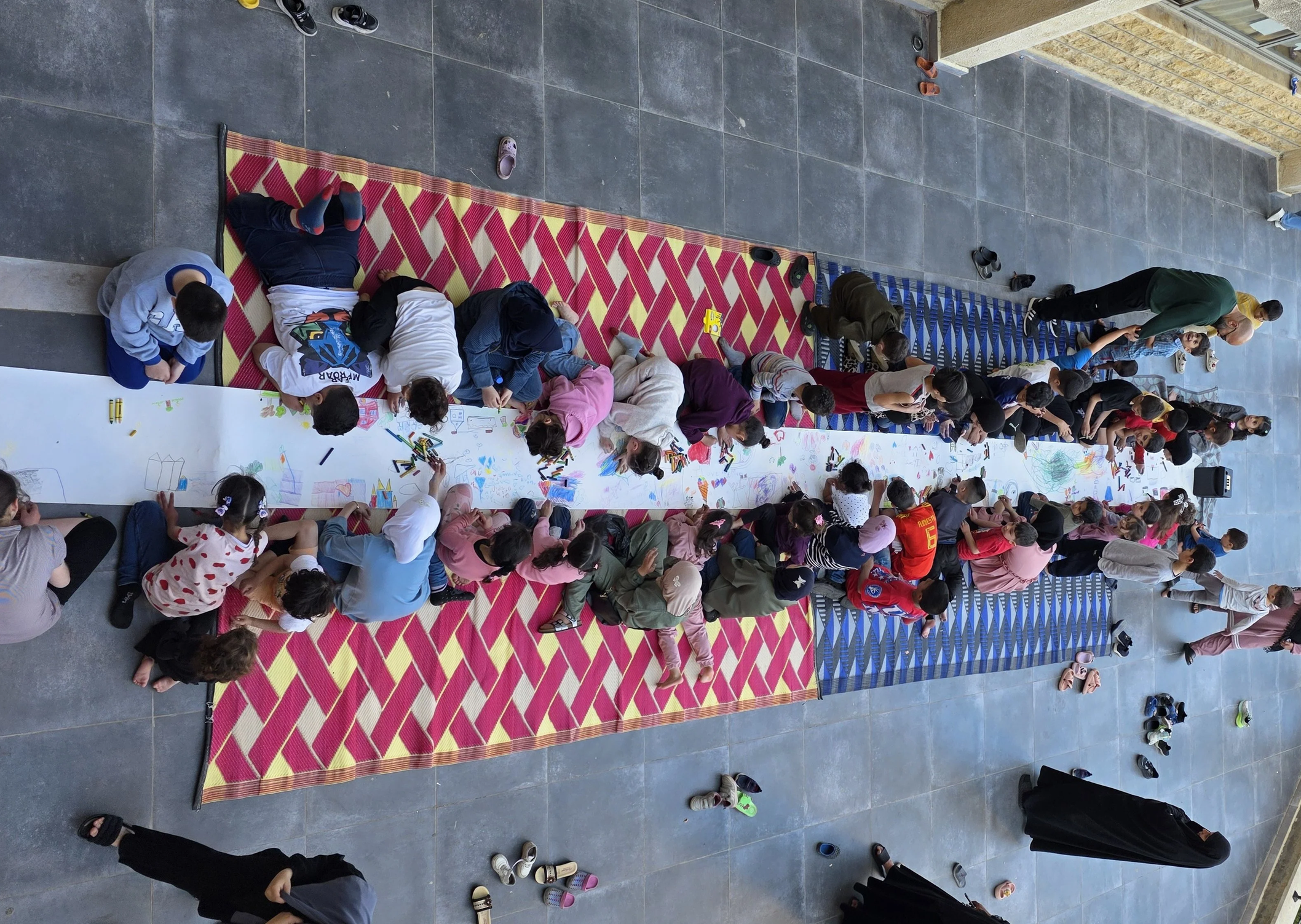
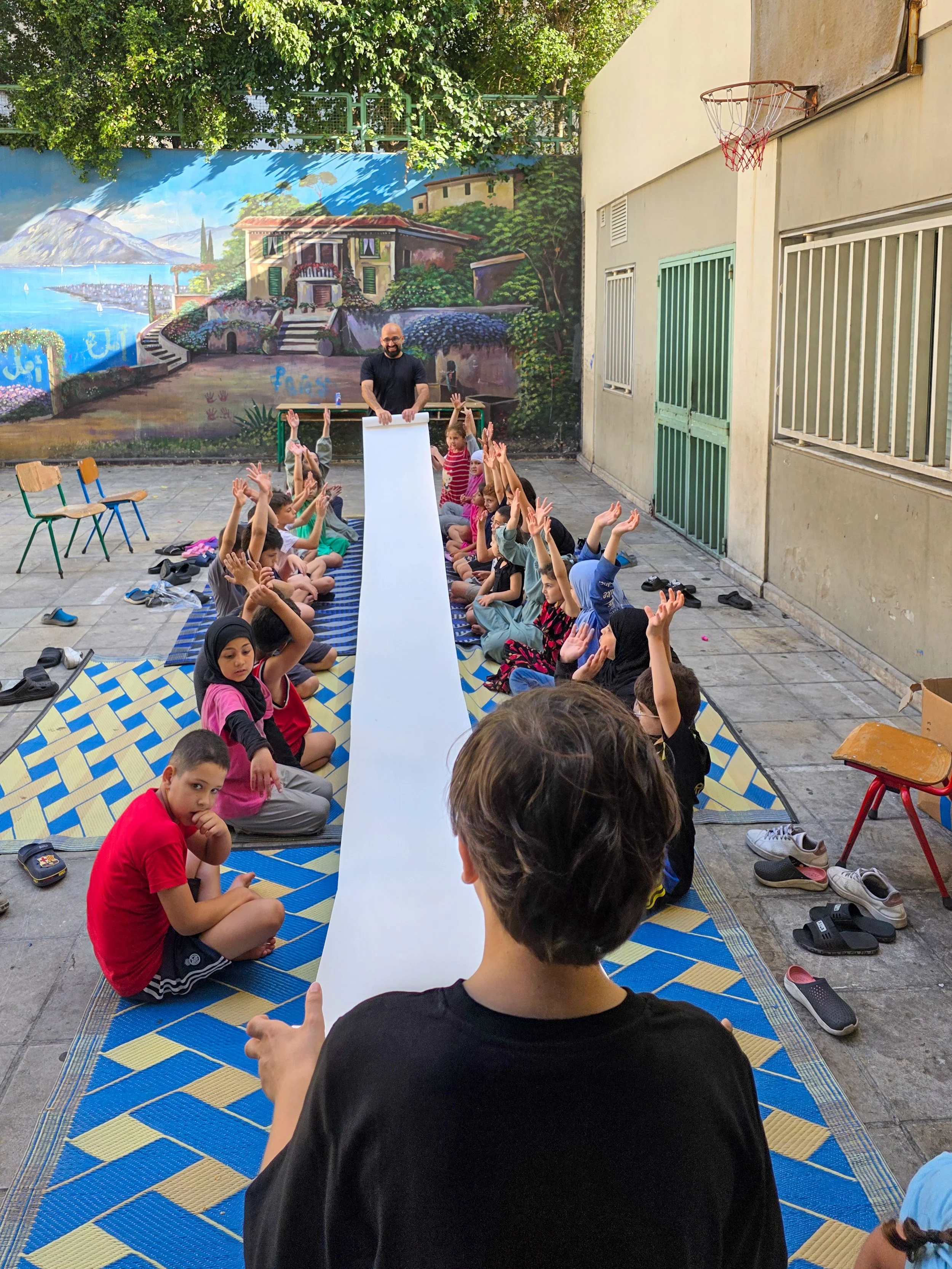
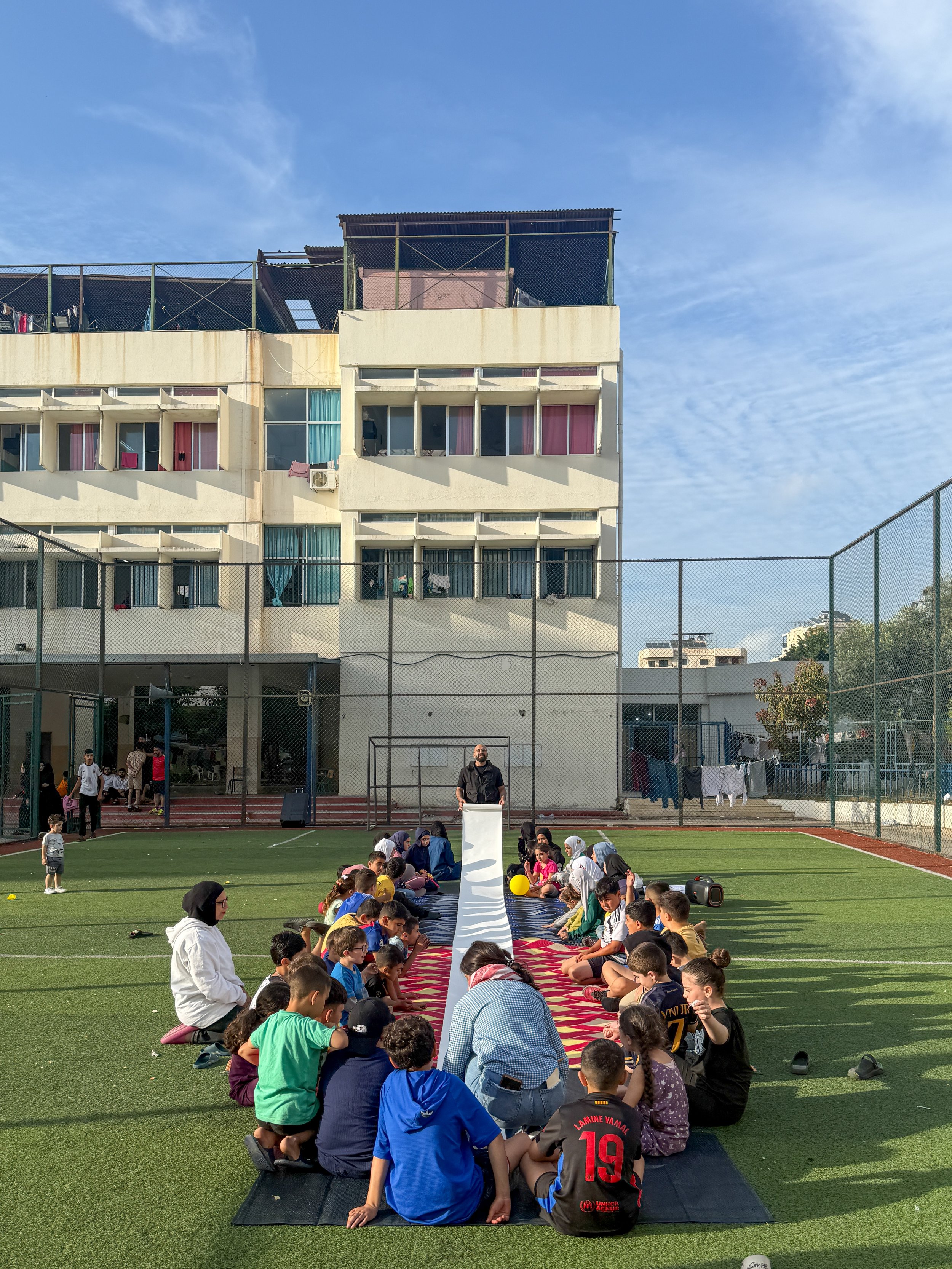
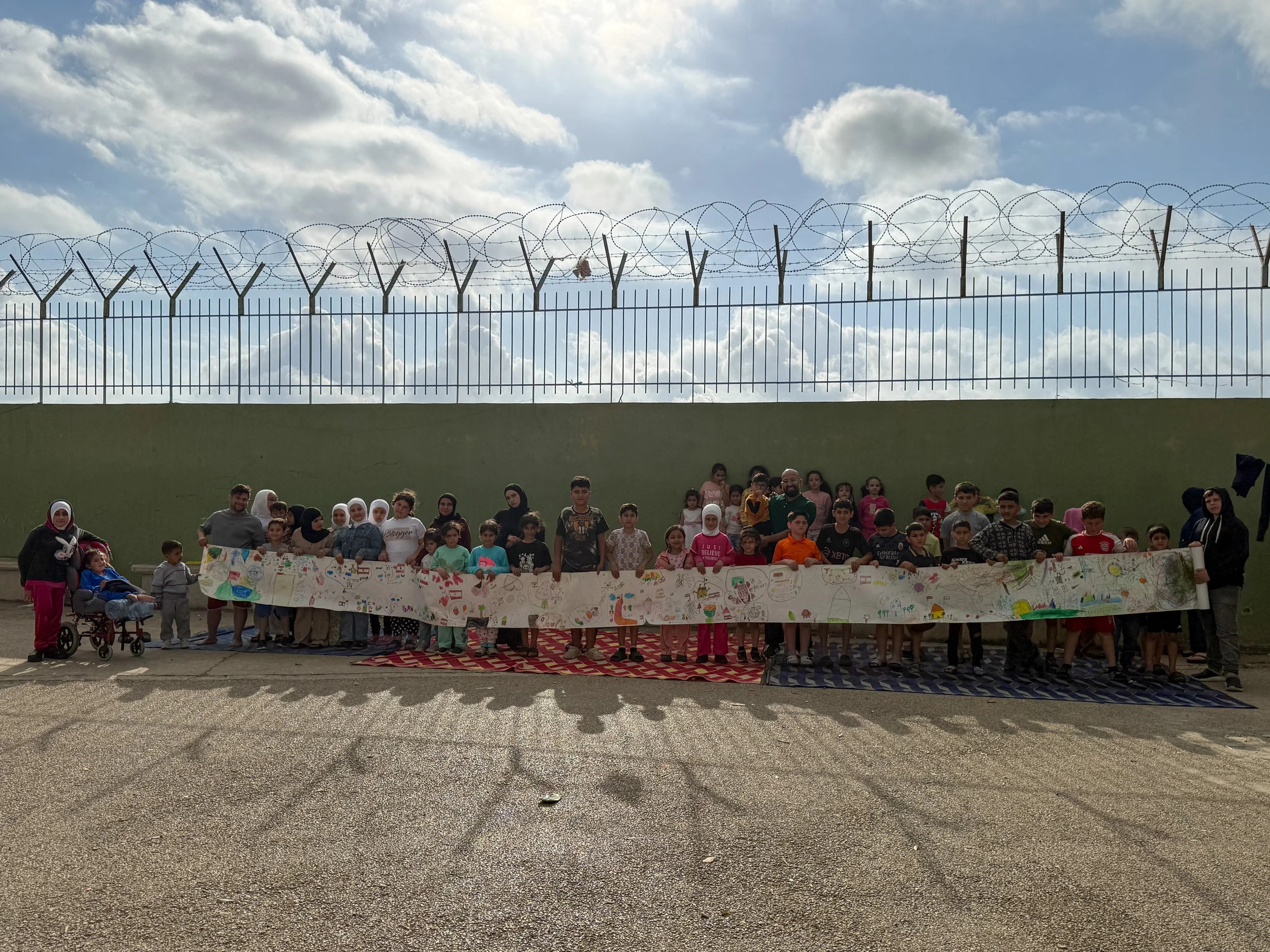
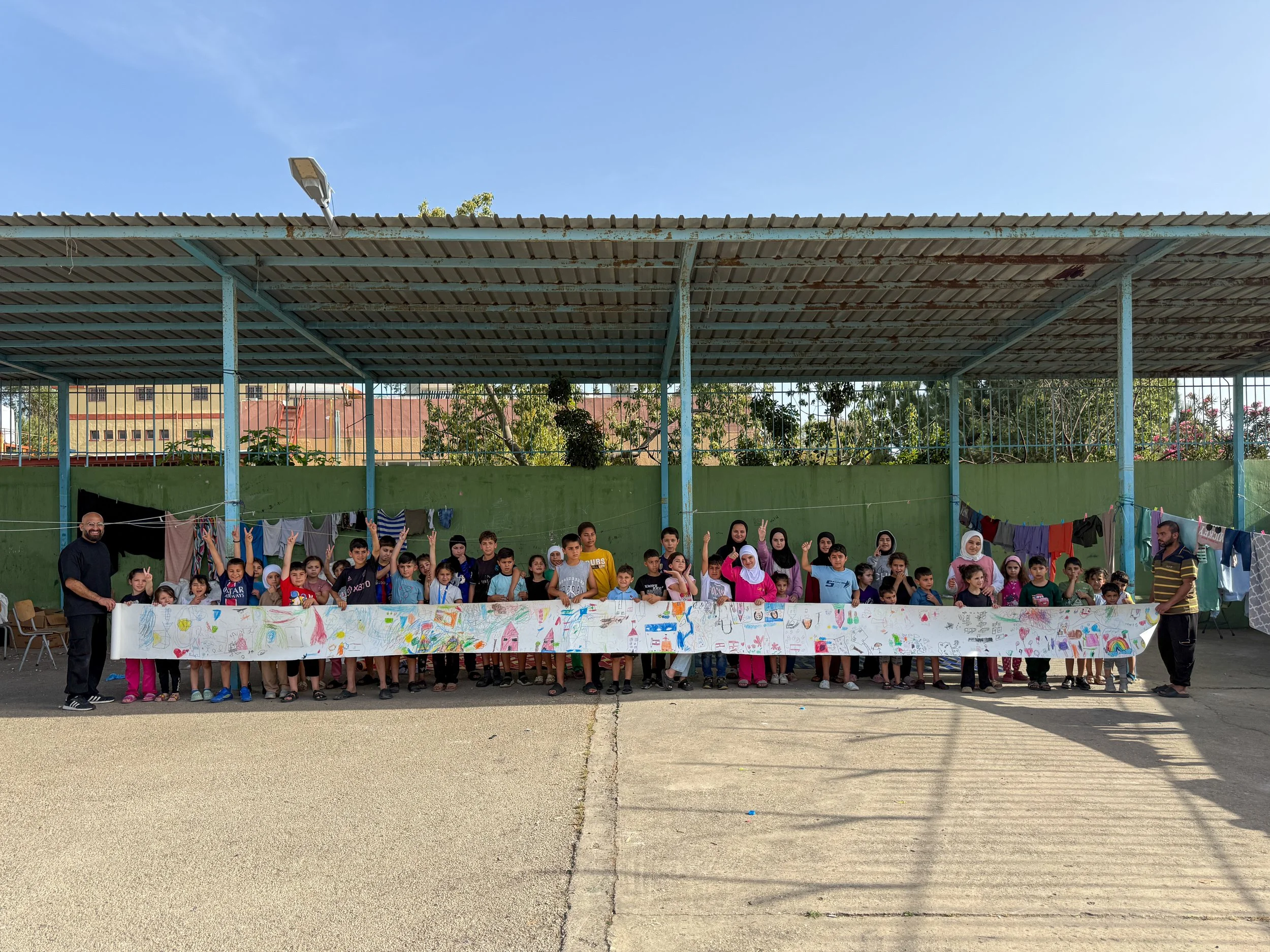
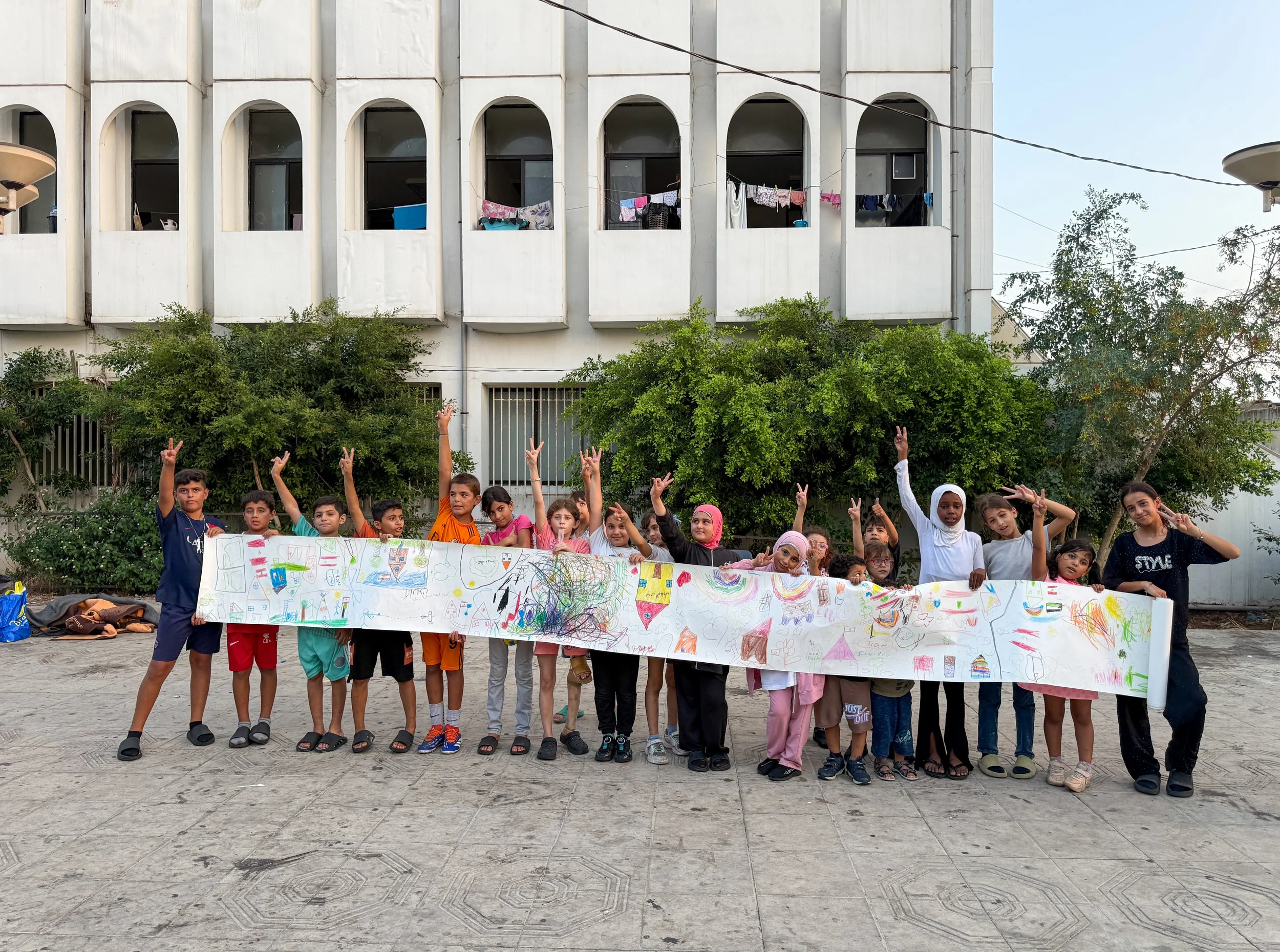
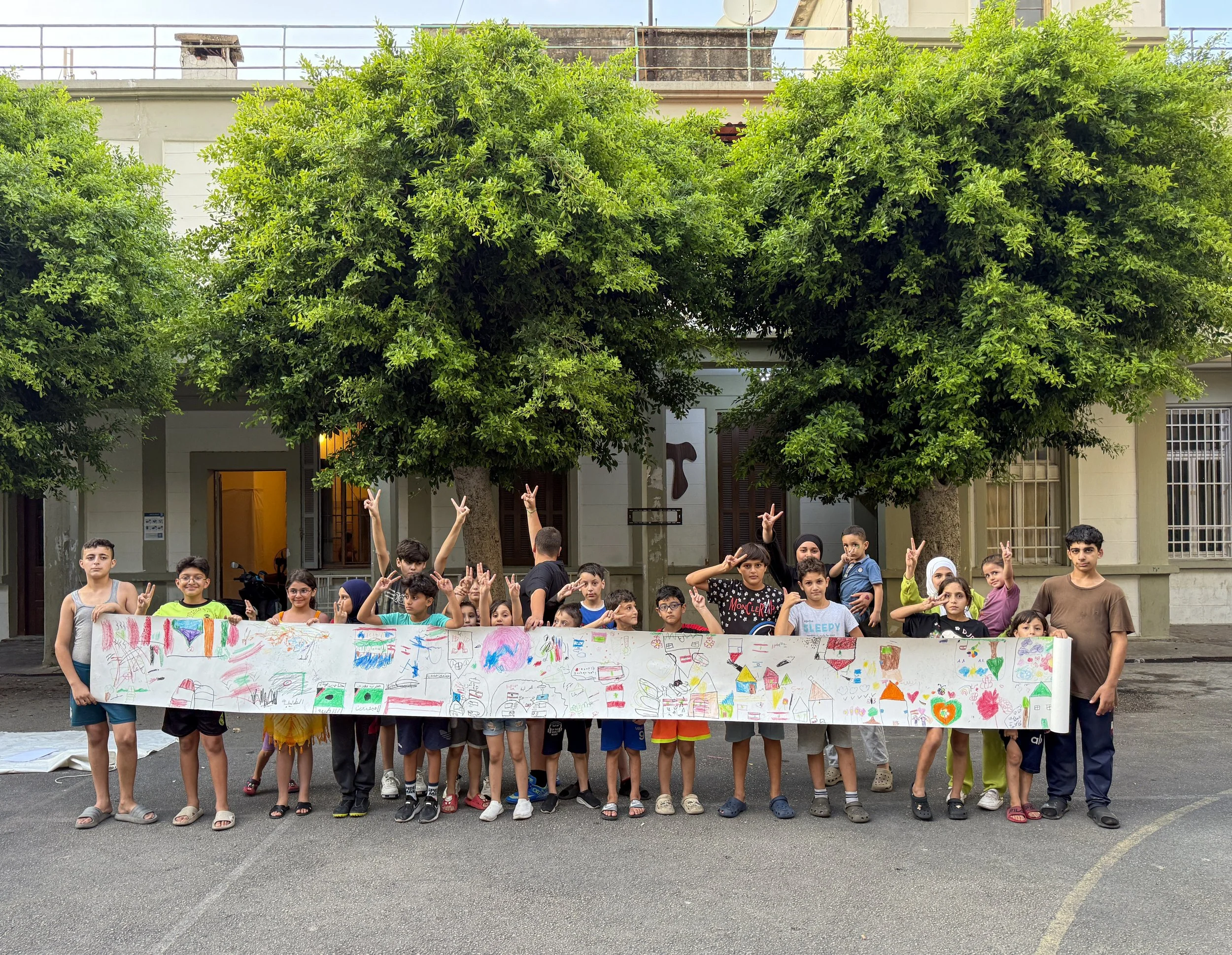
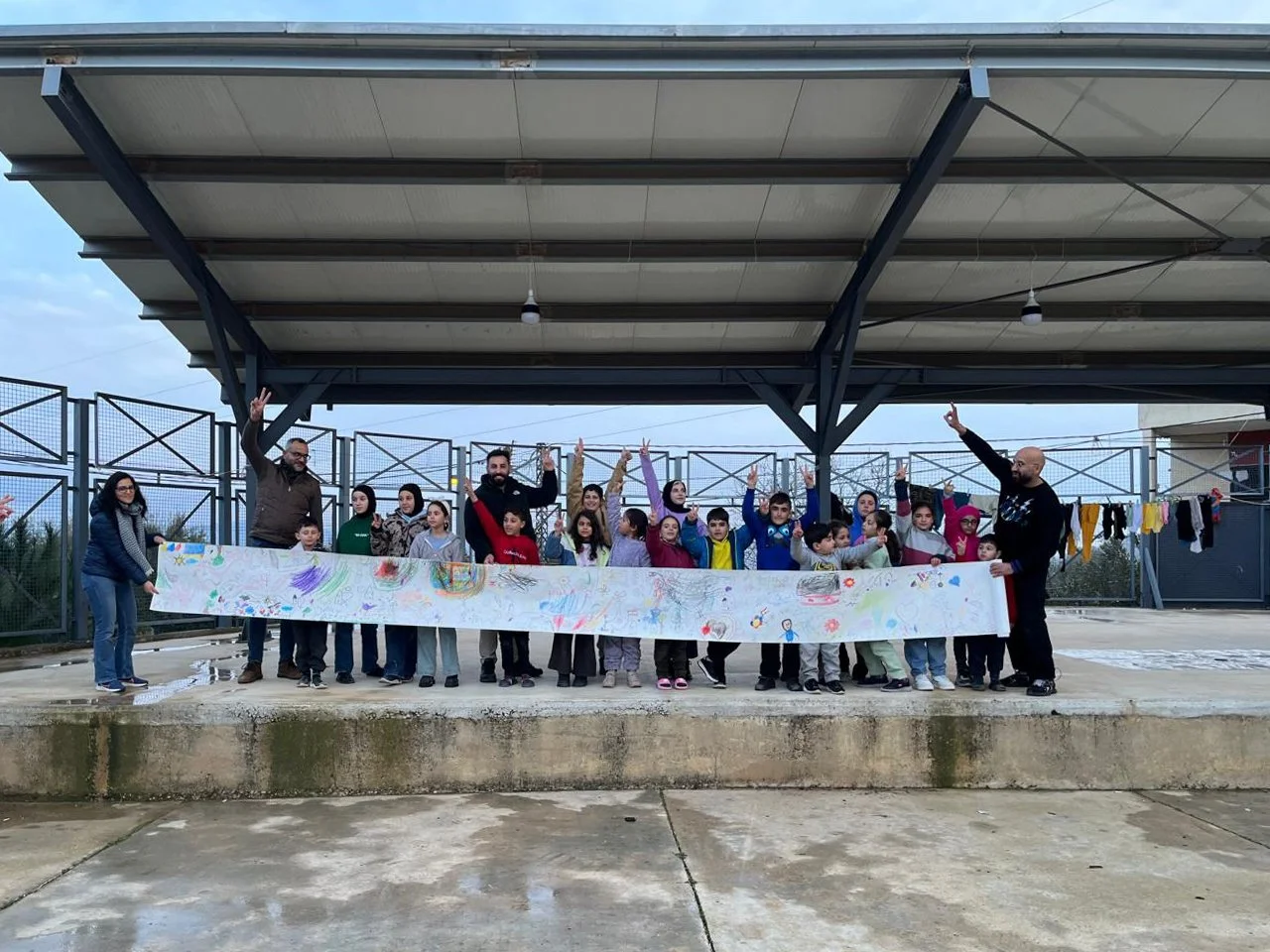
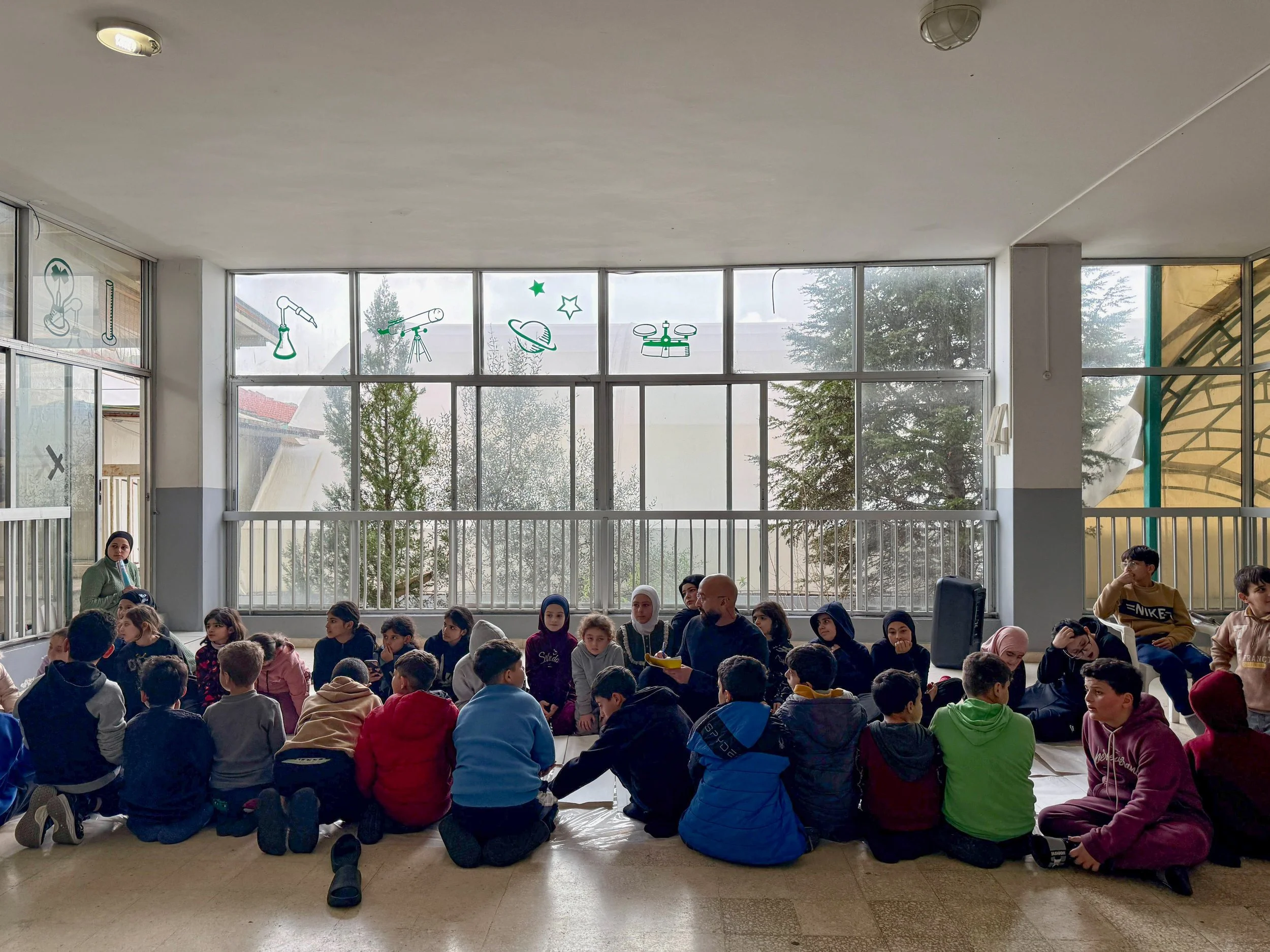
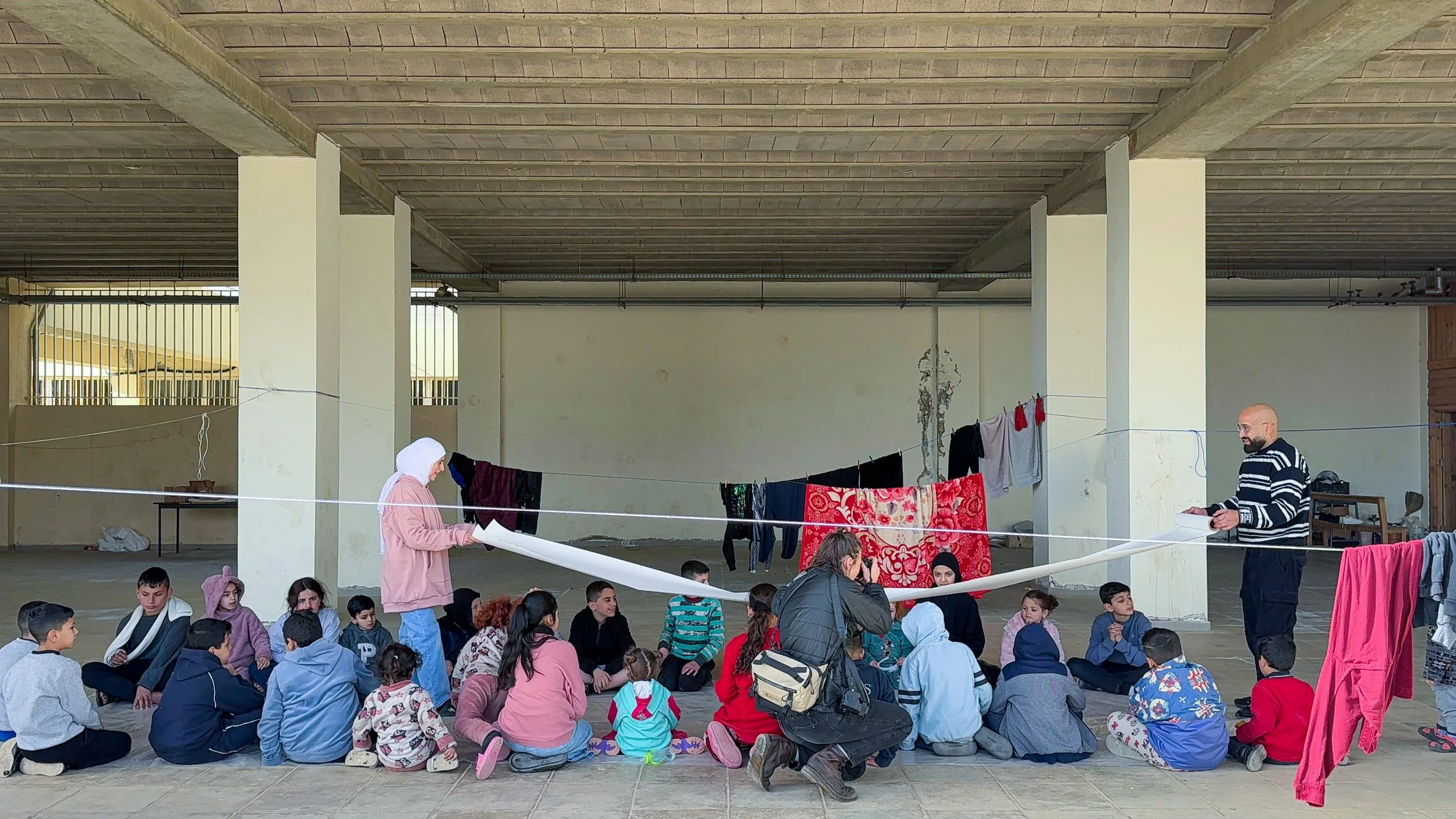
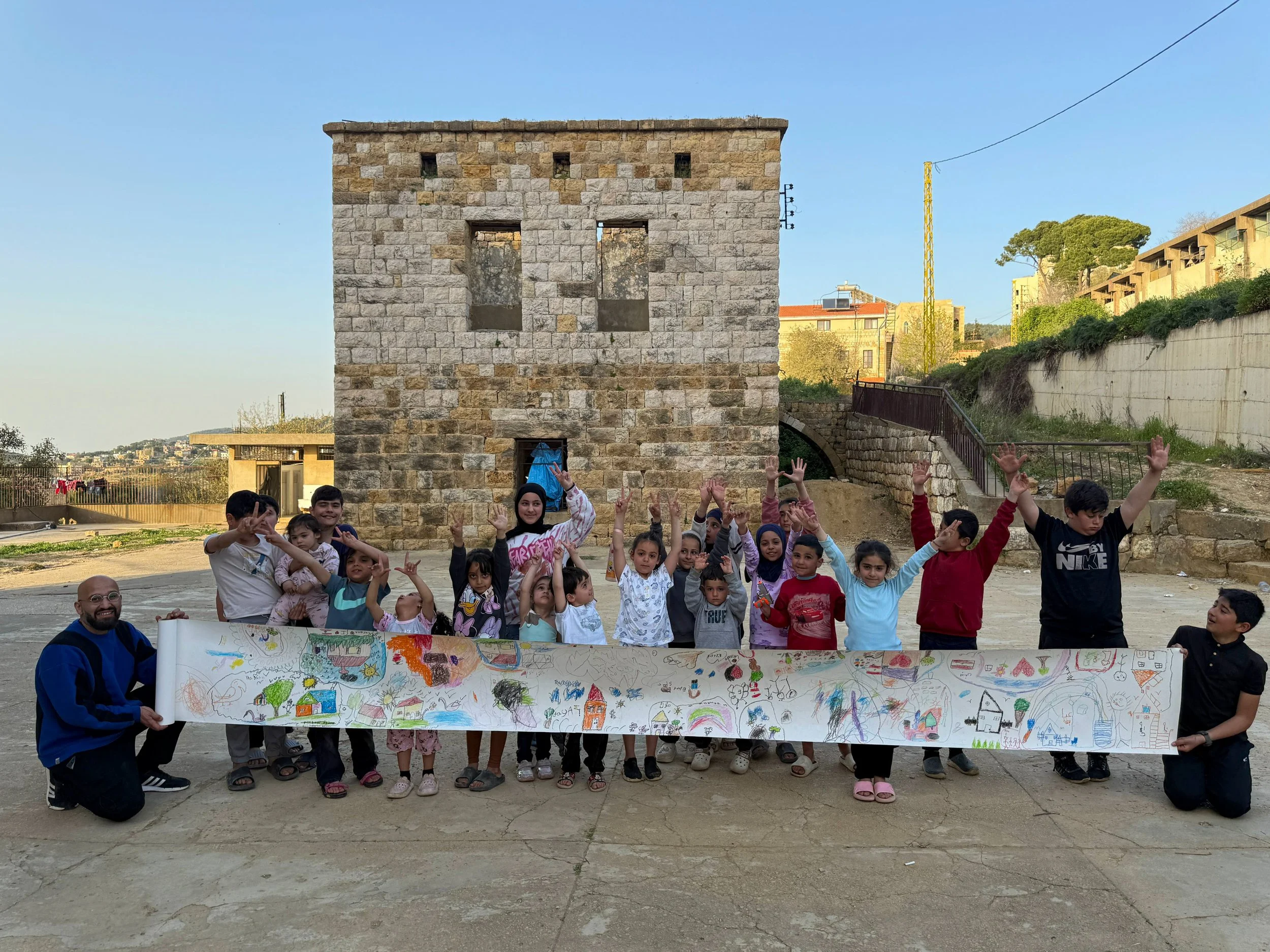
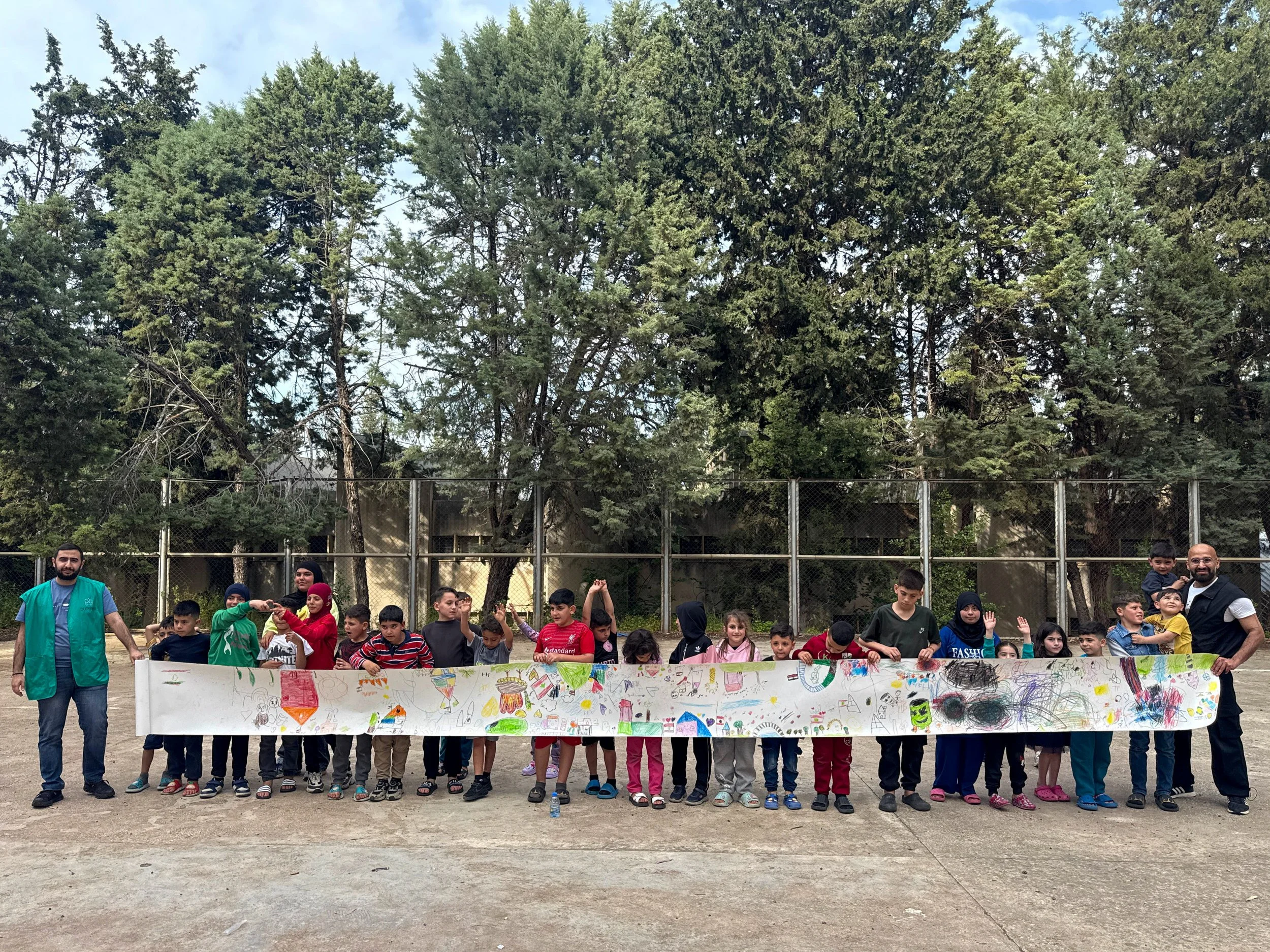
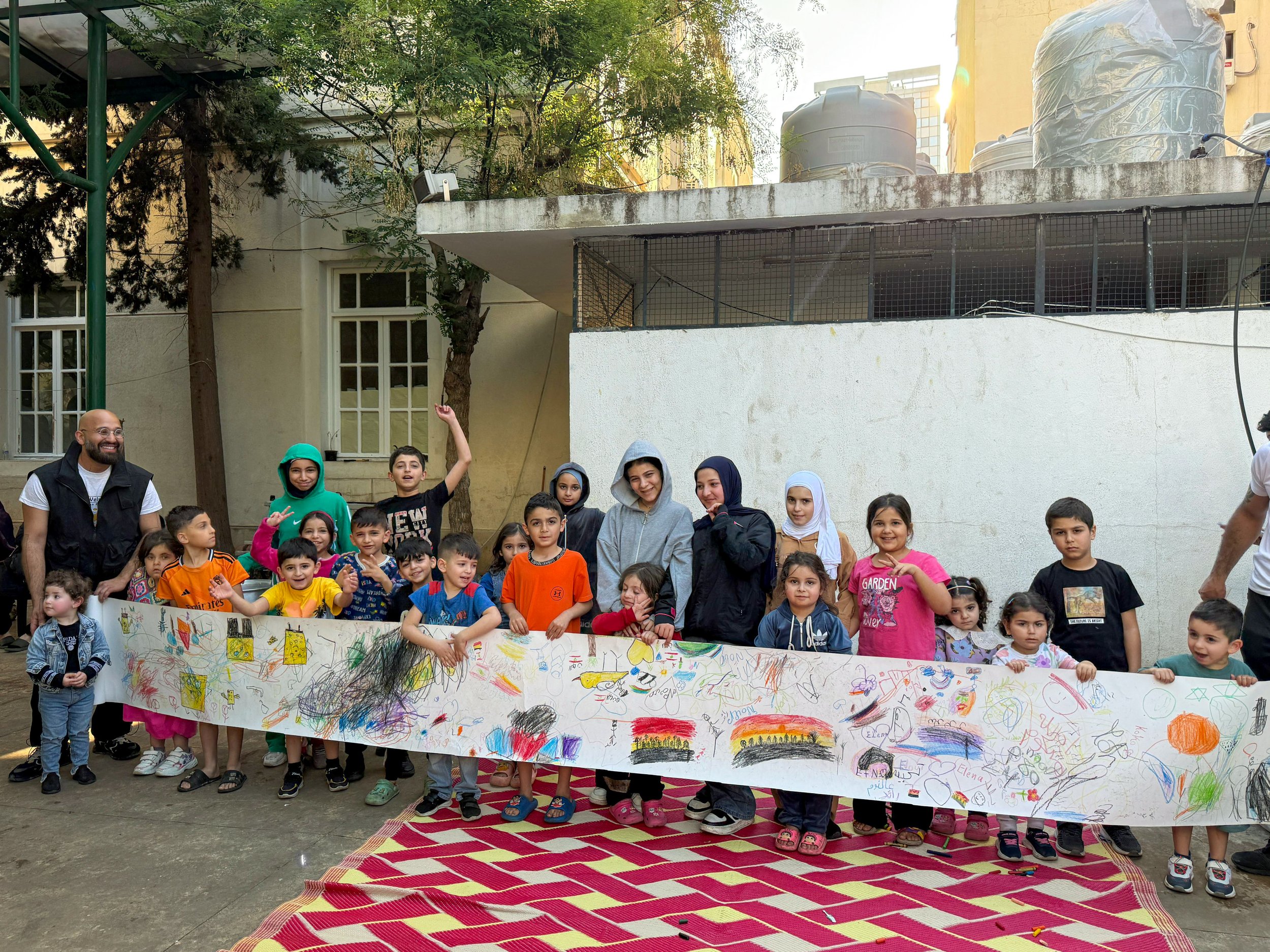
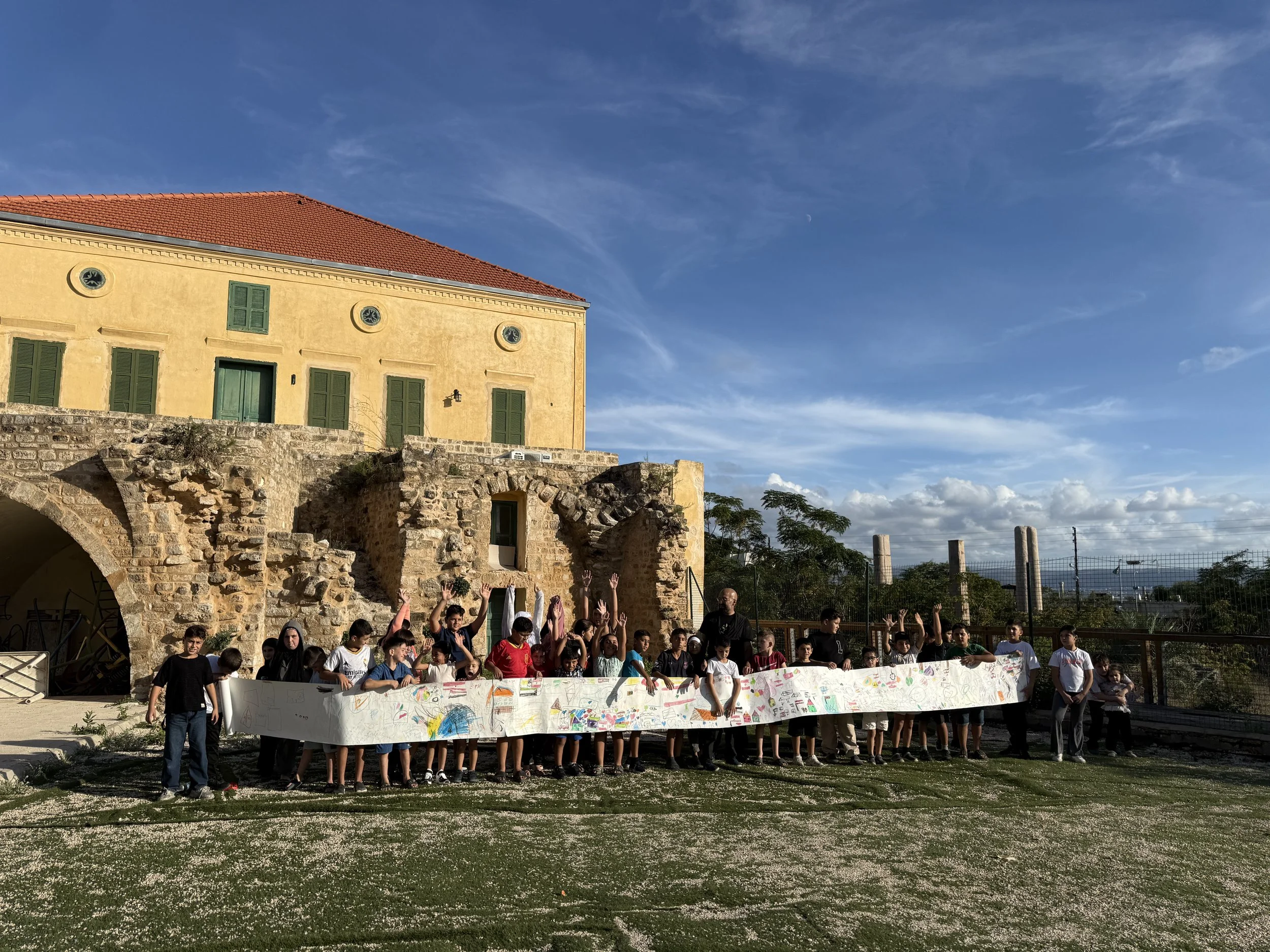
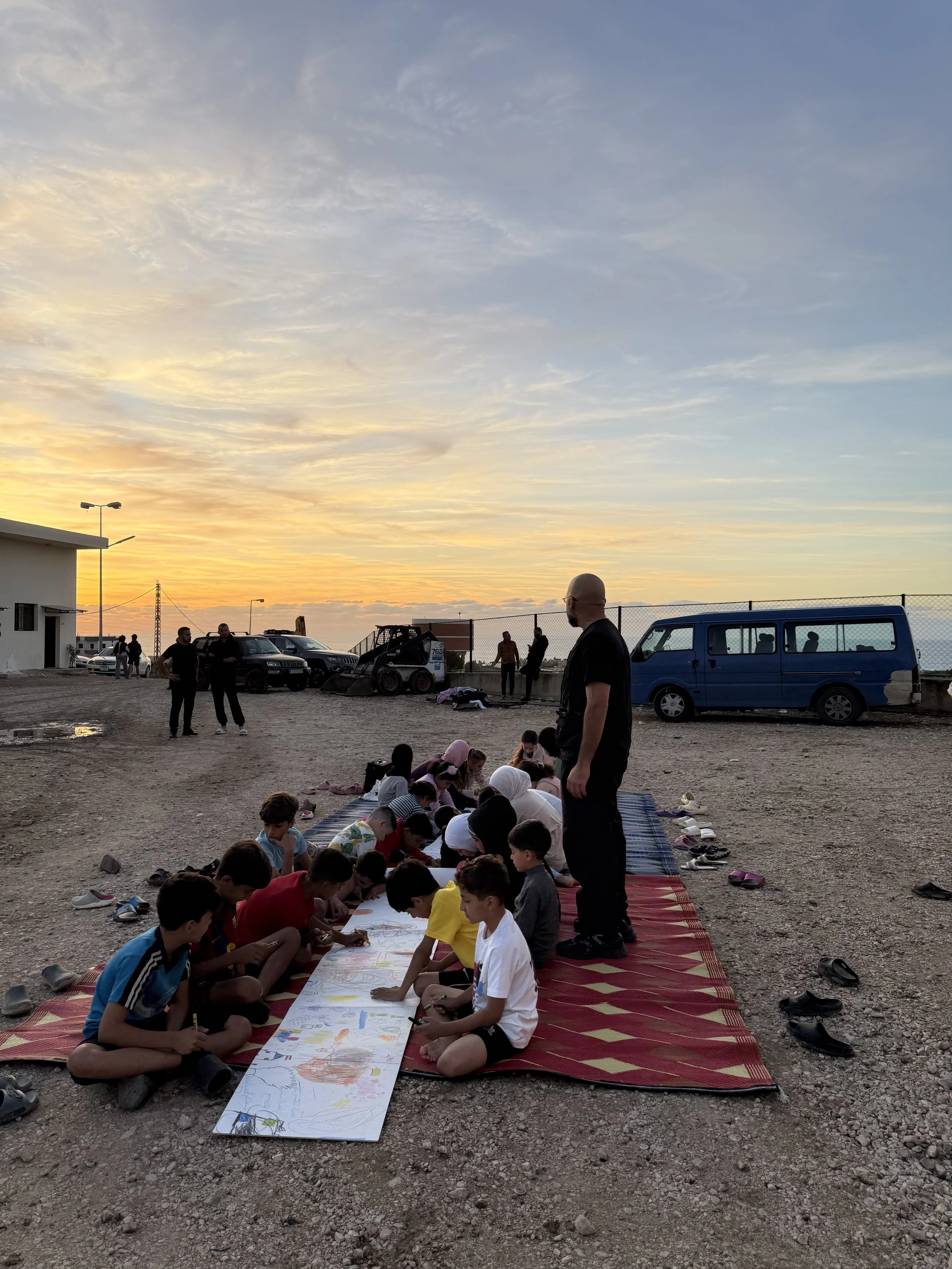
Each session begins with facilitated dialogue and storytelling activities that encourage participation, emotional reflection, trust-building, and collective interaction among children. Participants are then invited to engage in large-scale collaborative drawing sessions using a continuous ten-meter paper roll specifically designed to create a shared visual space for collective expression.
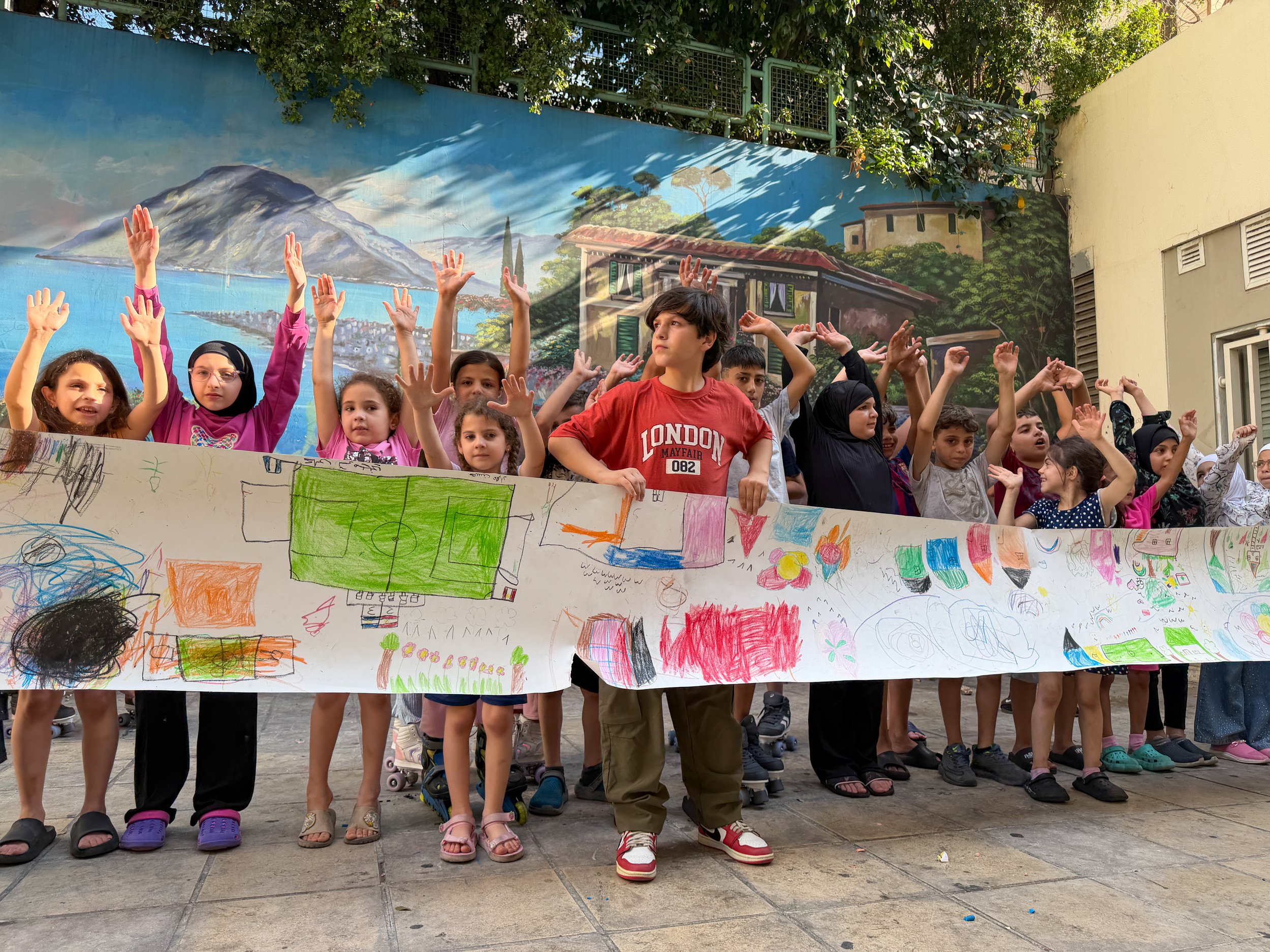
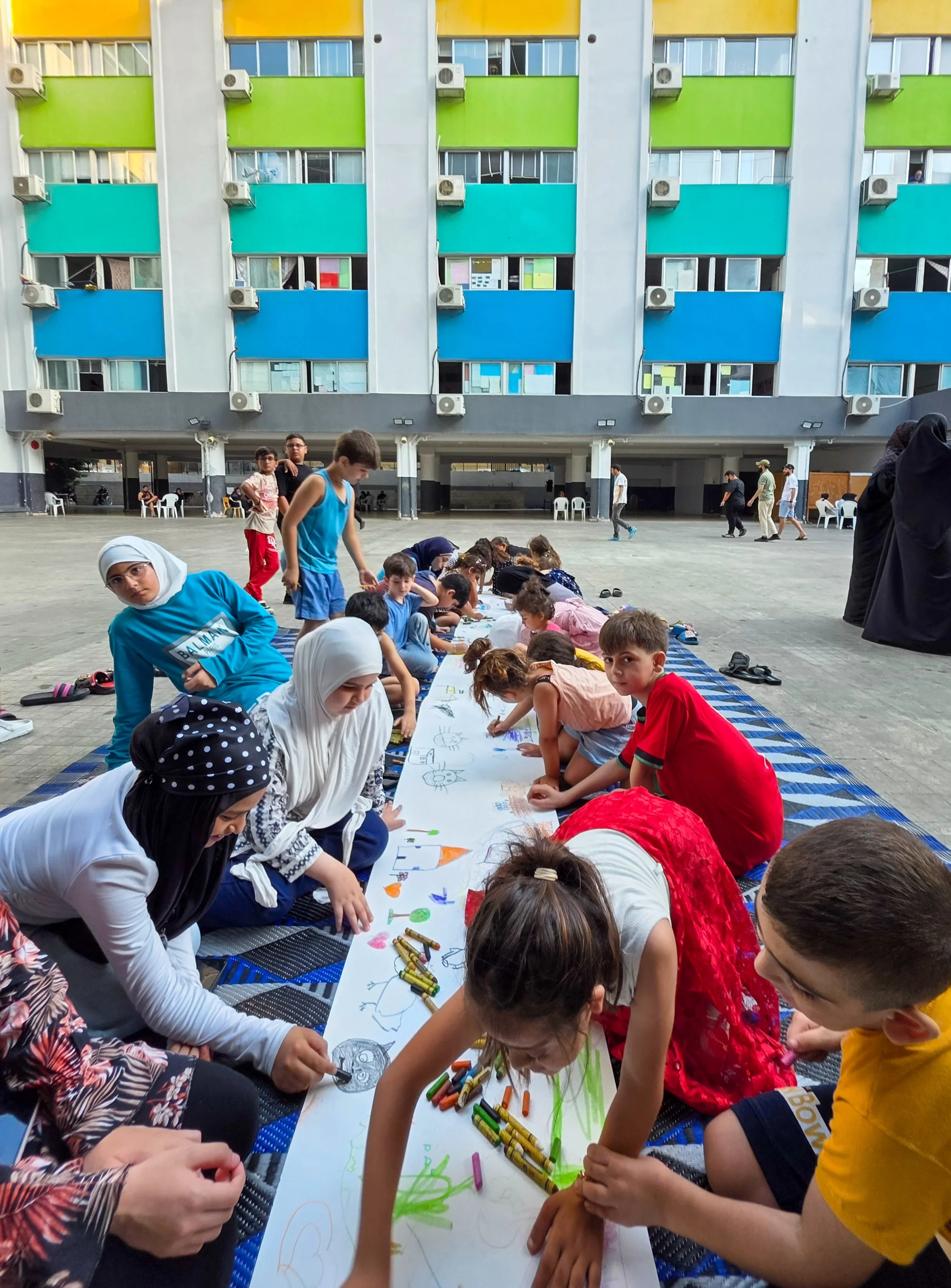
The paper roll functions both as an artistic and psychosocial tool. Its uninterrupted surface encourages movement, participation, and interaction between children while reducing the pressure associated with individual performance or “correct” drawing outcomes. By working collectively within the same continuous space, children are encouraged to coexist, contribute freely, observe one another’s expressions, and gradually build a shared visual narrative. The scale and openness of the paper also allow children to physically engage with the space through gesture, imagination, and collaborative mark-making, reinforcing connection, agency, and collective presence.
Art Kits Distribution
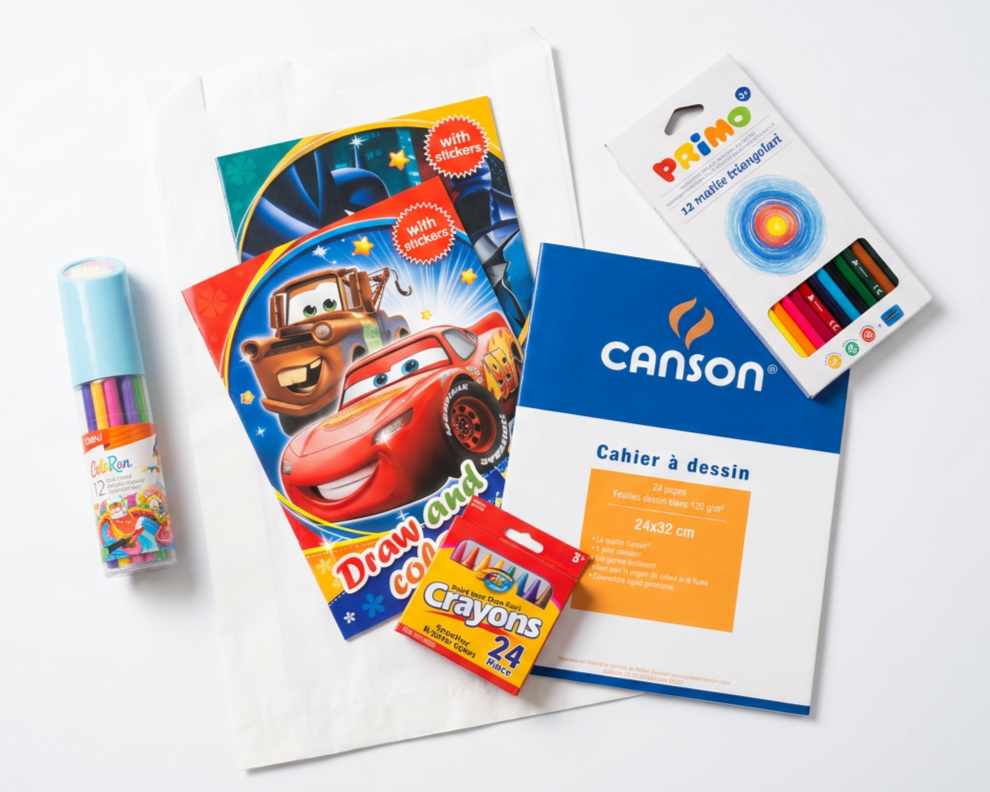
At the conclusion of each session, participating children receive individual art kits containing sketchbooks, coloring materials, watercolor pens, and drawing tools. The kits function both as a recognition of participation and as a practical psychosocial support resource that encourages continued creative expression and engagement beyond the workshop environment.
PHASE 1 — SAFE WHITE SPACE
Field Visits and Psychosocial Artistic Sessions
The first phase focuses on implementing mobile art sessions across public schools, collective shelters, and underserved areas with limited access to psychosocial and cultural programming. Designed as a flexible and low-infrastructure intervention, the project operates directly within communities affected by war and displacement, enabling accessibility in emergency and high-need contexts.
Each session begins with facilitated dialogue and storytelling activities that encourage participation, emotional reflection, trust-building, and collective interaction among children. Participants are then invited to engage in large-scale collaborative drawing sessions using a continuous ten-meter paper roll specifically designed to create a shared visual space for collective expression.
The paper roll functions both as an artistic and psychosocial tool. Its uninterrupted surface encourages movement, participation, and interaction between children while reducing the pressure associated with individual performance or “correct” drawing outcomes. By working collectively within the same continuous space, children are encouraged to coexist, contribute freely, observe one another’s expressions, and gradually build a shared visual narrative. The scale and openness of the paper also allow children to physically engage with the space through gesture, imagination, and collaborative mark-making, reinforcing connection, agency, and collective presence.
Art Kits Distribution
At the conclusion of each session, participating children receive individual art kits containing sketchbooks, coloring materials, watercolor pens, and drawing tools. The kits function both as a recognition of participation and as a practical psychosocial support resource that encourages continued creative expression and engagement beyond the workshop environment.
PHASE 1 — SAFE WHITE SPACE
Field Visits and Psychosocial Artistic Sessions
Art Kits Distributed to children
Art Kits Distributed to children
Children Engaged
Art Kits Distributed
-
![]()
Aaitat Public School
Children Engaged: 28 | Art Kits Distributed: 32
-
![]()
Hussein Massoud High School
Children Engaged: 32 | Art Kits Distributed: 35
-
![]()
Al Amliya Public High School - Ras Al Nabeh
Children Engaged: 42 | Art Kits Distributed: 45
-
![]()
Social and Cultural Center - Choueifat
Children Engaged: 28 | Art Kits Distributed: 28
-
![]()
Choueifat El Aamroussieh Public High School
Children Engaged: 21 | Art Kits Distributed: 23
-
![]()
Bedgan Center - Near Sawfar
Children Engaged: 12 | Art Kits Distributed: 12
-
![]()
Majdel Banaa Public School
Children Engaged: 13 | Art Kits Distributed: 13
-
![]()
Abu Jumaa Center
Children Engaged: 25 | Art Kits Distributed: 28
-
![]()
Al Basateen Public School
Children Engaged: 22 | Art Kits Distributed: 25
-
![]()
Verdun Abandoned Building
Children Engaged: 20 | Art Kits Distributed: 24
-
![]()
Vera Frangieh School
Children Engaged: 10 | Art Kits Distributed: 14
-
![]()
Tony Frangieh School
Children Engaged: 25 | Art Kits Distributed: 27
-
![]()
Kaferhabou Public School
Children Engaged: 15 | Art Kits Distributed: 15
-
![]()
Kfarmatta Public School
Children Engaged: 32 | Art Kits Distributed: 34
-
![]()
Kaifoun Public School
Children Engaged: 55 | Art Kits Distributed: 59
-
![]()
Bater Public School
Children Engaged: 48 | Art Kits Distributed: 54
-
![]()
Shakib Ereslan Public School / 1
Children Engaged: 33 | Art Kits Distributed: 37
-
![]()
Shakib Ereslan Public School / 2
Children Engaged: 20 | Art Kits Distributed: 37
-
![]()
Lycée Abdel Kader
Children Engaged: 36 | Art Kits Distributed: 39
-
![]()
Marouf Saad Public School
Children Engaged: 58 | Art Kits Distributed: 64
-
![]()
Siblin Public School / 1
Children Engaged: 52 | Art Kits Distributed: 52
-
![]()
Siblin Public School / 2
Children Engaged: 48 | Art Kits Distributed: 56
-
![]()
Bir Hassan Technical College - University
Children Engaged: 30 | Art Kits Distributed: 32
-
![]()
Saint Joseph School of the Capuchin Fathers
Children Engaged: 25 | Art Kits Distributed: 32
-
![]()
Baisour Public High School
Children Engaged: 36 | Art Kits Distributed: 39
-
![]()
Dhour El Choueir Public High School
Children Engaged: 44 | Art Kits Distributed: 44
-
![]()
Mtein Public Technical School
Children Engaged: 31 | Art Kits Distributed: 34
-
![]()
Abay Al Kabouchieh School
Children Engaged: 28 | Art Kits Distributed: 31
-
![]()
Zgharta Technical School
Children Engaged: 39 | Art Kits Distributed: 44
-
![]()
Abi Bakr Siddeeq School - Al Maqased
Children Engaged: 22 | Art Kits Distributed: 23
-
![]()
Beit Al Madina - Tyre
Children Engaged: 48 | Art Kits Distributed: 53
-
![]()
Abbasiyeh Shelter - Tyre
Children Engaged: 26 | Art Kits Distributed: 30
At the core of the project is the transformation of the collective paper rolls into a series of leporello artist’s books, preserving the children’s drawings within a continuous visual narrative. This phase draws on Abed Al Kadiri’s artistic and curatorial practice, which explores conflict, collective memory, migration, and cultural preservation through publishing, artist’s books, and collaborative archival practices.
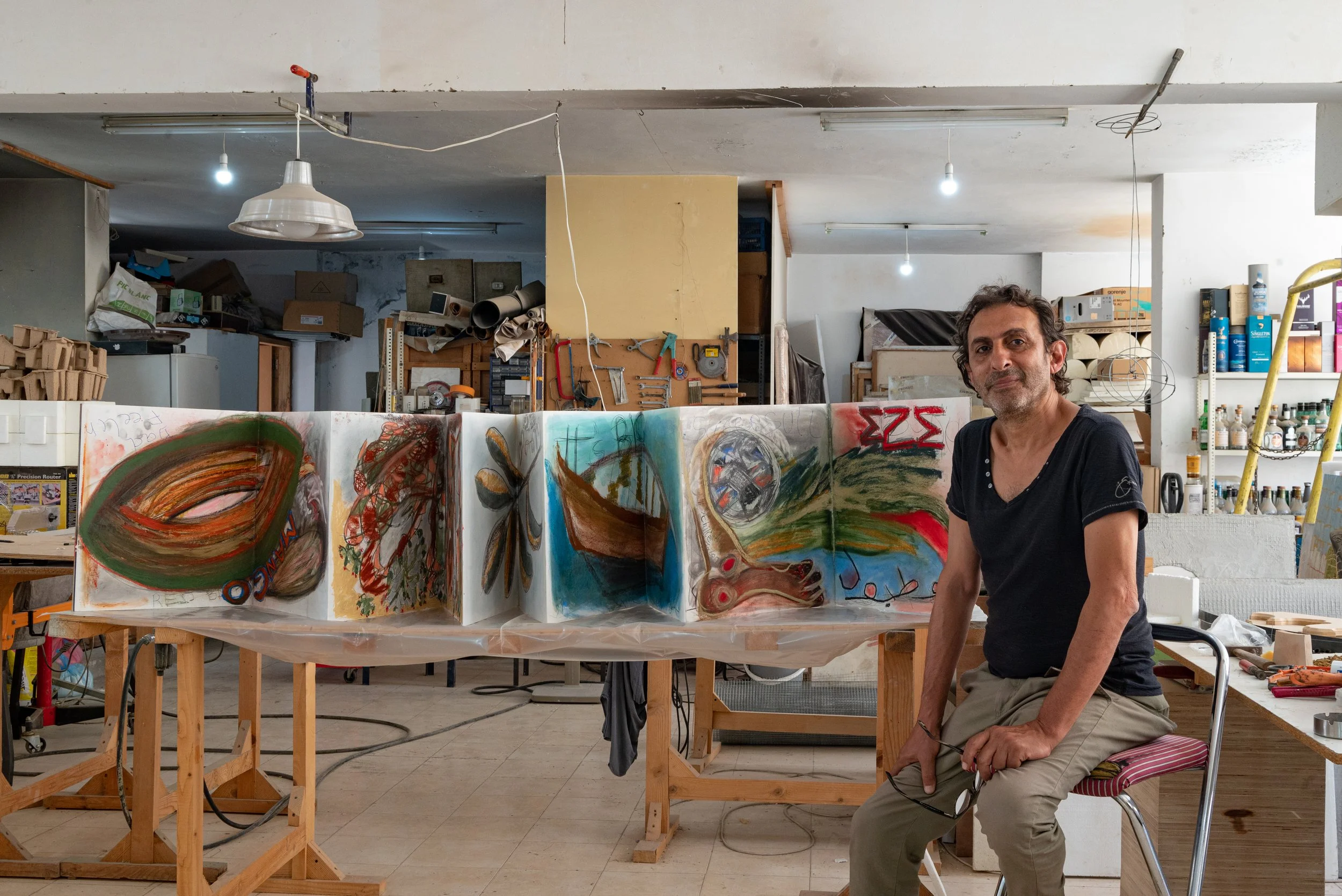
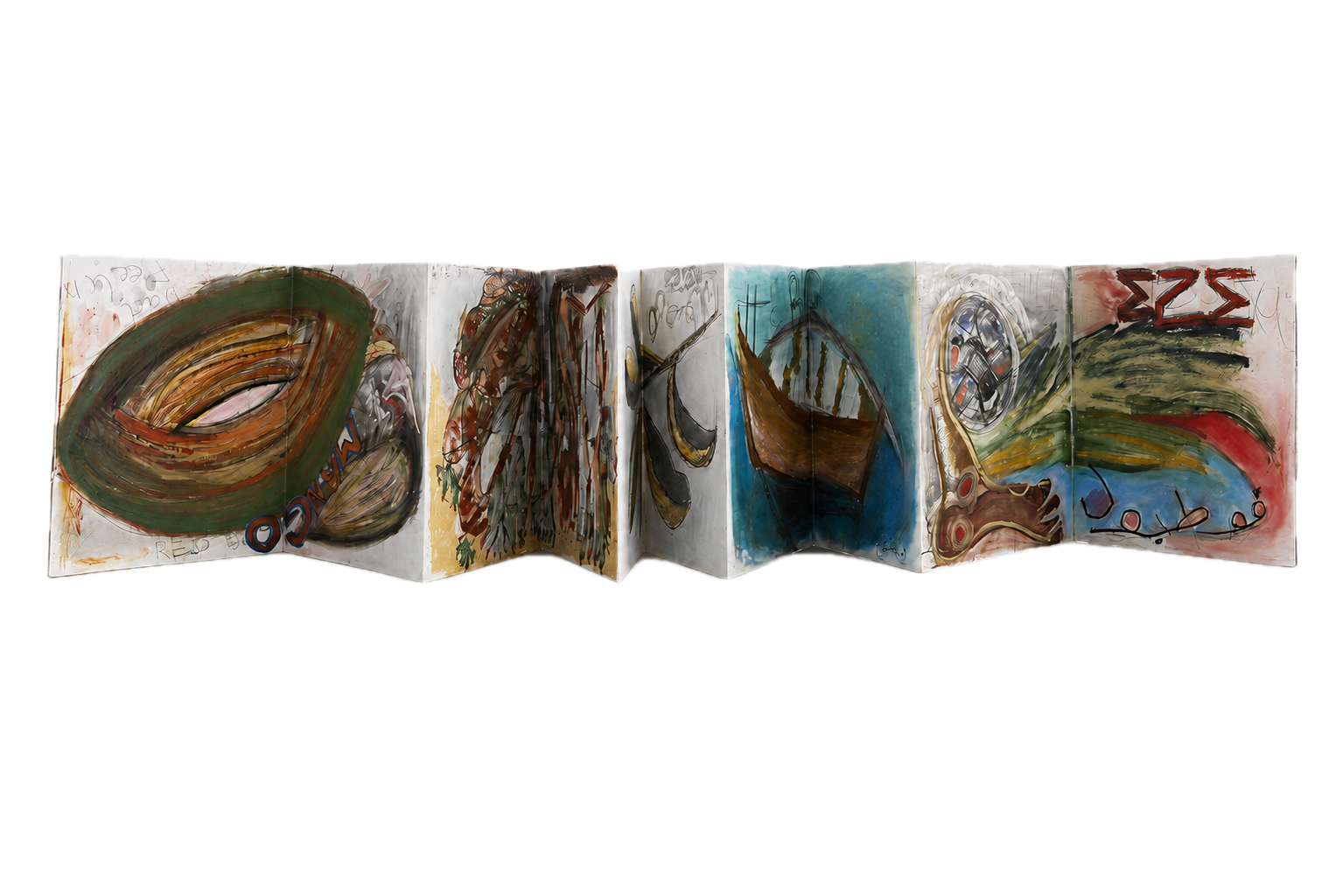
Each leporello is composed of two interconnected surfaces: the children’s original drawings are preserved on one side, while the reverse features artistic interventions by invited Lebanese, Arab, and international artists.
Through this process, the project creates a collaborative artistic archive that places children’s voices in direct dialogue with established contemporary artistic practices. The interventions are designed not to overwrite children’s expressions, but to respond to, preserve, amplify, and contextualize them within broader cultural narratives around resilience, movement, loss, and belonging.
PHASE 2 — VISUAL ARCHIVE OF DISPLACEMENT
The Creation of Leporello Artist’s Books
At the core of the project is the transformation of the collective paper rolls into a series of leporello artist’s books, preserving the children’s drawings within a continuous visual narrative. This phase draws on Abed Al Kadiri’s artistic and curatorial practice, which explores conflict, collective memory, migration, and cultural preservation through publishing, artist’s books, and collaborative archival practices.
Each leporello is composed of two interconnected surfaces: the children’s original drawings are preserved on one side, while the reverse features artistic interventions by invited Lebanese, Arab, and international artists.
Through this process, the project creates a collaborative artistic archive that places children’s voices in direct dialogue with established contemporary artistic practices. The interventions are designed not to overwrite children’s expressions, but to respond to, preserve, amplify, and contextualize them within broader cultural narratives around resilience, movement, loss, and belonging.
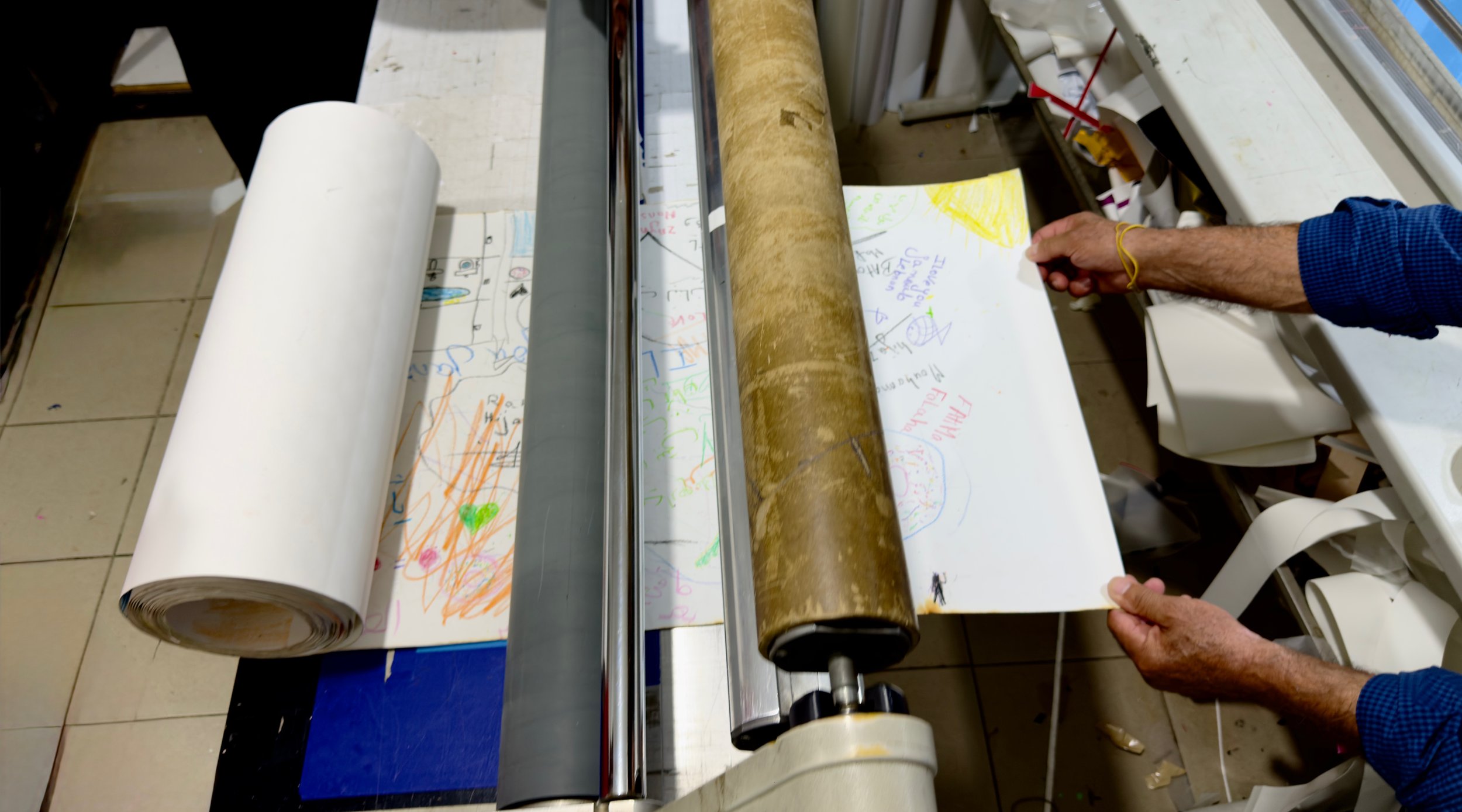
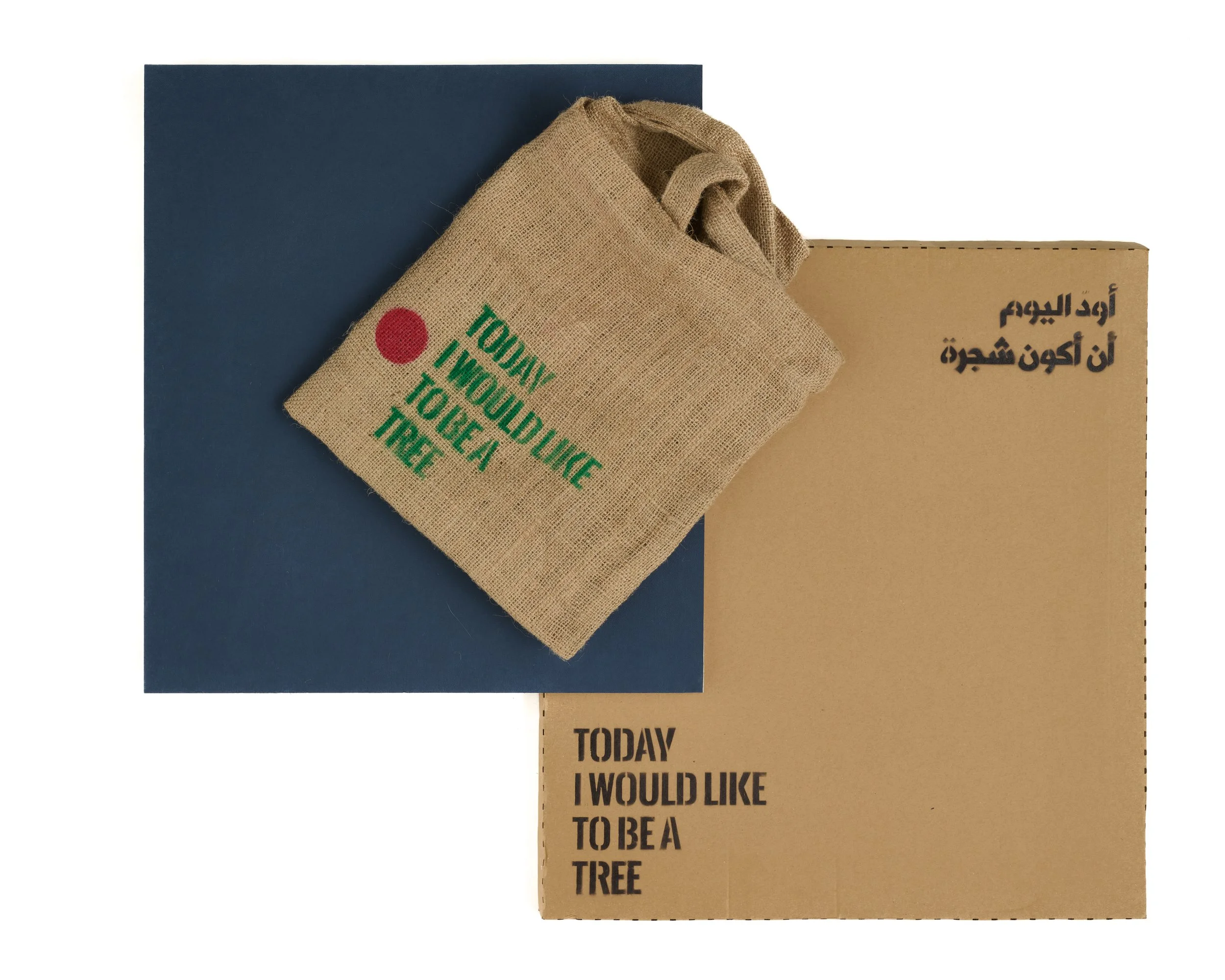
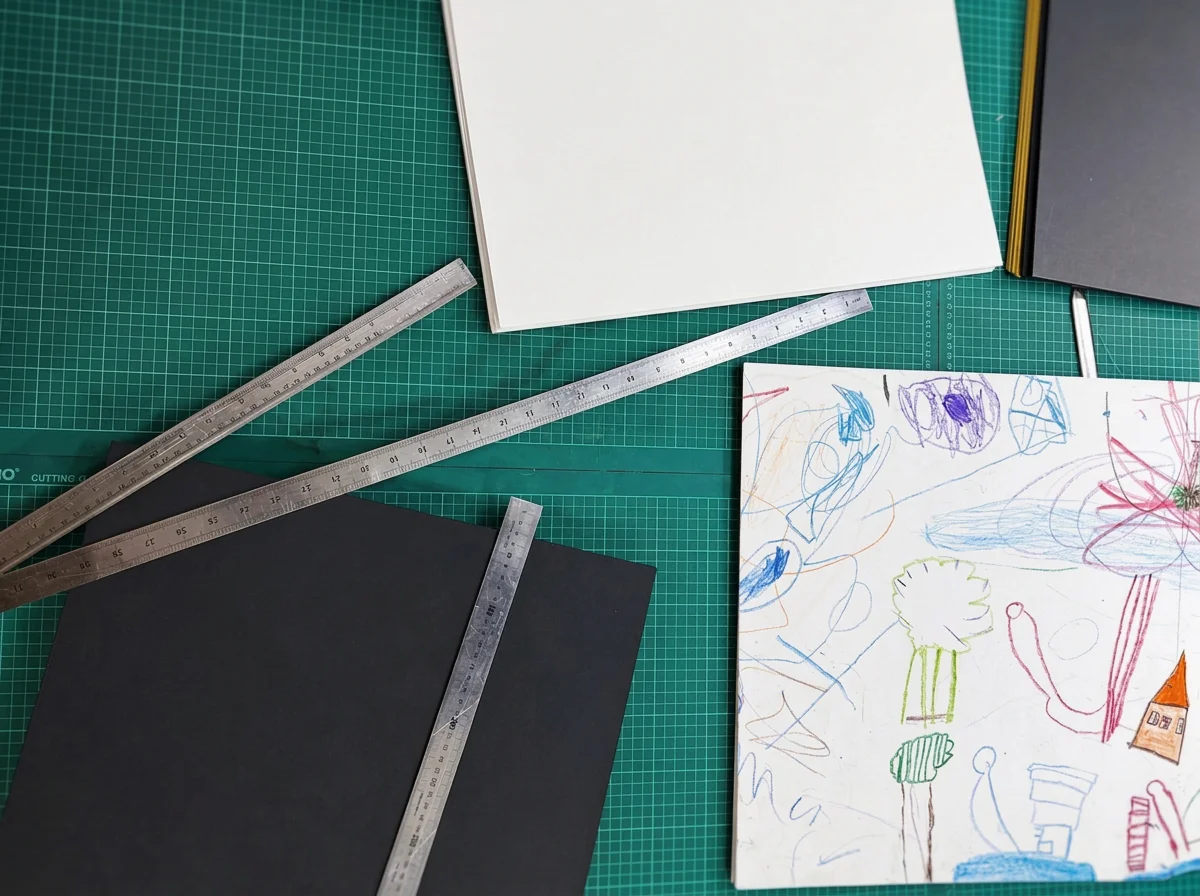
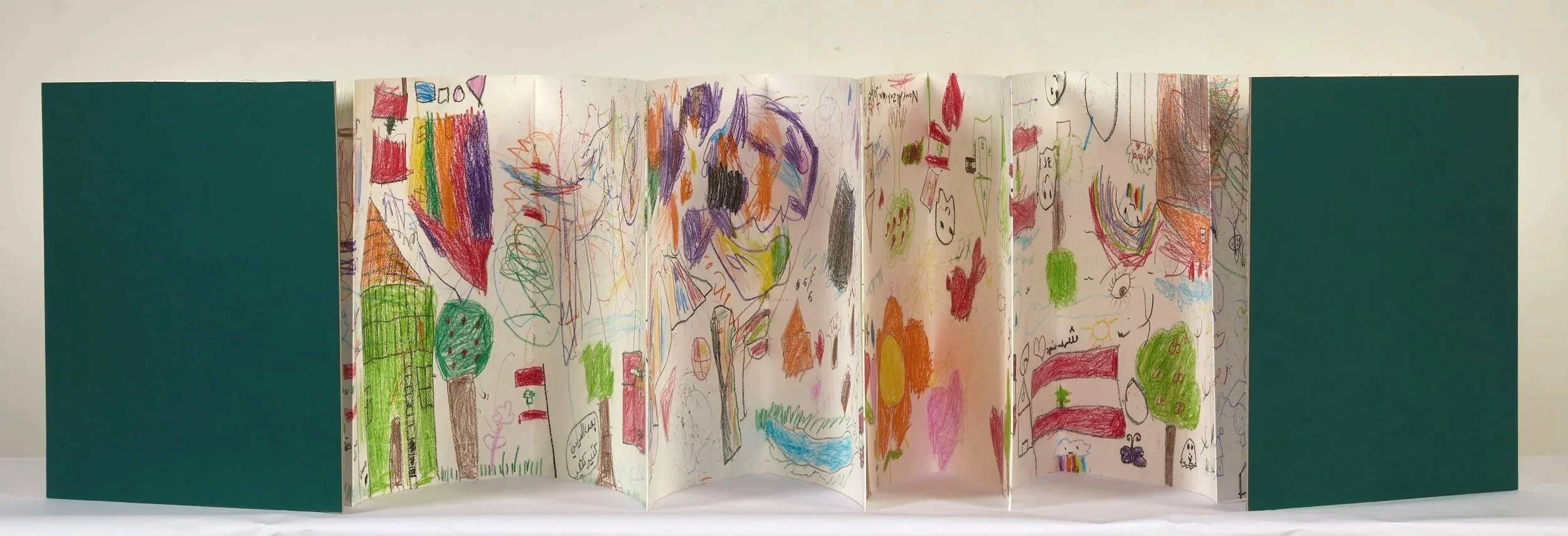
The paper roll transformed into a leporello book | 50 × 500 cm.
Photo by Cliff Makhoul
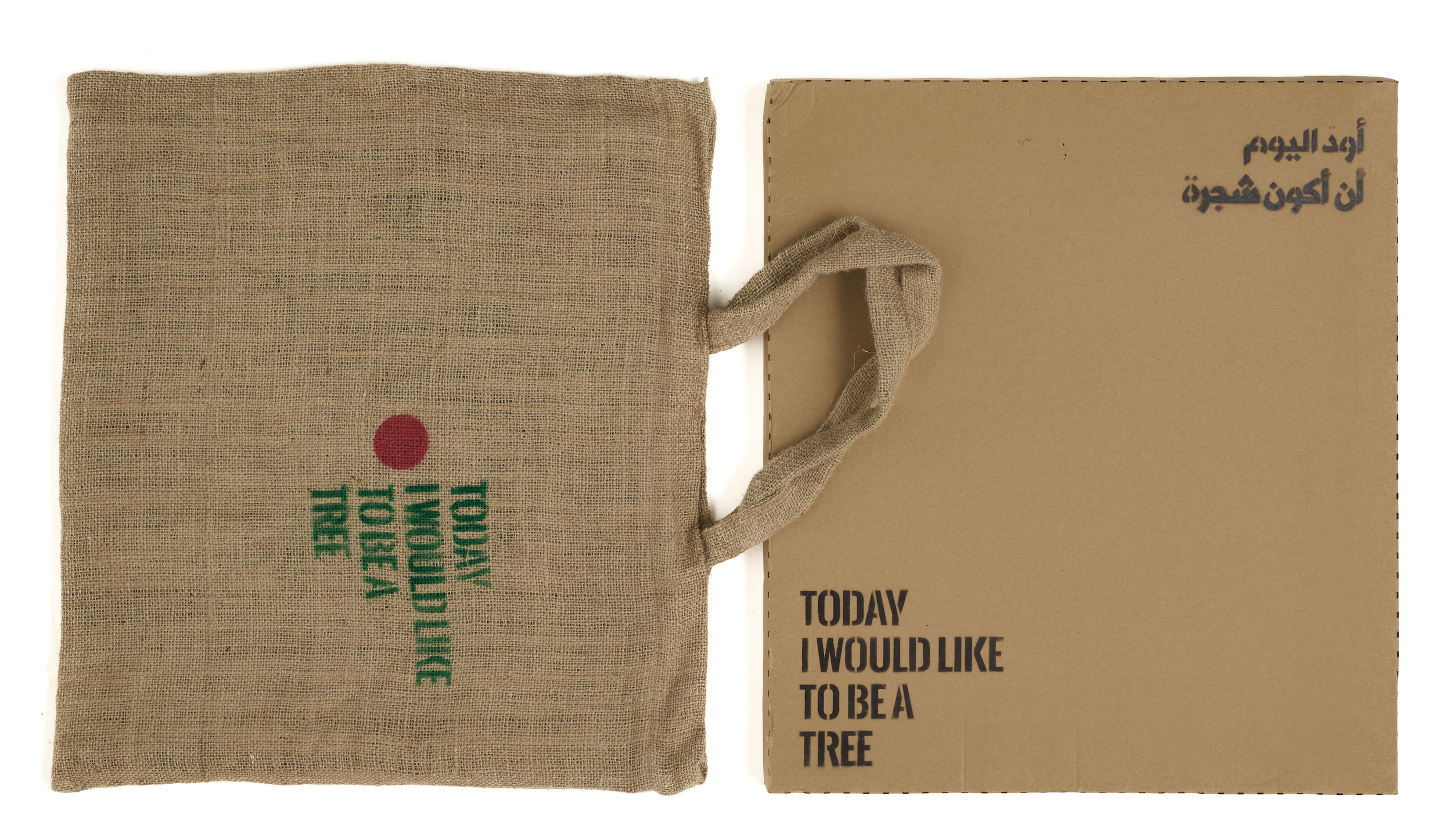
Leporello packaging sent to artists
Photo by Cliff Makhoul
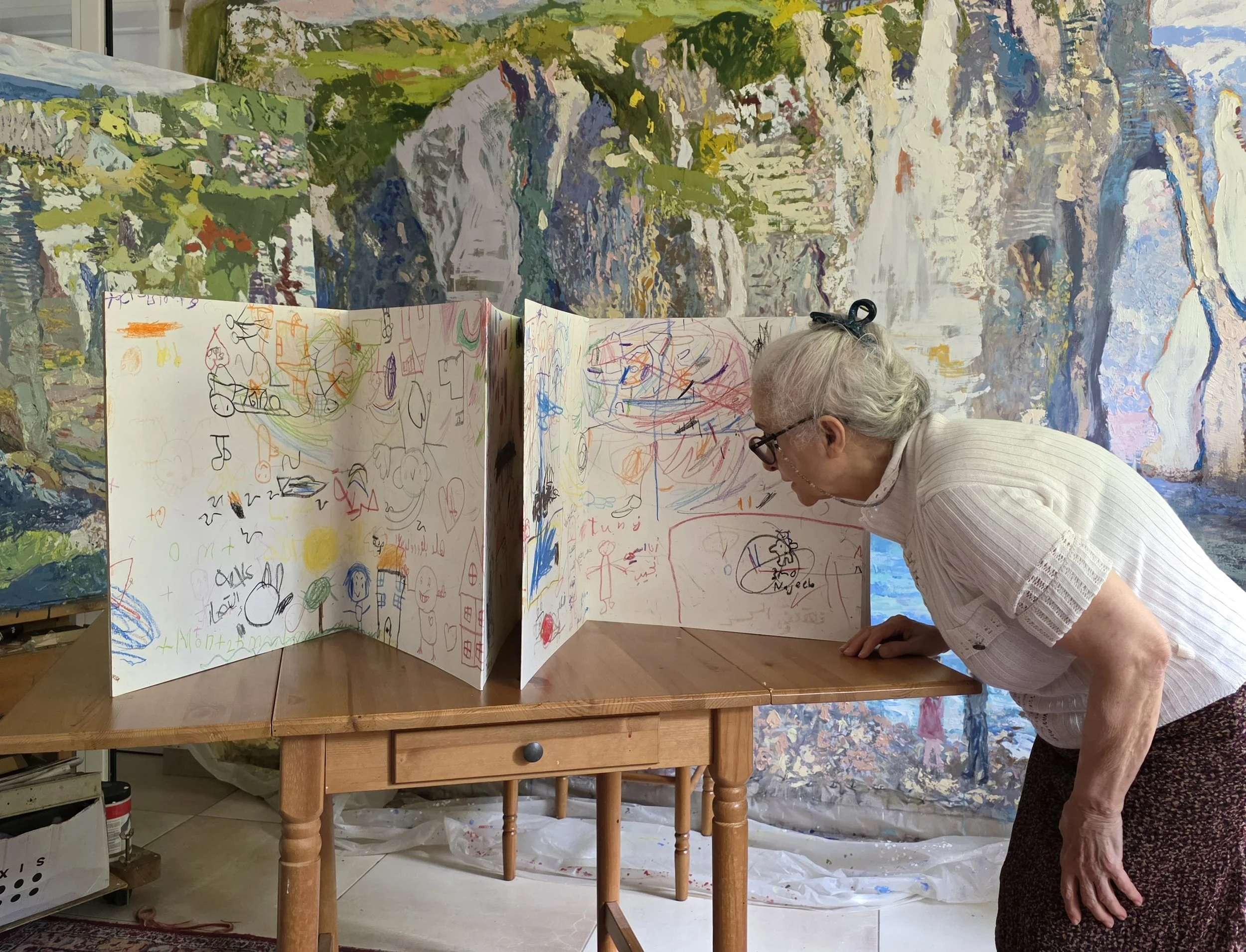
Work in progress - Fatima El Hajj in her studio
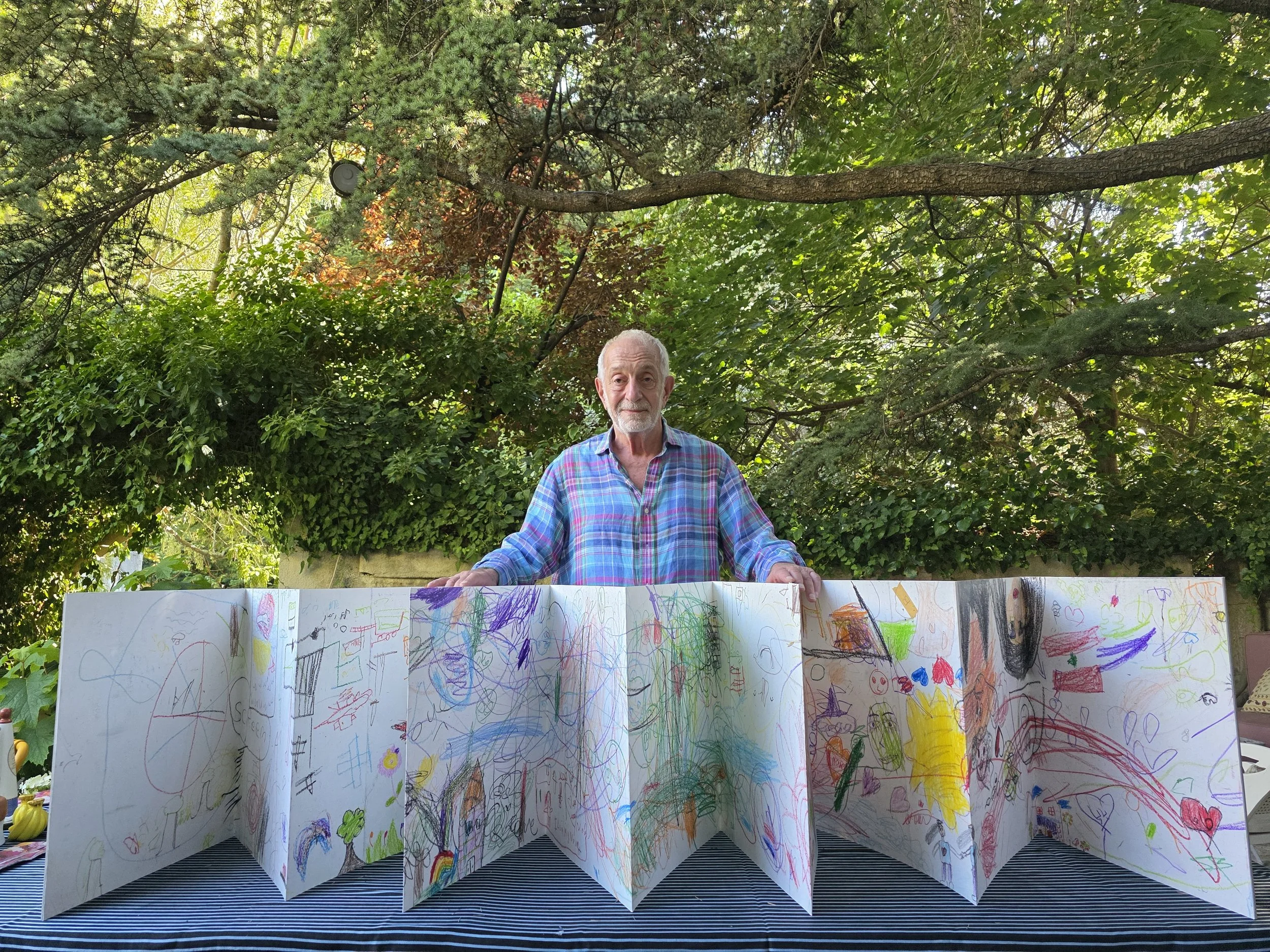
The paper roll transformed into a leporello book, 50x500 cm Photo by Cliff Makhoul
Nabil Nahas receiving his leporello book
Leporello packaging sent to artists
Photo by Cliff Makhoul
Work in progress - Marwan Rechmaoui in his studio
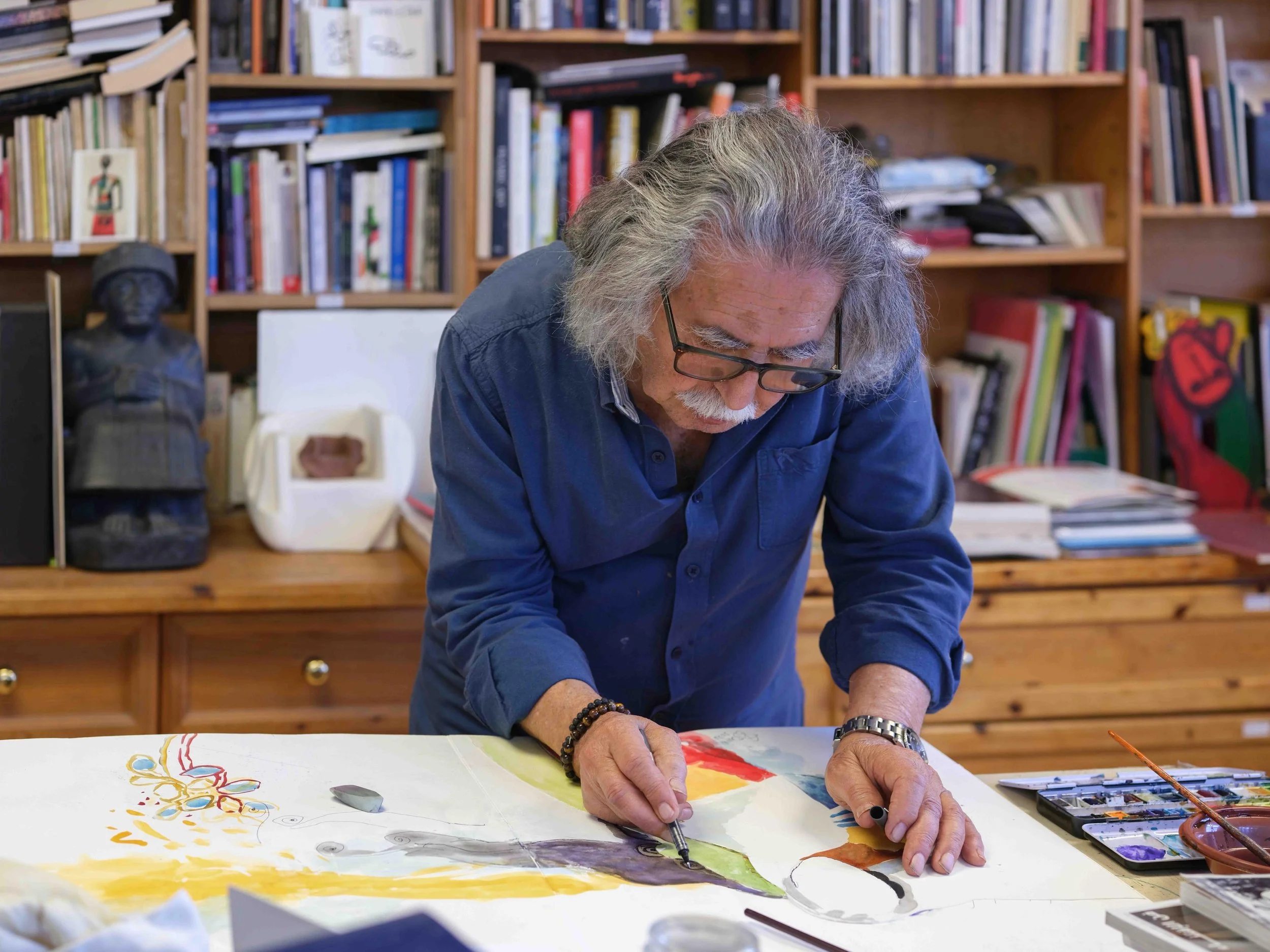
Work in progress - Fatima El Hajj in her studio
Work in progress - Dia al-Azzawi in his studio
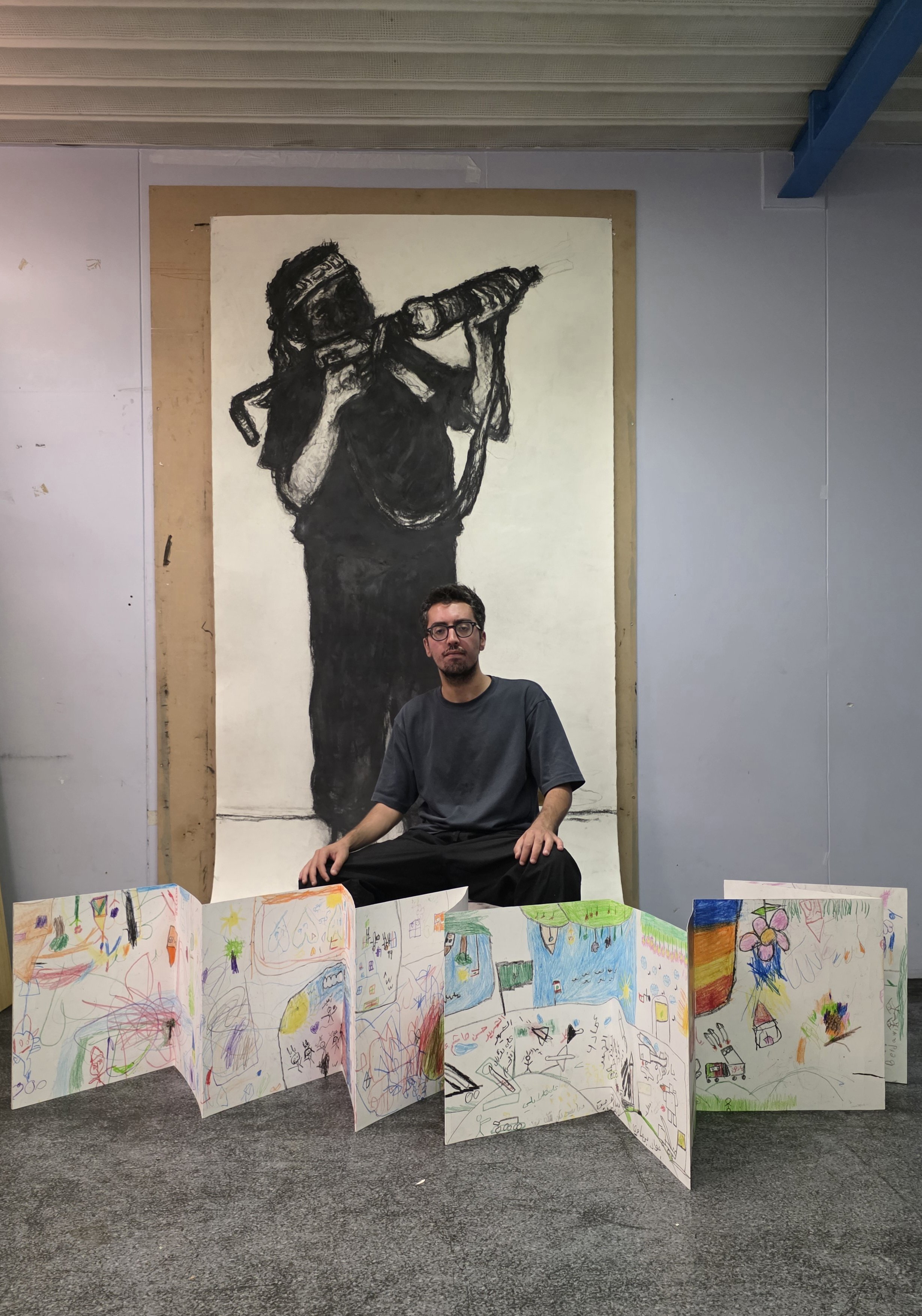
Nabil Nahas receiving his leporello book
Khaled Jarada receiving his leporello book
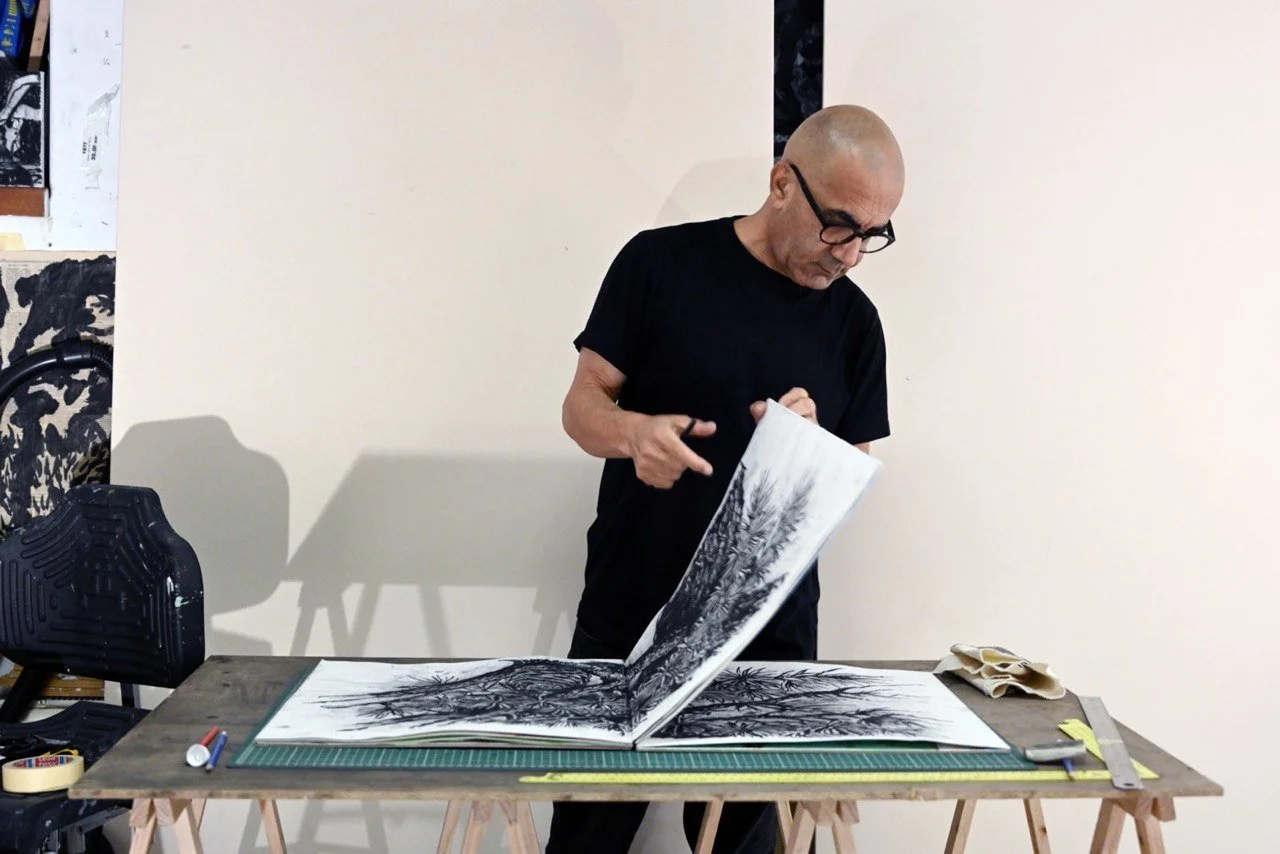
Work in progress - Marwan Rechmaoui in his studio
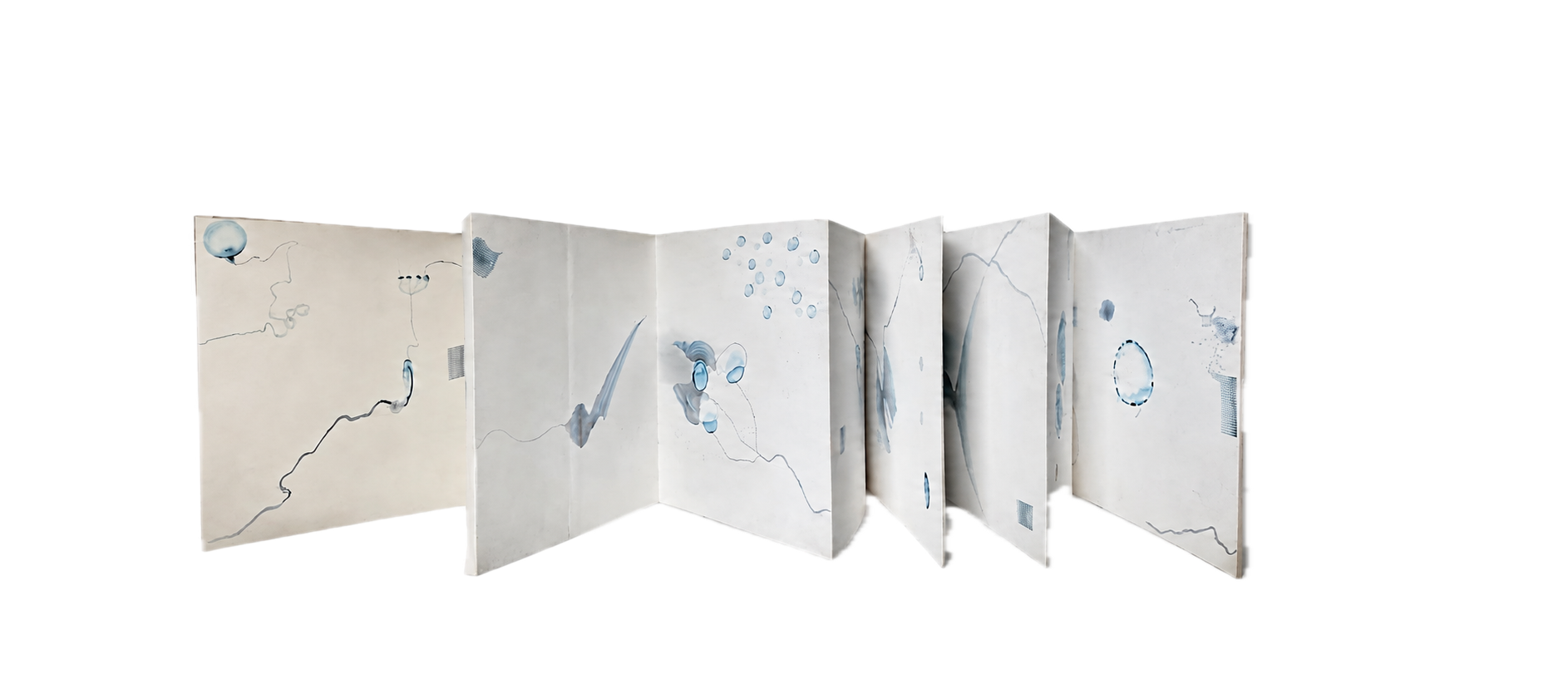
Hala Schoukair’s leporello, 2026
Work in progress - Sadik Kwaish Alfraji in his studio
PHASE 2 — VISUAL ARCHIVE OF DISPLACEMENT
The Creation of Leporello Artist’s Books
Marwan Rechmaoui’s leporello, 2026
Work in progress - Dia al-Azzawi in his studio
Hala Schoukair’s leporello, 2026
Marwan Rechmaoui’s leporello, 2026
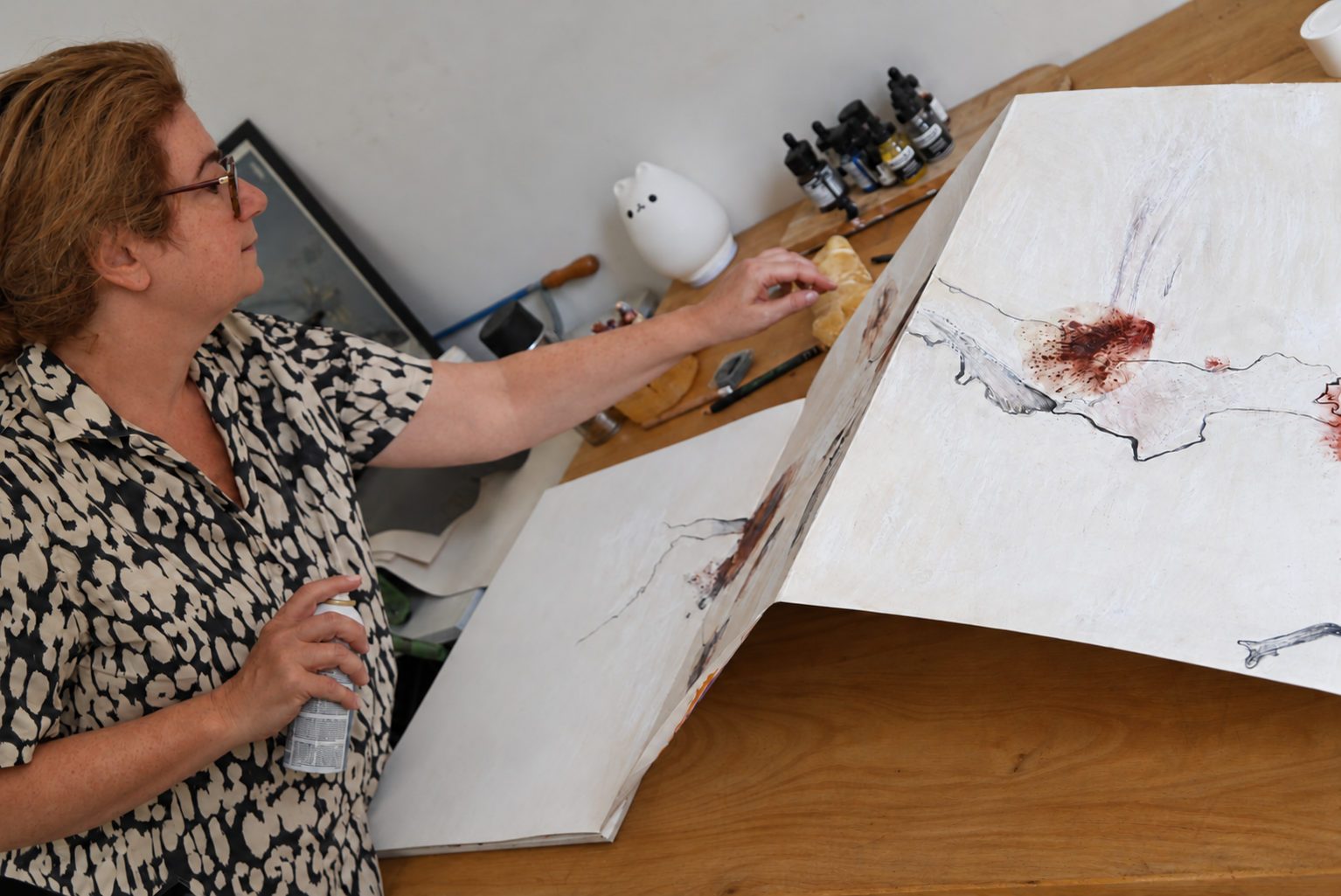
Work in progress - Lamia Joreige in her studio
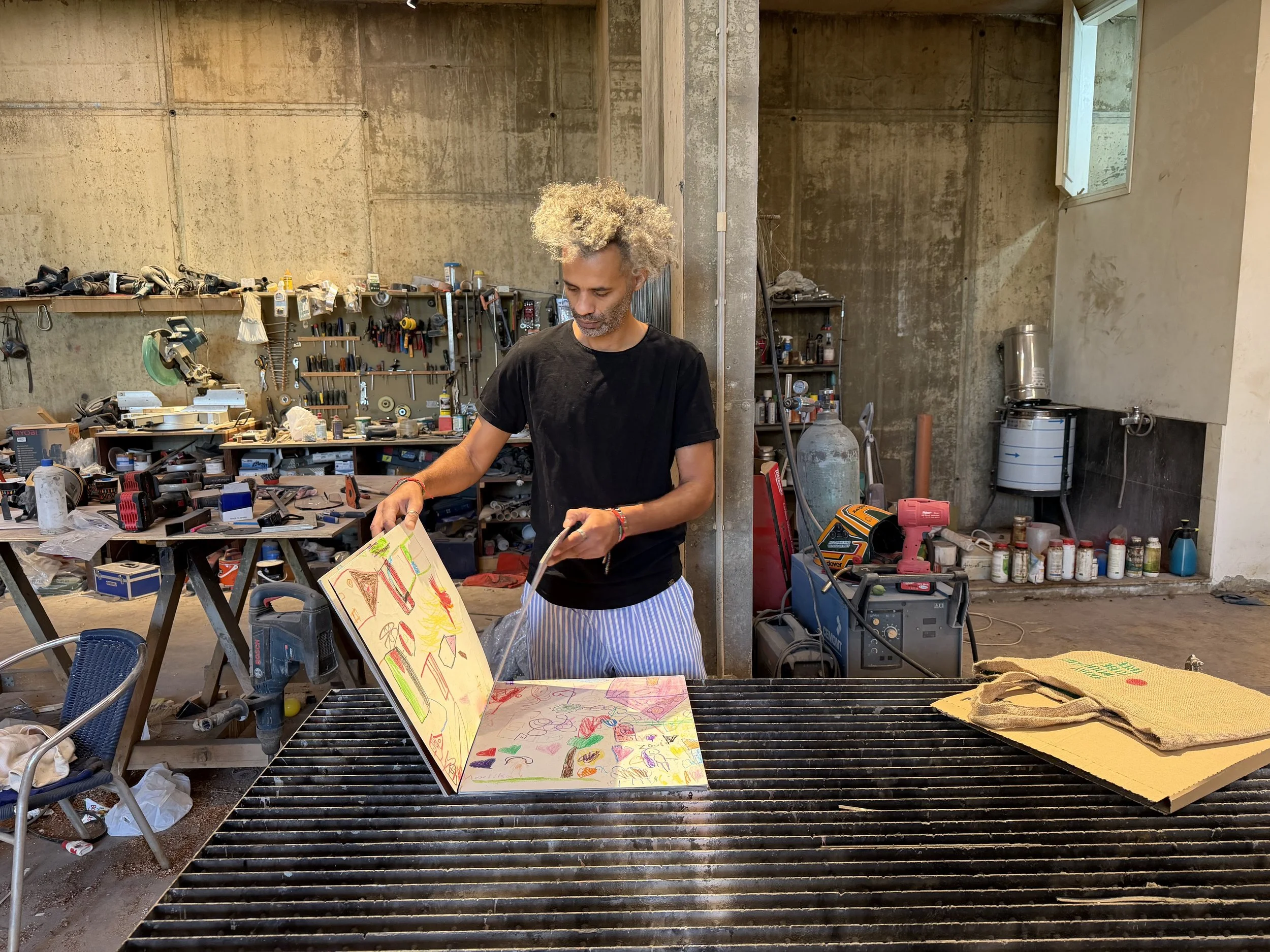
Abdul Rahman Katanani receiving his leporello book
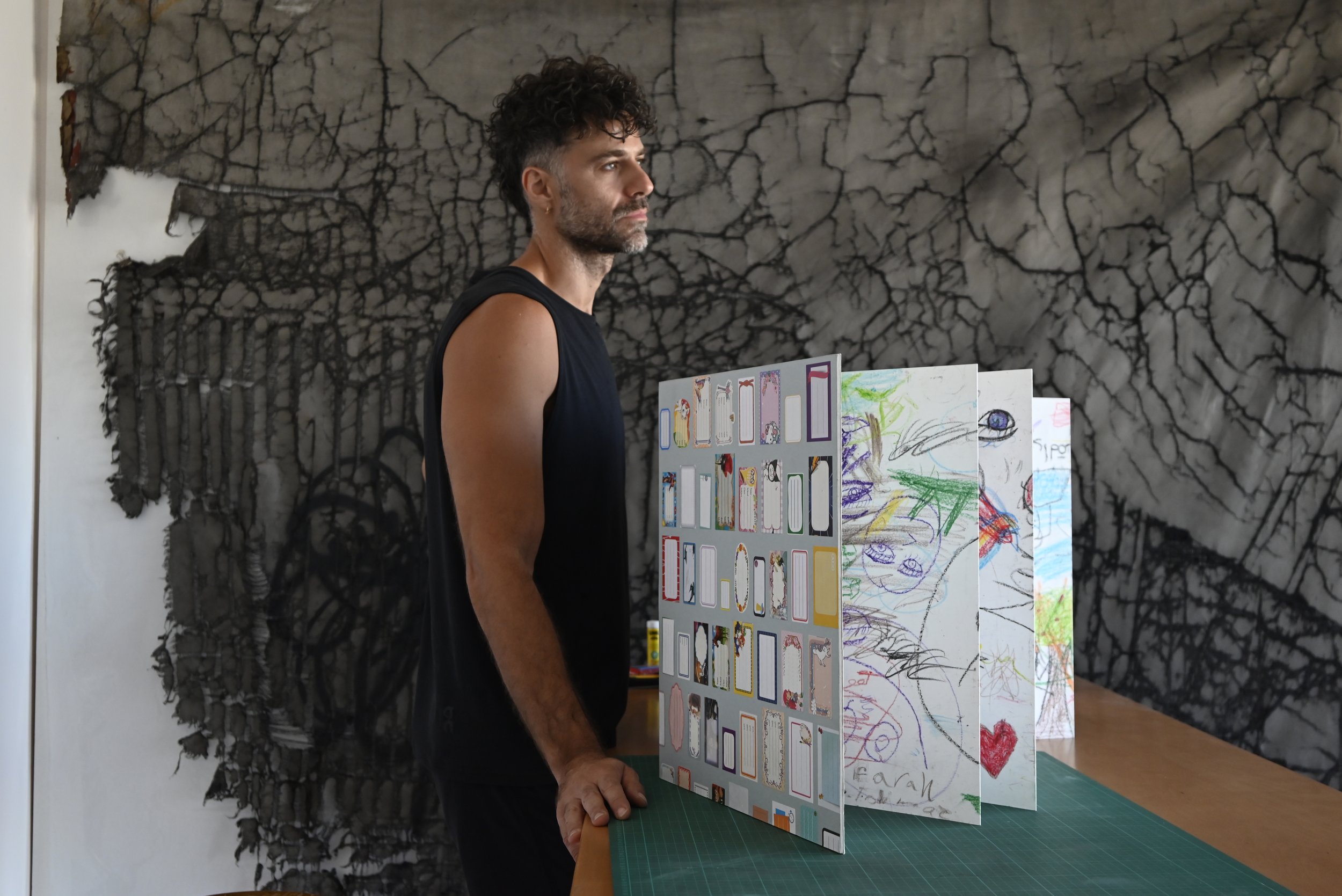
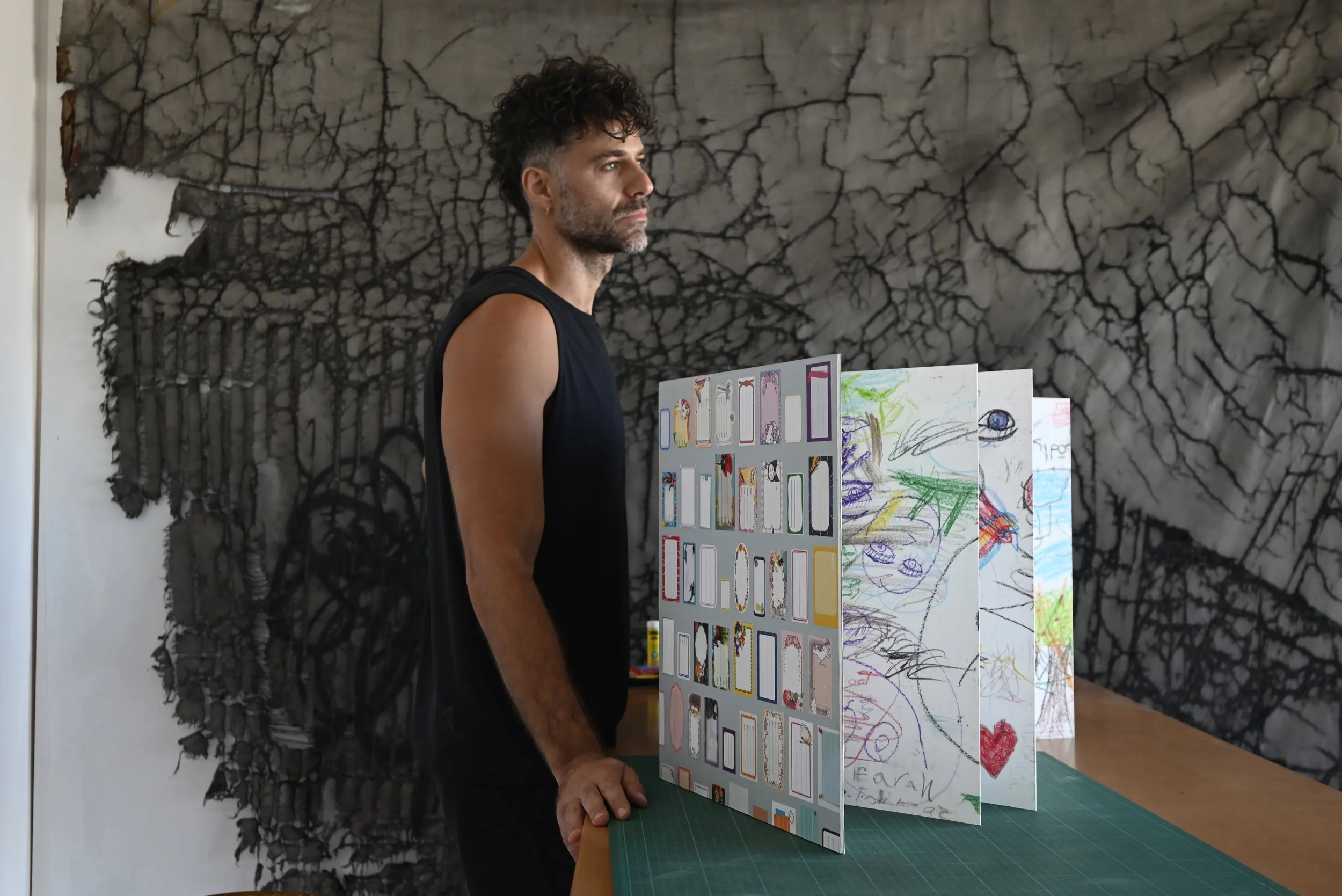
Work in progress - Omar Mismar in his studio
Khaled Jarada receiving his leporello book
Work in progress - Marwan Rechmaoui in his studio
Work in progress - Omar Mismar in his studio
Abdul Rahman Katanani receiving his leporello book
Work in progress - Lamia Joreige in her studio
MEET THE ARTISTS
.
MEET THE ARTISTS .
-
Abdul Rahman Katanani is a Palestinian contemporary visual artist born in 1983 in the Sabra refugee camp in Beirut, where he was raised as a third-generation Palestinian refugee. He studied Fine Arts at the Lebanese University, receiving his degree in 2007 and an MFA in Palestinian contemporary art in 2012.
His practice spans sculpture, installation, assemblage, graffiti, and drawing, exploring displacement, borders, identity, freedom, and the experience of refugees. Working primarily with materials drawn from his surroundings—including corrugated metal, discarded objects, crude-oil barrels, clothing, and barbed wire—Katanani transforms everyday materials associated with survival and confinement into powerful expressions of resilience and resistance.
His work draws deeply on his experience of life in the refugee camp and on the histories and experiences of displaced communities, while increasingly addressing broader questions of migration and belonging. He has participated in artist residencies in France and has exhibited internationally, and currently lives and works between Paris and Beirut.
-
Abed Al Kadiri (b. 1984, Beirut) is a multidisciplinary artist, publisher, and curator currently based between Paris and Beirut. He has a double major in visual arts and arabic literature. His work focuses on the notion of translating violence, investigating repressed personal and collective traumatic experiences, while emphasizing the destruction of cultural heritage, migration, and belonging.
He took part in numerous international group exhibitions and He had recent solo exhibitions at Dumonteil gallery, paris, Galerie Tanit, Munich; Cromwell Place, London; and Sursock Museum, Beirut. His work can be found in private and public collections such as: the British Museum; Institut du monde arabe, Paris; the World Bank, Washington D.C.; Barjeel Foundation, Sharjah; and Arab Fund, Kuwait. In 2017 he was awarded the Sursock Museum’s Jury Award at the 32nd Salon d’Automne.
In 2021 Al Kadiri was an artist-in-residence at the Cité Internationale des Arts, Paris . Al Kadiri worked as an art critic before becoming the Director of Contemporary Art Platform (CAP) Kuwait from 2012–15. In 2017, he cofounded Dongola Limited Editions, a leading publishing house that positions artist’s books as an artistic contemporary practice from the Arab world.
-
Akram Zaatari (b. 1966, Lebanon) is a multidisciplinary artist, filmmaker, curator, and researcher based in Beirut. He studied architecture at the American University of Beirut, graduating in 1989, and later received a Master of Arts in Media Studies from The New School in New York. Working across photography, film, video, installation, and performance, he draws extensively on archival materials and photographic histories to examine questions of witnessing, survival, and self-documentation.
In 1997, he co-founded the Arab Image Foundation in Beirut, where he has played a significant role in researching, preserving, and exhibiting photographic archives from the Arab world. Zaatari has participated in numerous international exhibitions, including dOCUMENTA (13), the Venice Biennale, and the Sharjah Biennial, and his work has been presented at institutions such as the Museum of Modern Art, New York; Tate Modern, London; Centre Pompidou, Paris; and Moderna Museet, Stockholm. His work is held in major international collections, including those of the Museum of Modern Art, Tate Modern, and the Centre Pompidou.
-
Anas Albraehe holds a Bachelor’s degree in Painting and Drawing from the University of Fine Arts in Damascus, Syria, which he received in 2014. In 2015, following the outbreak of the Syrian war, he relocated to Lebanon, where he pursued further studies and earned a Master’s degree in Psychology and Art Therapy from the Lebanese University.
Growing up in the remote countryside of Suwayda, Syria, Albraehe developed a deep sensitivity to the vivid details, colors, and landscapes of his surroundings. His practice explores the relationship between color, memory, emotion, and human psychology. Influenced by French artists including Jean-François Millet, Jules Breton, Henri Matisse, and Paul Gauguin, he combines intricate compositions with a vibrant and intuitive palette. Color plays a central role in his work, serving not only to depict reality but also to transform and distance his paintings from it, creating an imaginative and harmonious interplay of shades.
Despite his geographical distance from his homeland, Albraehe maintains a strong connection to his Syrian roots, weaving the visual richness and emotional textures of his native environment into his paintings. His works offer intuitive and atmospheric explorations of color, shape, memory, and place, balancing observation with imagination.
Albraehe was a laureate of the French Institute’s residency programme at the Cité internationale des Arts in Paris in 2021, and in 2023 he was an artist-in-residence at the Zinsou Foundation in Benin. His work is held in the collections of prominent cultural institutions, including the Saudi Arabia Museum of Contemporary Art in Riyadh, the Arab World Institute in Paris, and the Dalloul Art Foundation in Beirut.
In recent years, Albraehe has presented his work internationally, including Exodus at Mor Charpentier in Paris in 2025, Más allá de las nubes at Mor Charpentier in Bogotá, Colombia, and The Turn at Saleh Barakat Gallery in Beirut in 2024. His exhibitions have also included The Dreamer at Anita Rogers Gallery in New York and Die Träumer at Galerie Tanit in Munich in 2022.
His earlier exhibitions include Mother Earth and The Dream Catcher at Agial Art Gallery in Beirut, Arabicity | Ourouba at the Middle East Institute Gallery in Washington, D.C . His early works were presented in Manal at Artspace Hamra in Beirut and Wadi Finan Art Gallery in Amman, Jordan.
-
Ayman Baalbaki (b. 1975, Lebanon) is a Lebanese multidisciplinary artist whose practice encompasses painting, sculpture, and mixed media. Born during the Lebanese Civil War, his work draws extensively on themes of war, displacement, destruction, memory, and loss, often drawing on the personal and collective experiences of Lebanon’s recent history.
He received his Bachelor’s degree in Fine Arts from the Lebanese University in Beirut, followed by a Diplôme d’Études Supérieures in Art and Space from the École Nationale Supérieure des Arts Décoratifs (ENSAD) in Paris, and completed his D.E.A. in “Art of Images and Contemporary Art” at Paris VIII in 2003. Baalbaki has exhibited extensively internationally, including at the Middle East Institute in Washington, D.C.; the Cairo Biennial; the Berengo Center for Contemporary Art and Glass in Murano; the Institut du Monde Arabe in Paris; and Saleh Barakat Gallery in Beirut.
His work is held in private and public collections including Tate Modern, London; the Ramzi and Saeda Dalloul Art Foundation; Fondation Carmignac; and KA Private Art Space.
-
Chafa Ghaddar (b. 1986, Lebanon) graduated from Académie Libanaise des Beaux Arts (ALBA), where she earned her Bachelor’s in Fine Arts degree in 2007 and a Master’s in Visual Arts in 2009. In 2012, she attended an intensive course in fresco and traditional painting techniques in Florence, Italy, an experience that continues to inform her practice today. In 2024 she completed a 6-month teaching artist fellowship awarded by DCT.
Wall painting and surface finishing are central to her practice. She explores the use of fresco as a contemporary mode of making, as well as other techniques, and works equally with murals, painting, drawing, photography, and mixed media.
The artist executes site-specific and public artworks, and has collaborated with global brands such as Hermès and Gucci, and participated in solo and group exhibitions in Beirut, Dubai, New York, Brussels, Amsterdam and Verona. Her latest was a solo show at Maraya Art Center, Sharjah. In 2022, Ghaddar was commissioned to produce a site-specific work for the 16th Lyon Biennale, Manifesto of Fragility, curated by Sam Bardaouil and Till Fellrath. She has been awarded several artist fellowships and residencies, including the Tashkeel Studio Critical Practice Program in 2018/2019 (with a solo exhibition), the Salama Emerging Artist Fellowship (SEAF, 2018), and the artist-in-residence program at the Villa Empain (Brussels, 2015), which also awarded her the Boghossian Art Prize for painting in 2014.
Ghaddar has been developing a teaching practice for the last 6 years and conducted lessons across different art institutions in the UAE alongside NYU Abu Dhabi and Istituto Marangoni, Dubai.
-
Daniele Genadry (b. 1980, USA) works with painting, photography and print, to examine conditions and contemporary forms of seeing, particularly those present in postwar Lebanon. Her practice considers the potential of an image to generate its own temporality (light), and to create a mediated field of vision that sensitizes our consciousness. Often based on landscape motifs, the paintings seek, through their material surface, to act physically on the viewers’ eyes, requiring a time of focus and adjustment, in order to apprehend the (painted) image. Their aim is to give a heightened and intense view - and an image form to a particular quality and force - of presence, fragility and disappearance.
Genadry studied at Dartmouth College, NH and at the Slade School of Art, London. She was the Abbey Scholar at the British School at Rome (2013-14), a fellow at the Bogliasco Foundation (IT, 2019) and Camargo Foundation (2021), and the recipient of the 2024 Munn Artist fellowship in Giverny, FR. She participated in residencies at the Cite Internationale des Arts, Bronx Museum and Fondazione Ratti. Recent exhibitions include: National Museum of Beirut, IAIA, Biennale Gherdeina, Artist Rooms at Jameel Arts Centre, Beirut Art Center, Sharjah Biennial 13, Biennial del Sur, MUCEM, Sursock Museum, Fondazione Pasticio Cerere and SMBA. Genadry lives and works in Paris, France and Beirut, Lebanon.
-
Dia al-Azzawi (b. 1939, Baghdad) is a prolific multi-disciplinary artist, publisher and designer. He uses artistic and cultural references from Arab heritage to create contemporary works that are both local and create dialogue with other cultures.
His manifesto Towards a New Vision (1968) became the foundation for numerous Arab cultural activities throughout the 1970s, a relationship he maintained after leaving Iraq (1976) through international exhibitions and works inspired by Arabic literature, the destruction of Iraqi civil society and injustice against Palestinians.
Azzawi supports other artists through publishing, collecting, commissioning, donating to institutions, and curating international projects featuring artists from across the global South. Azzawi’s work has been exhibited and collected by public institutions worldwide.
-
Fatima El-Hajj (b.1953, Lebanon) graduated in 1978 from the Institut des Beaux-Arts at the Lebanese University in Beirut, and later from the Academy of Fine Arts in Leningrad. She then completed her studies at the Ecole Nationale Supérieure des Arts Décoratifs of Paris in 1983.
She was awarded with the Picasso Prize in Madrid in 1985, and taught in Beirut at the Institut des Beaux-Arts until 2017. She is recipient of the First award, EMAAR International Art Symposium (EIAS)in 2007. Since 1986, she has shown regularly in Lebanon, Spain, and France, as well as in Kuwait, the United Arab Emirates, Bahrain, Syria, Morocco, and Qatar. Her work is in the Institut du mond arabe’s permanent collections, among others.
-
Hajra Waheed (b. 1980) multidisciplinary practice ranges from painting, drawing, video, sound, sculpture and installation. Her practice explores the nature of power, the human impact of displacement and incarceration, and the transformative possibilities of liberation struggles. Characterized by a distinct visual language and a unique poetic approach, her works often use the ordinary to convey the profound, and landscape as a medium to transpose human struggle and a radical politics of resistance and resilience.
Waheed has participated in exhibitions worldwide including: KunstInstiuut Melly, Rotterdam (2026); Taipei Fine Arts Museum, Taipei (2026); 36th Sao Paulo Biennial (2025); 15th Shanghai Biennial (2025) Irish Museum of Modern Art, Dublin (2024); Sharjah Biennial 15 (2023); Haus der Kulturen der Welt, Berlin (2023); Centre Pompidou, Paris (2020); Lahore Biennial 02, Pakistan (2020); British Museum, London (2019); 57th Venice Biennale (2017) and 11th Gwangju Biennale, South Korea (2016). She currently lives and works between Montreal and Yogyakarta.
-
Hala Schoukair (b. Beirut, 1957) received her master's degree in Cinematographic Studies from the Sorbonne University, Paris, and has been painting and exhibiting her work since her graduation in 1981.
Hala has been invited to show her work at the 61st Venice Biennale 2026, under the theme In Minor Keys curated by Koyo Kouoh. She has also had a 2025 solo show at Saleh Barakat Gallery in Beirut, and was part of the exhibition ARABOFUTUR at the Institut du Monde Arabe, Paris. She has also been participating in both Art Fair Dubai and the Abu Dhabi Art Fair for the last few years, and had a solo exhibition, represented by Gallery Bessiere, at Art Paris 2022.
Hala's previous solo shows included You Promised Me Spring, 2017, and Grains of Light, 2014, both of which were held at Agial Art Gallery in Beirut.
Recent group exhibitions included Intimate Garden Scene by Ashkal Alwan at The Sursock Museum, Beirut, 2023- 2024. She has also participated in Continuity and Change: Islamic Tradition in Contemporary Art at The Williamsburg Art and Historical Center in New York
(2007); Morgenröte, aurora borealis and Levantin: Into your solar plexus at the Knusthalle Bern museum in Switzerland (2015); and the 32nd Salon D'Automne at the Sursock Museum (2016).
Hala's work became part of the permanent collection of the Block Museum of Art, Northwestern University, IL, in 2023, and the Los Angeles County Museum of Art, in 2024.
Hala moved from New York to Lebanon in 2019, and currently lives in the town of Ras El Metn, where she has established The Saloua Raouda Choucair Foundation, which commemorates her mother's art and legacy.
-
Hoda Tawakol (b. London, 1968) is an Egyptian-French artist living and working in Hamburg, where she graduated from the University of Fine Arts in 2011. Working across textiles, ceramics, hair, film, and mixed-media sculptures, Tawakol explores the female body, cultural memory, identity, and belonging, often drawing on personal and inherited histories.
Her work has been exhibited at the Schirn Kunsthalle, Frankfurt; Dortmunder Kunstverein; Georg Kolbe Museum, Berlin; Museum der Moderne Salzburg; the Museum for Art in Wood, Philadelphia; Gallery Isabelle van den Eynde, Dubai; and Sfeir-Semler Gallery, Lebanon, among others. Her work is in the collections of the Salama Bint Hamdan Al Nahyan Foundation, Abu Dhabi; the Progressive Art Collection, USA; Open Space Contemporary, Turkey/UK; The Naila Collection; The iSelf Collection; and the Weserburg Museum, Germany, among others.
In 2022, Tawakol was an artist in residence at the Goethe-Institut in Marseille.
-
Filmmakers and artists Joana Hadjithomas and Khalil Joreige work between photography, installations, video, and cinema, whether documentary or fiction films. They question storytelling, the fabrication of images and representations, the construction of imaginaries and the writing of history. Their multi-awarded films include Memory Box (2021), Ismyrna (2016), The Lebanese Rocket Society (2012), Je Veux Voir (2008), A Perfect Day (2005)... Several retrospectives of their films have been presented in renowned institutions.
Their artworks are part of the most important exhibitions and public and private collections. They have been awarded the prestigious Marcel Duchamp Prize in 2017 for their project Unconformities.
-
Khaled Jarada is a visual artist and illustrator from Gaza City. He holds a BA in Multimedia. He has worked in the field of children’s and young adult books, publishing a number of titles in collaboration with various publishing houses. He has participated in local and international exhibitions and has completed several artist residencies, including at the Spanish Academy in Rome, the Cité internationale des arts in Paris, and the Shbabek Center for Contemporary Art in Gaza.
His artistic practice centers on figurative work, with a focus on the human body as a carrier of both individual and collective experience. His works explore the relationship between body and place, questions of exile and displacement, and the internal effects of political and social transformations on the individual. Through a visually constructed language that balances corporeal presence with emotional tension, his work investigates memory and identity as shifting, unstable spaces
-
Lamia Joreige (b. 1972, Beirut, Lebanon) is a visual artist and filmmaker based in Beirut. She received her BFA from the Rhode Island School of Design in 1995, where she studied painting and filmmaking.
Working across film, photography, drawing, sculpture, and multimedia installation, her practice explores time, memory, history, and their possible narratives, drawing extensively on archival documents and elements of fiction. Rooted in her experience of Lebanon, her work examines the representation of the Lebanese wars and their aftermath, as well as the relationship between individual stories and collective memory.
Joreige has exhibited internationally at institutions including the Centre Pompidou and Musée Nicéphore Niépce in France, Tate Modern and the Serpentine Gallery in London, the New Museum and the International Center of Photography in New York, and the Sharjah Biennial.
Her work is held in public and private collections including the Centre Pompidou, Tate Modern, Sharjah Art Foundation, MATHAF in Doha, and the Nicéphore Niépce Museum. She is a co-founder and former co-director of Beirut Art Center, which she co-directed from 2009 to 2014, and was a fellow at Harvard University’s Radcliffe Institute for Advanced Study in 2016–2017.
-
Majd Abdel Hamid (b. 1988, Damascus) is currently based between Beirut and Paris.
He graduated from Malmö Art Academy, Sweden and attended the International Academy of Art in Palestine. Hamid has had solo exhibitions in Glasgow, Paris, and Brussels, and has been featured in numerous group exhibitions, including at the Sharjah Art Museum; SMAK, Ghent; Frac Franche-Comté, Besançon; Cité International des Arts, Paris; Ruya Maps,Venice; Beirut Art Center; Krognoshuset Lund, Sweden; and the Valencia Institute of Modern Art, among others.
He has taken part in several international residencies and workshops, including March Project (Sharjah Art Foundation), Former West (Berlin), and Truth is Concrete (Graz, Austria). Hamid worked in residence at the Cité Internationale des Arts in Paris in 2009. He was a finalist for the Young Artist of the Year Award, presented by the A. M. Qattan Foundation, in 2008, 2010, and 2012.
-
Malak Mattar (b. 1999, Palestine) is a self-taught artist whose multidisciplinary practice encompasses painting, drawing, and mixed media. Mattar started making art as a teenager during a period of open conflict (Operation Protective Edge, 2014), and she soon began to sell work online and exhibit internationally. She won a scholarship to study political science at Istanbul Aydin University (2018–22) and another to study a Masters of Fine Art at Central Saint Martin’s, London, in 2023.
Mattar wrote and illustrated the bestselling children’s book Sitti’s Bird (2021) based on her own life experiences, which is already in its second print run. In defiance of strict travel restrictions, Mattar has lectured in universities across the USA (2020–21) and she has had solo exhibitions in Palestine (2015 onwards); Costa Rica (2015); Great Britain (2017, 2018, 2023, 2024); Sweden (2018); USA (2019, 2021); Germany (2020); Lebanon (2021); Portugal (2022) and Italy (2022).
Most recently, Malak had two concurrent exhibitions in London, and her monumental painting No Words was shown for the first time (March 2024). Her artworks have also been collected, published, and exhibited in numerous group shows worldwide.
-
Marwan Rechmaoui (b. 1964, Lebanon) studied sculpture and painting in Boston and New York between 1987 and 1993. His most recent solo exhibition was presented in 2019 at the Sharah Art Foundation and the Bonnefantenmuseum, Maastricht.
His work has been shown in exhibitions in Lebanon and abroad, including, MoMA (2022), Villa Empain, Brussels, (2020), Darat al Funun, Amman (2018); Ashkal Alwan, Homeworks 7; Beirut (2015); Istanbul Biennial 13 (2015); Here & Elsewhere, New Museum, New York (2014), Sharjah Biennial (2013 & 2015); Serpentine Gallery, London, UK (2012); Saatchi Gallery, London (2009); Zentrum Paul Klee, Bern, Switzerland (2009); Musée d’art Contemporain de Nîmes, France (2008); and Palais des Beaux-Arts, Brussels, Belgium (2008).
He is the recipient of the 2019 Bonnefantenmuseum Award for Contemporary Art. His works are in the collections of MoMA, New York; Tate Modern, London; Centre Pompidou, Paris; Guggenheim Abu Dhabi; The Sharjah Art Foundation; among other major private and public collections.
-
Marwan Sahmarani (b. 1970, Lebanon) is a Lebanese visual artist whose core practice is painting, supplemented by drawing, sculpting, ceramics, and occasional mixed-media. He studied at the École Supérieure d’Arts Graphiques, Atelier Met de Penninghen, Paris, where he graduated in 1994. Sahmarani works address themes of violence, identity, memory, and political conflict, often bridging figurative and abstract modes.
In 2010, Sahmarani was one of three recipients of the Abraaj Capital Art Prize, with his work The Feast of the Damned unveiled at Art Dubai and later presented at the Museum of Arts and Design, New York. His international exhibition record includes Told/Untold/Retold at Mathaf: Arab Museum of Modern Art, Doha (2010); the 3rd Thessaloniki Biennale of Contemporary Art, Greece (2011); and the 3rd Çanakkale Biennial, Turkey (2012).
He has also presented solo exhibitions at Lawrie Shabibi, Dubai (2011); Kashya Hildebrand Gallery, Zurich (2011), London (2014), and Dubai (2015); and Leila Heller Gallery, Dubai (2017-25); Farjam Foundation (2025). His work has featured in All About Beirut at Kunsthalle whiteBOX, Munich (2010), and Convergence: New Art from Lebanon at the American University Museum, Washington D.C. (2010). Sahmarani’s works are held in several significant public and institutional collections, including the British Museum (London), the Institut du Monde Arabe (Paris), Mathaf: Arab Museum of Modern Art (Doha), and the Dubai Collection (Dubai).
-
Nabil Nahas (b. 1949, Lebanon) is a Lebanese-American artist whose practice encompasses painting and sculpture, characterized by vivid colour, layered surfaces, and an interplay between geometry and organic forms.
He received his BFA from Louisiana State University and his MFA from Yale University in 1972, before moving to New York, where he has been based for much of his career.
His work draws on both abstraction and the natural world, with recurring imagery of constellations, marine forms, and trees emblematic of his native Lebanon, including cedars, olive trees, and palms. Nahas has exhibited extensively internationally, representing Lebanon at the 25th São Paulo Biennial in 2002 and participating in Glasstress at the 54th Venice Biennale in 2011.
He held his first retrospective at the Beirut Exhibition Center in 2010, and his work has been presented at institutions including the Metropolitan Museum of Art, New York; Museum of Fine Arts, Boston; Tate Modern, London; MATHAF: Arab Museum of Modern Art, Doha; and the Museum of Arts and Design, New York.
His work is held in major international collections, including those of the Guggenheim Abu Dhabi, Tate Modern, the Metropolitan Museum of Art, and the Ramzi and Saeda Dalloul Art Foundation. In 2026, Nahas was selected to represent Lebanon at the Lebanese Pavilion of the Venice Biennale.
-
Nadia Kaabi-Linke (b. 1978, Tunis) is a multimedia conceptual artist based in Berlin and Kyiv.
Her work gives physical presence to that which tends to be invisible in contemporary society, be it people, structures, or the geopolitical forces that shape them. Her work straddles beauty and violence, refinement and brutality as well as the sublime and the vulgar, engaging the viewer in the play of conflicting forces of fear and attraction, repulsion and desire.
She holds an MA from the Tunis School of Fine Arts, a PhD from the Pantheon Sorbonne, Paris. Her works are in the collections of the Museum of Modern Art, New York; Solomon R. Guggenheim Museum, New York; M+ Museum, Hong Kong; Centre Pompidou, Paris; the Sharjah Art Foundation, UAE, among others.
She has had solo exhibitions at Darat Al Funun, Amman; Kunstmuseum Bonn; Dallas Contemporary; Mosaic Rooms, London; and Calouste Gulbenkian, Lisbon. She has participated in the Lyon Biennale, Bruges Triennial, Liverpool Biennale, and the Sharjah Biennale.
She has been awarded the lthra Art Prize, the Francois Schneider Art Prize, the Art Basel Discovery Prize, and the Abraaj Group Art Prize, among others.
-
Omar Mismar is a visual artist based in Beirut. Project driven, parasitical, and medium promiscuous, his work takes up conflict and desire as they shape the everyday via form deliberations, material interventions, and translation strategies.
These investigations have produced a dérive through form, from photography, sculpture, and mosaics to performance, installation, and film. Recent solo and group exhibitions include: Whispers on the Horizon, Taipei Biennial, Taipei; Exercises in Ruins, SECCI Gallery, Milan (both 2025); Foreigners Everywhere, La Biennale di Venezia, Venice (2024); After the Mediterranean, Hauser & Wirth, Menorca; The Shining Things, MMCA Changdong, Seoul (both 2023); Confiscated Imaginaries, Beirut Art Center; Northeast Southwest, Kunsthaus Dresden; Scratch the Surface, Touch the Sun, Hosn Niha, Lebanon (all 2022); Omniscient, Leslie Lohman Museum, New York (2021); You Are Here: California Stories on the Map, Oakland Museum, Oakland (2020); Imagined Communities, 21st Contemporary Art Biennial Sesc_Videobrasil, São Paulo; L’Intrus REDUX, Westfalischer Kunstverein, Münster (both 2019).
Between 2016 and 2017 he participated in the Whitney Independent Study Program in New York. He has undertaken residencies at the Skowhegan School of Painting and Sculpture, SOMA, Art Omi, MMCA Changdong, and Gasworks.
From 2022-2024, he was the Boris Lurie Fellow at the Vera List Center for Arts and Politics. Omar has taught at California College of the Arts, the University of San Francisco, the Académie Libanaise des Beaux Arts, and the American University of Beirut.
-
Rayyane Tabet (b. 1983, Lebanon) studied architecture at The Cooper Union in New York and fine art at the University of California in San Diego.
Drawing from experience and self-directed research, Tabet explores stories that offer an alternative understanding of major socio-political events through individual narratives. Informed by his training in architecture and sculpture, his work investigates paradoxes in the built environment and its history by way of installations, performances and publications that reconstitute the perception of physical and temporal distance.
In recent years, Tabet has had solo exhibitions at CCA Wattis, San Francisco (2027); MUDAM Museum, Luxembourg (2023); Walker Art Center, Minneapolis (2021); Sharjah Art Foundation (2021); Storefront for Art and Architecture, New York (2020); Parasol Unit Foundation for Contemporary Art, London (2019); The Metropolitan Museum of Art, New York (2019); The Louvre,Museum, Paris (2019); Carée d’Art Museum, Nîmes (2018); and at the Kunstverein, Hamburg (2017). He took part in numerous international group shows, among which the MSU Broad Art Museum (2026), the Islamic Arts Biennale (2025), Museo Reina Sofía (2023), the Whitney Biennial (2022), the Yokohama Triennial (2020), the Lahore Biennial (2020), Jameel Art Center (2018), the Sydney Biennial (2018), Manifesta 12 (2018), the Istanbul Biennial (2017), the São Paulo Biennial (2016) and the Sharjah Biennial (2011, 2015).
His work is in the collections of the Guggenheim Museum, New York and Abu Dhabi; the Metropolitan Museum of Art, New York; the Whitney Museum of American Art, New York; IVAM Institut Valencià d’Art Modern, Valencia; Kunsthalle Hamburg; Carré d’Art Musée d’Art Contemporain de Nîmes and many other public and private collections.
-
Sadik Kwaish Alfraji (b. 1960, Iraq) is a multidisciplinary artist based in Amersfoort, Netherlands. Working across drawing, painting, video animation, artist books, graphic art, and installation, his practice explores what he describes as “the problem of existence,” addressing themes of loss, exile, fragmentation, displacement, and the vulnerability of human existence. His distinctive visual language often centres on a solitary, shadow-like figure rendered in charcoal tones, through which he examines the psychological and emotional dimensions of the human condition.
He received a Bachelor of Fine Art in Painting and Plastic Art from the Academy of Fine Arts, Baghdad in 1987 and a High Diploma in Graphic Design from CHK Constantijn Huygens, Netherlands in 2000. His work has been exhibited internationally at institutions including the British Museum, Stedelijk Museum Amsterdam, Victoria and Albert Museum, LACMA, Institut du Monde Arabe, Mathaf: Arab Museum of Modern Art, and the Venice Biennale. His works are held in major public and private collections including the British Museum, Stedelijk Museum, Mathaf, LACMA, and Barjeel Art Foundation.
-
Serwan Baran (b. 1968, Baghdad) lives and works in Beirut. His paintings center on the turbulent history of his native Iraq.
While studying fine art at the University of Babylon, Baran became fascinated by the ancient city’s legendary ruins, mythology, and visual culture, which stood in stark contrast to modern day Iraq’s political instability and decades of warfare. Baran, who served as a soldier for his country, often comments on his experiences in the military and Iraq’s present day political conflicts in his work.
He depicts harrowing scenes of fellow soldiers facing their final moments using a gestural, expressionistic style and an earthy color palette drawn from the landscape of his homeland.
Baran has widely exhibited in the Middle East and North Africa, and in 2019 he was the first solo artist to represent Iraq at the Venice Biennale. He has had solo exhibitions at Nabad Art Gallery, Amman, Matisse Art Gallery, Marrakech, among other galleries in Amman, Damascus, Tokyo, and various Iraqi cities. He has participated in the Cairo Biennale in 1999, Al-Kharafi Biennial in Kuwait in 2011, and the fourth Marrakech Biennale in 2012. He has also participated in group exhibitions in Aleppo, Amman, Baghdad, and Doha.
-
Tania El Khoury (b. 1982, Lebanon) is a Lebanese artist whose practice encompasses interactive installations and performances exploring collective memory, displacement, borders, state violence, and the politics of space.
Her work creates intimate encounters in which audiences become active participants, using tactile, auditory, and visual materials drawn from personal and collective histories. She studied Fine Arts at the Lebanese University, received an MA in Performance Making from Goldsmiths, University of London, and holds a PhD in Theatre Studies from Royal Holloway, University of London.
El Khoury has presented her work in more than 30 countries across six continents, in spaces ranging from museums and galleries to public sites and the Mediterranean Sea. She is the recipient of the International Live Art Prize, the Herb Alpert Award in the Arts, the Soros Art Fellowship, the Bessies Outstanding Production Award, and the Total Theatre Innovation Award.
She is a Distinguished Artist in Residence at Bard College, where she is also the founding director of the Center for Human Rights and the Arts, and is a co-founder of Dictaphone Group, a research and performance collective aiming to reclaim public space in Lebanon.
PHASE 3 — THE EXHIBITION
Fundraising for Education and Psychosocial Support
PHASE 3 — THE TOURING EXHIBITION
Fundraising for Education and Psychosocial Support
The final phase of Today I Would Like to Be a Tree will take the form of a touring public exhibition, opening in Beirut at the Nuhad Es-Said Pavilion for Culture before traveling to different venues regionally and internationally. More than a presentation of the project’s artistic outcomes, the exhibition is conceived as a platform through which children’s experiences can enter the public sphere. By placing their drawings alongside the work of established artists, the project gives equal visibility to different forms of expression and creates a space for audiences to encounter experiences of war and displacement through gestures, images, memories, and imagination.
The exhibition therefore marks not the conclusion of the project, but its transition into a new phase of impact. The completed leporello artist’s books will be offered for sale as part of a dedicated fundraising initiative, with proceeds contributing to sustained investment in the education and psychosocial wellbeing of children affected by displacement. In this way, the artworks created through the project become a direct means of supporting its longer-term social and educational impact.
For this next phase, we will be choosing a Lebanese NGO that focuses on children’s education. Drawing on their respective expertise and existing community networks, the partnership will support the development of a sustainable model combining educational support with psychosocial support (PSS), responding not only to immediate needs but also to the longer-term consequences that displacement and interrupted schooling can have on children.
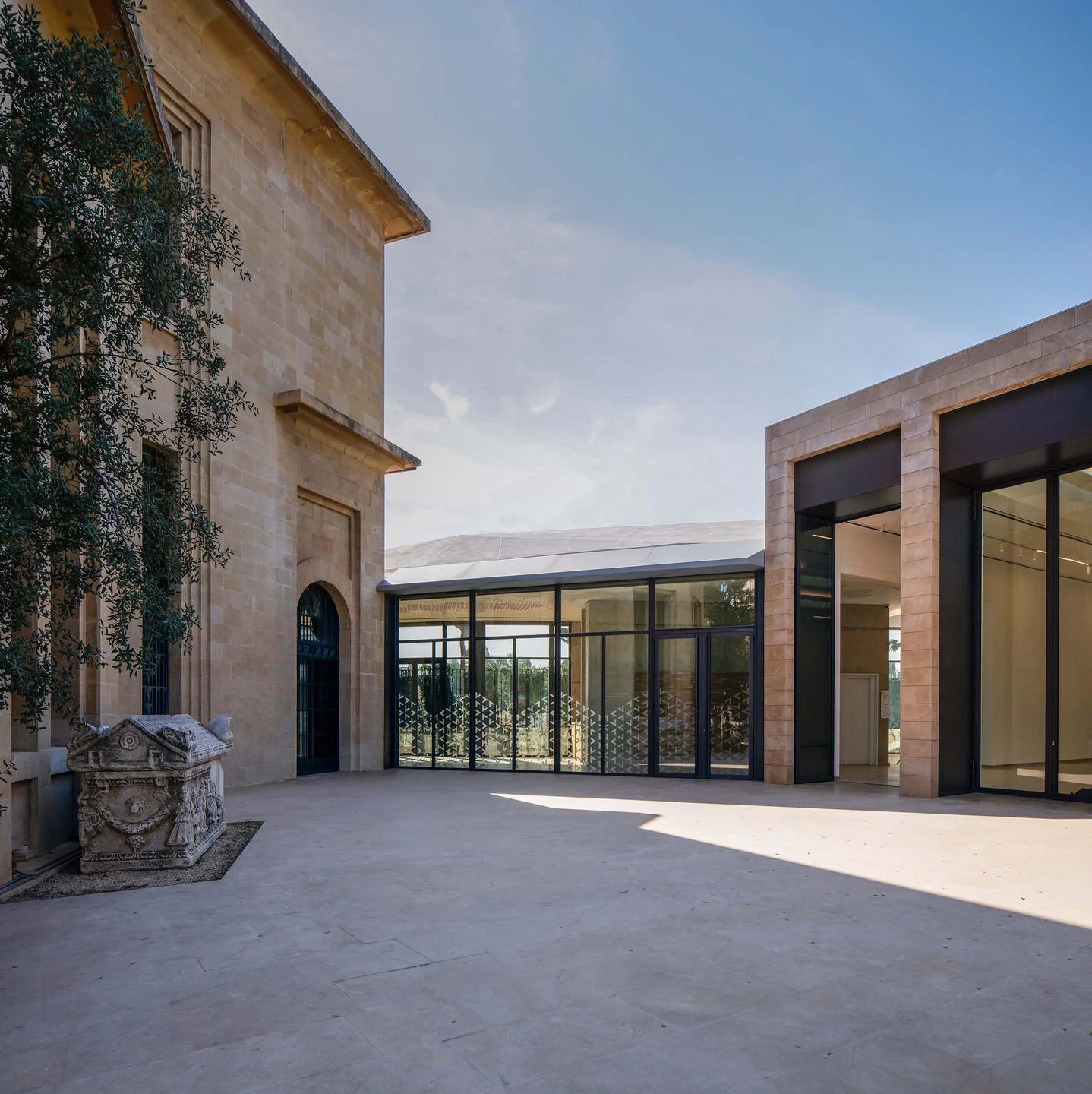
Nuhad Es-Said Pavilion
The final phase of Today I Would Like to Be a Tree will take the form of a touring public exhibition, opening in Beirut at the Nuhad Es-Said Pavilion for Culture before traveling to different venues regionally and internationally. More than a presentation of the project’s artistic outcomes, the exhibition is conceived as a platform through which children’s experiences can enter the public sphere. By placing their drawings alongside the work of established artists, the project gives equal visibility to different forms of expression and creates a space for audiences to encounter experiences of war and displacement through gestures, images, memories, and imagination.
The exhibition therefore marks not the conclusion of the project, but its transition into a new phase of impact. The completed leporello artist’s books will be offered for sale as part of a dedicated fundraising initiative, with proceeds contributing to sustained investment in the education and psychosocial wellbeing of children affected by displacement. In this way, the artworks created through the project become a direct means of supporting its longer-term social and educational impact.
For this next phase, we will be choosing a Lebanese NGO that focuses on children’s education. Drawing on their respective expertise and existing community networks, the partnership will support the development of a sustainable model combining educational support with psychosocial support (PSS), responding not only to immediate needs but also to the longer-term consequences that displacement and interrupted schooling can have on children.
Nuhad Es-Said Pavilion